





The Five Most Tax-Friendly Countries in Europe to Move to in 2027

Europe’s competition for private wealth has produced a curious result. A country can make its best-known tax concession dearer and still have an offer worth considering. Italy’s higher annual levy on covered foreign income makes that point, especially when you consider what a lower bill may ask of you in return. Greece generally requires you to commit capital locally, while Cyprus gives qualifying residents favourable treatment on dividends through its domicile rules. That’s how two people comparing the same tax-friendly countries in Europe can arrive at very different shortlists.
The same offer can look different to you a few years into the move. Say you stop drawing a salary but keep your stake in the business. You might live on dividends until you sell, then draw a pension from the country you left. If the assets you’ll pass on are also spread across borders, we’d look at those years together to see how much of your financial life the concession actually covers (read more: Baerz guide to wealth relocation and tax residency).
For our 2027 comparison, assume you qualify for the treatment described and spend a full tax year in your new country, with no income other than €500,000 in cash dividends from personally held shares in a foreign company with no local property exposure. We compare local charges before foreign withholding and treaty credits and assume full remittance in Malta. We’ll begin with what happens when the bill is fixed and your income can vary.
Italy and the price of a quiet year
There’s something reassuring about knowing what your tax bill will be before you know what your investments will pay. If you’re choosing a home you expect to keep for years, that certainty can help you plan. Its value depends on what a slow year looks like for you. At €500,000 in annual dividends, we’d want a good reason to take on a €300,000 charge year after year. You generally need to have been non-resident in nine of the previous ten tax periods, and the election can last up to 15 years. The charge rises by €50,000 for each family member you bring into the election. So if you and your partner both have foreign income, we’d ask your adviser to run the figures separately before you decide who should join.
Now suppose the dividends are what you live on while you prepare to sell the business. The timing of that sale deserves a conversation of its own. Certain gains from substantial shareholdings fall outside the election in the first five tax periods, so we’d get the sale checked before a fixed charge became part of your reasoning. Once your adviser has worked through that timing, we can look at the house on its own terms. A home you’ll live in and one you’ll visit seasonally can carry different ownership costs. The costs of buying a home that qualifies for prima casa relief can differ from those of buying a second home, where you’d generally also budget for annual municipal property tax. Before we’d let the election influence where you buy, we’d want to see how it holds up in a quiet year and in the year you sell.
Greece asks where you’ll put your money
If you like the predictability of Italy’s approach and you’d already consider owning property in Greece, there’s a reason to look at the Greek election next. It offers the same certainty over the annual charge on covered income and brings the investment you make in Greece into the decision. Under Article 5A, you’d pay €100,000 a year on the €500,000 in covered foreign dividends we’ve been discussing. You generally need to have been non-resident in seven of the preceding eight years and put at least €500,000 into qualifying Greek investments within three years. We’d keep that investment capital separate from your tax calculation. If you plan to use a property purchase to meet the requirement, establish that it qualifies before letting the tax election dictate what you buy. (view AADE guide to new-resident tax incentives)
Once you’ve found a property that suits you and could qualify, the next thing we’d look at is the order in which you buy and move. For qualifying final home purchase contracts from 1 July 2027, Greece applies a 15% transfer tax if you’re tax resident outside the EU and EEA when the liability arises, subject to the Article 42 exemption. The usual rate is 3% before the municipal levy. If you’re hoping to secure a home before you relocate, we’d settle the sequence with your notary before you commit. The home needs to work as a purchase in its own right, with the investment eligibility and transfer tax established before you settle on a price (view AADE transfer tax guidance).
In Malta, it depends what comes ashore
If you’re weighing Greece against Malta, consider what your money would be doing in each place. In Greece, part of it may go into an investment you intend to hold. In Malta, we’d begin by working out how much you’ll need to bring in to pay for the life you’re planning there. If you qualify for the Global Residence Programme and bring in all €500,000, the bill comes to €75,000. The programme charges 15% on foreign income received in Malta, with a €15,000 annual minimum. It’s open to qualifying third-country nationals who meet the housing and other programme conditions. But let’s say you only need €100,000 in Malta that year and genuinely leave the rest offshore. Under the same assumptions, you’d pay €15,000, which would put Malta ahead of Andorra in our example. (learn more on Global Residence Programme rules)
A purchase is where that carefully chosen remittance figure starts to move. Buying and furnishing a home can mean bringing in considerably more cash than you’d need once you’re settled. We’d also ask your adviser how to document the funds you transfer. Genuine foreign capital gains can remain outside Maltese income tax when remitted, so being able to trace the proceeds from a sale separately from accumulated dividends can affect the calculation. We’d model the purchase year on its own. Then you can judge Malta on what it would cost to get established and what it would cost to stay.
Andorra’s low tax rate comes with a high threshold
Suppose you expect to use most of those dividends after you move. We’d then look at what it costs to receive them under ordinary income tax, which is where Andorra becomes interesting. Once we’ve worked that out, we can ask what it would take to make Andorra your home. Apply its 10% personal income tax rate to €500,000 after the €3,000 savings-income reduction and you arrive at €49,700. We’d put that figure beside the capital you’re prepared to invest to establish residence. If you’re considering passive residence, the standard route generally requires €1 million in qualifying investment. There’s also a €400,000 Housing Fund route. If you want a home to count towards the standard investment requirement, each property you acquire for that purpose must exceed €800,000. That figure can shape your property search from the outset.
A home that qualifies on paper still has to work with the time you’ll spend in it. That’s where we’d bring your calendar into the conversation. The passive permit generally requires at least 90 days of effective residence, while tax residence can arise if you spend more than 183 days there or have your principal economic interests there. If you expect to keep a home elsewhere and divide your year between the two, we’d have your adviser assess those ties while we’re still looking at properties. We’d judge the home against the time you genuinely expect to spend there. That gives you a basis for deciding whether the capital required for residence is a commitment you’d make (view the Baerz guide to wealth relocation and tax residency).
Cyprus lets you keep more of what your portfolio pays
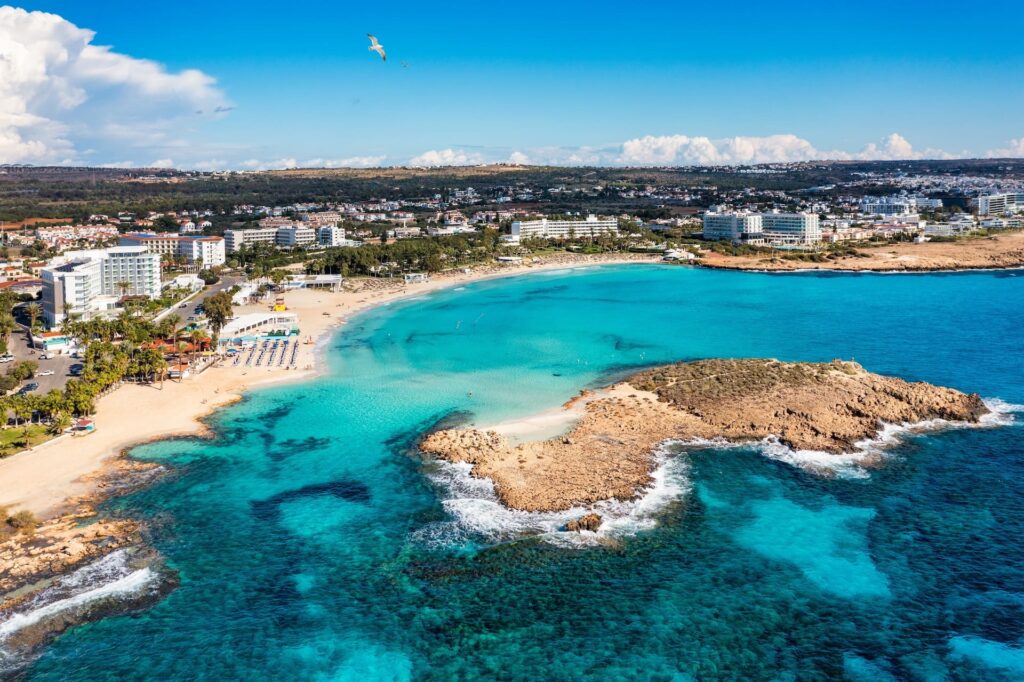
If dividends will fund your life after the move, Cyprus comes out ahead in our comparison. As an eligible non-domiciled resident, you generally owe no personal income tax or Special Defence Contribution on those dividends. The General Healthcare System contribution can still apply at 2.65%, but the annual contribution base is capped at €180,000. On the €500,000 in dividends we’ve been comparing, that puts the estimated local charge at €4,770. Before relying on that figure, we’d ask your adviser how long you can expect the treatment to apply and what tax may still be withheld abroad.
If the numbers make Cyprus worth a closer look, you can rent a permanent home while you get to know the area. Renting can satisfy the housing requirement under the 60-day tax residence route, provided you also meet the other conditions, including a qualifying local business, job or office and limits on time spent abroad. Since 2026, foreign tax residence alone no longer bars that route under Cyprus law, though a treaty may still determine where you’re treated as resident. When you’re ready to buy, we’d check whether VAT applies. Transfer fees are generally waived on purchases subject to VAT and halved on purchases outside VAT.
The case for making Cyprus your tax home
If foreign dividends will pay for most of your life after the move, we’d start with Cyprus. For an eligible non-domiciled resident in the example we’ve followed, Cyprus leaves you with the most income after local charges. The advantage holds even if you need to bring the full dividend income into the country. Before you plan around it, we’d ask your cross-border tax adviser to confirm that you qualify, how long you can expect the treatment to apply and what the country paying the dividends will still withhold.
Once those answers are in, you have a reason to spend time in Cyprus and see how it works as a place to live. We’d use that first stay to compare the areas that fit your daily life and decide whether to rent before buying. If your financial plans change, especially if you expect to sell the business that pays those dividends, have your adviser model that year before you commit. With the dividend plan we’ve followed here, though, Cyprus is where we’d begin the property search.
FAQ About Tax-Friendly Countries in Europe
Is Cyprus tax-free?
Cyprus does tax income, but dividends can get favourable treatment. If you qualify as a non-domiciled resident, your main local cost on those dividends is generally the healthcare contribution. In our example, the 2.65% contribution tops out at €4,770, before any tax withheld abroad.
Is Andorra tax-free?
You’ll generally pay 10% on taxable personal income. If you live on foreign dividends, the first €3,000 of qualifying savings income is generally tax-free. We’d weigh the annual tax bill alongside what you’d need to invest to secure residence.
Is there property tax in Italy?
Yes. If you’re buying a second home, we’d budget for an annual tax called IMU. At the standard 0.86% rate, a €200,000 taxable cadastral base would mean €1,720 a year. Ask for the cadastral figure and the local rate when you’re comparing homes.
Does Malta tax foreign income?
It can, and what you bring into Malta can change the bill. The Global Residence Programme generally charges 15% on foreign income you receive there, with a €15,000 annual minimum. We’d model the purchase year separately if you plan to bring in extra income to buy.
Does Greece have property tax?
Yes. You’ll generally pay annual ENFIA on property you own on 1 January. There’s also a separate tax when you buy. The standard purchase rate is 3.09% including the municipal levy. From 1 July 2027, qualifying buyers resident for tax outside the EU and EEA can face 15% before any applicable levy, subject to the Article 42 exemption.