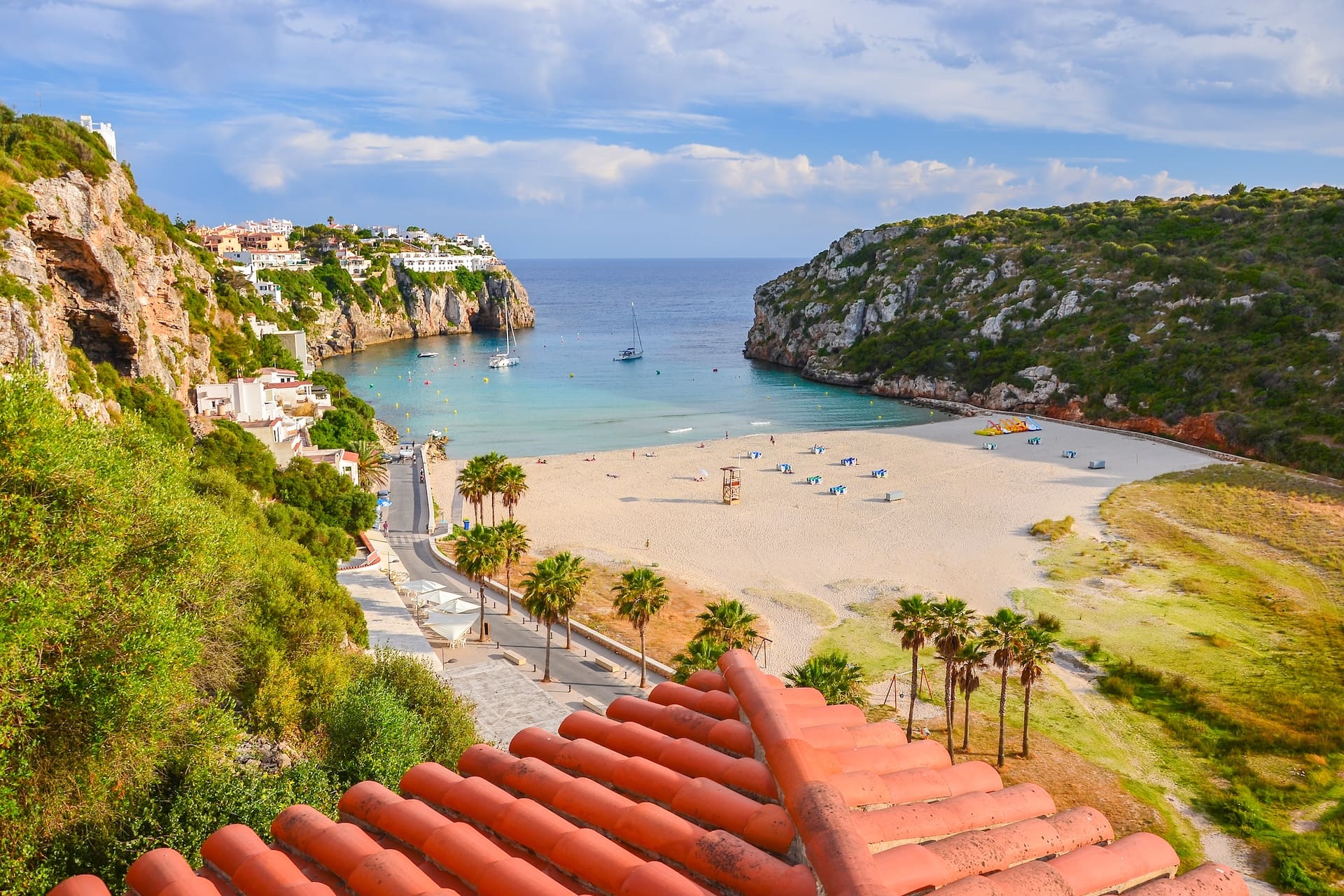

If we were sitting across the table discussing buying property in Menorca, we would probably begin with a question that has very little to do with property. What do you want an ordinary Tuesday to look like? Perhaps you want to walk out for coffee in a historic town, know your neighbours and have dinner by the harbour. Perhaps you picture mornings in the countryside, a pool behind an old stone house and almost no passing traffic. You may want the sea close enough for an evening swim, or you may need schools, healthcare, an airport and everyday services within easy reach because Menorca will become home rather than somewhere you visit occasionally.
Those answers tell us far more than a list of bedrooms. Menorca can accommodate very different ways of living, but the island makes much more sense once you stop looking at it as one property market and start understanding the individual places, landscapes and communities within it.
The island sits at the eastern end of Spain’s Balearic Islands, covering roughly 700 square kilometres. You can drive from one end to the other in around an hour, yet the landscape changes considerably along the way. The north is more exposed, with darker rock, open countryside and a coastline shaped by the Tramuntana wind. The south brings pale limestone, pine forests and many of the clear coves associated with the island. Between them are working farms, dry stone walls, small villages and two very different urban centres, Ciutadella in the west and Maó, or Mahón, in the east.
The island has been a UNESCO Biosphere Reserve since 1993, while Talayotic Menorca joined the UNESCO World Heritage List in 2023. Its environmental protection has played a central role in controlling development and preserving large areas of coastline and countryside. That is visible when you travel around Menorca. There is less continuous development than on many Mediterranean islands, and property tends to sit within a much stronger relationship with the landscape around it.
This also shapes how we approach a property search. Development restrictions, heritage controls, protected land and planning rules can influence what exists, what can be altered and what may be built in the future. The character people come to Menorca for is closely connected to those controls, so they need to be understood as part of the property decision rather than treated as an administrative detail after a home has been found.
Summer is naturally the most animated part of the year. Boats fill the harbours, restaurants stay open late, coastal villages become busier and the beaches become part of everyday life. Yet anyone considering living in Menorca permanently, or spending several months here each year, should also experience the island outside July and August. Winter gives you a much clearer idea of which locations continue to function as communities and which are shaped primarily around the summer season.
Ciutadella and Maó remain active throughout the year, as do towns such as Es Mercadal, Alaior and Ferreries. Some coastal areas become considerably quieter once the season ends. That can be highly appealing if privacy and calm are priorities, but it changes the practical side of ownership. We therefore look beyond how a property feels during a sunny viewing and consider what daily life around it will look like in January, March or November.
Menorca has one principal road connecting Maó and Ciutadella, strong telecommunications across most populated areas, a main hospital in Maó and an international airport close to the capital. Flights to mainland Spain operate throughout the year, while the international network expands considerably during the summer season. Ferries also connect the island with Mallorca and mainland Spain. It remains unmistakably an island, but it is an accessible one.
There is no single area that works for everyone because the answer depends on how the property will be used. A family moving permanently has very different priorities from someone spending six weeks here each summer. Someone buying primarily for investment will assess the same address differently again.
The most productive way to search is therefore to begin with use rather than location. Once we know how often you will be here, how much privacy you want, how important walkability is, whether schools or airport access are relevant and how much property management you want to take on, the map becomes much easier to read.
Ciutadella is usually one of the first places we explore when someone wants architecture, restaurants, local life and access to the sea without giving up the convenience of a proper town. Its historic centre has apartments, substantial townhouses and carefully restored period homes, while the harbour and surrounding neighbourhoods introduce a stronger maritime character. Several of western Menorca’s beaches are also within relatively easy reach.
It works particularly well for people who want the property to feel connected to life outside the summer season. You can walk to restaurants, markets and shops, and the town remains active long after many coastal areas have quietened. A historic townhouse can be exceptionally appealing here, although renovation permissions, parking, heritage protections and access are all details we would examine closely before progressing.
Maó offers a different proposition. Its natural harbour is one of the defining features of the city, while proximity to the airport, the island’s principal hospital and a wider range of commercial services makes the east especially practical. Property ranges from apartments and historic houses within the city to homes overlooking or sitting close to the harbour.
Nearby Es Castell has its own identity and a strong connection with the water. Buyers who travel frequently, plan to live on the island throughout the year or simply want services close at hand often find the east particularly convenient. A beautiful remote house can be compelling during a viewing, but convenience becomes much more relevant once Menorca becomes part of normal life.
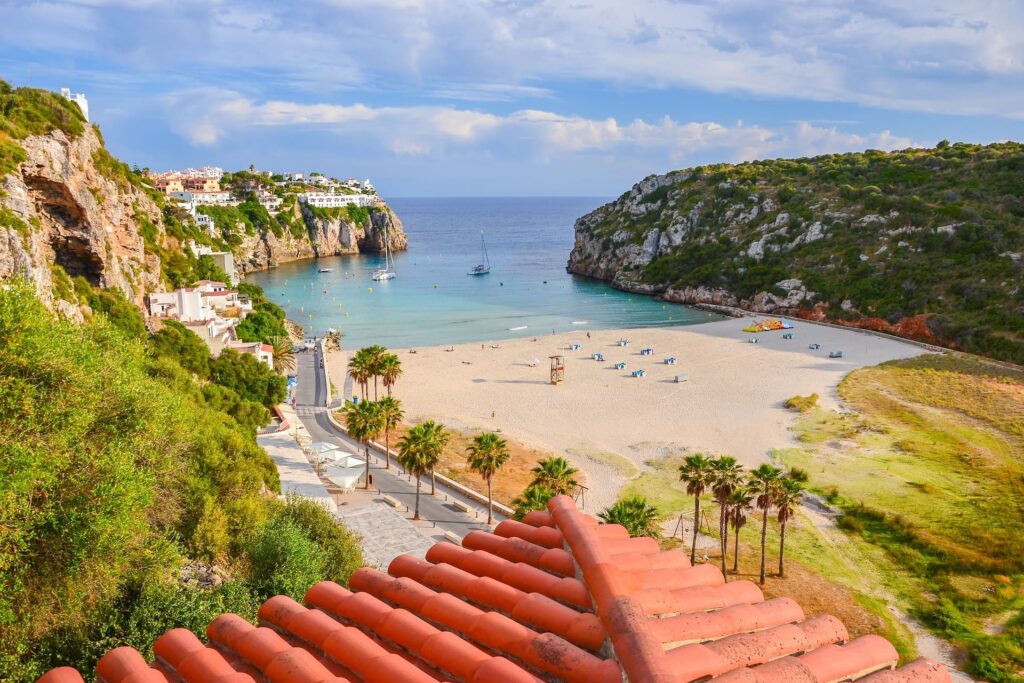
South of Maó, Sant Lluís combines a traditional inland town with quick access to several of the southeast coast’s residential areas. Binibeca, Punta Prima and the surrounding coastline are known for detached villas, sea views and the whitewashed architectural language strongly associated with this part of Menorca.
This area can work very well as a second home because airport access is straightforward and the sea is close. The important consideration is how the immediate location functions outside the summer months. Some streets and developments remain residential throughout the year, while others become noticeably quieter once seasonal visitors leave. The difference may be exactly what you want, but it should be understood before the search becomes focused on a particular view or architectural style.
Es Mercadal sits close to the centre of the island, making both coasts relatively accessible. It remains an established town in its own right, which makes it appealing to people who want everyday services nearby without living in one of the two larger urban centres.
To the north, Fornells has one of Menorca’s most distinctive maritime settings. Its sheltered bay, sailing culture and waterfront restaurants attract buyers who want a close relationship with the sea but prefer something quieter than a larger harbour town. The surrounding countryside also introduces fincas, traditional agricultural buildings and homes with substantial land, bringing a very different type of ownership into the search.
The inland towns can be overlooked during an initial trip because Menorca’s coastline naturally commands attention. Once you begin thinking about permanent life, renovation opportunities or larger properties, they become much more relevant. Alaior offers a functioning town environment with relatively easy access to southern beaches such as Son Bou, while Ferreries sits farther west and gives good access to both countryside and the western side of the island.
These areas often appeal to people looking for traditional townhouses, fincas or homes that feel more integrated into an established residential community. The choice becomes less about proximity to a particular beach and more about how the property fits into everyday life, the services around it and the amount of land or maintenance you actually want to take responsibility for.
Menorca’s property stock needs to be understood by type as much as by location. A historic townhouse offers architecture and walkability, although heritage rules can influence renovations and alterations. A coastal villa gives you privacy, outdoor space and easy access to the sea, but salt, wind, gardens, swimming pools and seasonal maintenance become part of the ownership equation.
A rural finca can offer land, privacy and some of the island’s most beautiful settings, but this is where due diligence becomes particularly important. Registration, planning history, water supply, agricultural classifications, access, outbuildings and previous alterations all need to be checked properly. The physical property you see and the property recorded in official documentation should correspond.
Plots and development opportunities require the same discipline. A piece of land may look perfectly suitable for construction without having the planning status required to build the home you have in mind. Menorca is a place where legal and technical checks should happen before architectural imagination gets too far ahead.
Property investment in Menorca should be approached with a longer view than a simple seasonal rental forecast. Protected land, controlled development and the limited volume of high-quality homes in the strongest locations can support long-term demand. Properties with good architecture, privacy, legal clarity and strong locations tend to remain relevant to international buyers because those qualities are difficult to reproduce.
Short-term rental income needs separate analysis. Tourist accommodation is tightly regulated throughout the Balearic Islands, and the existence of a rental licence should never be assumed because a home has previously been marketed online. If rental income is part of the plan, we establish the licence position, permitted use, operating restrictions and realistic rental season before it enters any financial projection.
This is why many Menorca purchases ultimately sit somewhere between investment and lifestyle. The property may provide personal use for part of the year, retain long-term value and generate income when appropriate, without being selected purely to maximise annual rental return. A home that works exceptionally well for your own use and remains desirable to the next owner can be a very sound investment decision in itself.
Foreign nationals can buy property in Spain, although the process needs to be structured correctly from the start. International purchasers normally require a Spanish NIE identification number and should appoint independent legal representation to review the transaction. Title, debts, licences, planning compliance, property boundaries and the relationship between cadastral and land registry records should all be checked before completion.
Older houses and rural properties often justify an additional technical survey. Extensions or outbuildings may have been created many years ago, while utilities, boundaries and structural condition can raise questions that are not evident during a viewing. It is far easier to investigate these points before committing than to inherit them with the keys.
Taxes depend on the type and value of the property. Resale homes in the Balearic Islands are subject to transfer tax, while qualifying new property is generally subject to VAT and stamp duty. Residency should also be treated separately from ownership. Spain’s Golden Visa route closed to new applicants in April 2025, so buying property no longer creates an investor residence route for non-EU nationals.
One of the easiest ways to make a property search unnecessarily complicated is to begin by contacting every selling agency individually. Very quickly, you can have multiple conversations running at once, several versions of the same market being presented to you and very little coordination between them.
A Personal Property Advisor approaches the search from your side. Baerz Property Finders & Advisors represents the purchaser independently rather than representing the seller, allowing the brief to lead the search. That means looking across the market, working with multiple agencies, identifying off-market opportunities where available and assessing each property against the same set of priorities rather than against the need to sell a particular listing.
In Menorca, that role is handled by Matt Ziolkowski. With more than fifteen years of international sales experience across real estate and interior design, Matt works with international clients buying both permanent residences and second homes. His role can extend from sourcing and negotiation to legal introductions, interiors and relocation support, but the most useful part is often the ability to challenge the property itself. If the house near the cove creates the wrong winter lifestyle, the finca brings renovation commitments you never wanted or another address gives you a stronger overall proposition, you should know that before signing anything.
Spend time in Ciutadella in the evening and Maó in the morning. Drive through Es Mercadal, stop in Alaior, have lunch in Fornells and explore the southeast without looking only at houses. Walk part of the Camí de Cavalls, visit the island outside peak summer if possible and pay attention to how each area functions when you are doing ordinary things rather than sightseeing.
A first home, second home and investment property will naturally produce different priorities. Permanent living may place greater weight on community, schools and everyday infrastructure. A second home may make airport access, privacy and ease of maintenance more important. An investment purchase may focus more closely on permitted use, long-term demand and the profile of the eventual resale market.
Once those priorities are clear, the property search becomes considerably sharper. Menorca rewards buyers who understand the island before deciding which part of it they want to own.
Explore the current Menorca property collection or speak directly with Matt to begin a search built around how you actually want to live here.
Menorca appeals to people looking for a protected natural environment, controlled development, strong quality of life and a property market that remains closely connected to the island’s character. The strongest location will depend on how frequently the home will be used, which seasons you intend to spend there and how much access to services you require.
Ciutadella and Maó provide the widest range of year-round services, while Es Mercadal, Alaior and Ferreries can work extremely well for people who prefer smaller towns with good access to both coast and countryside. The right choice depends on work, schooling, transport, healthcare and how much activity you want around you outside summer.
Yes. Foreign nationals can purchase property in Spain. International purchasers normally need an NIE and should use independent legal representation to confirm title, planning status, taxation, contractual terms and any property-specific restrictions before completion.
Yes. Foreign nationals can purchase property in Spain. International purchasers normally need an NIE and should use independent legal representation to confirm title, planning status, taxation, contractual terms and any property-specific restrictions before completion.
Possibly, although tourist accommodation is regulated and the property’s licence and permitted use must be confirmed individually. Rental income should never be included in an investment projection until the legal position of the specific property has been checked.
A Personal Property Advisor represents your interests rather than those of a selling agency. The role combines independent property search, access across the market, negotiation, local knowledge and coordination of the professionals involved in the purchase, giving you one point of advice throughout the process rather than several disconnected sales conversations.
























 Dutch
 German
 Spanish
 French
 Arabic
 Chinese
 Russian
 Swedish
 Portuguese
 Polish
 Greek
 Italian