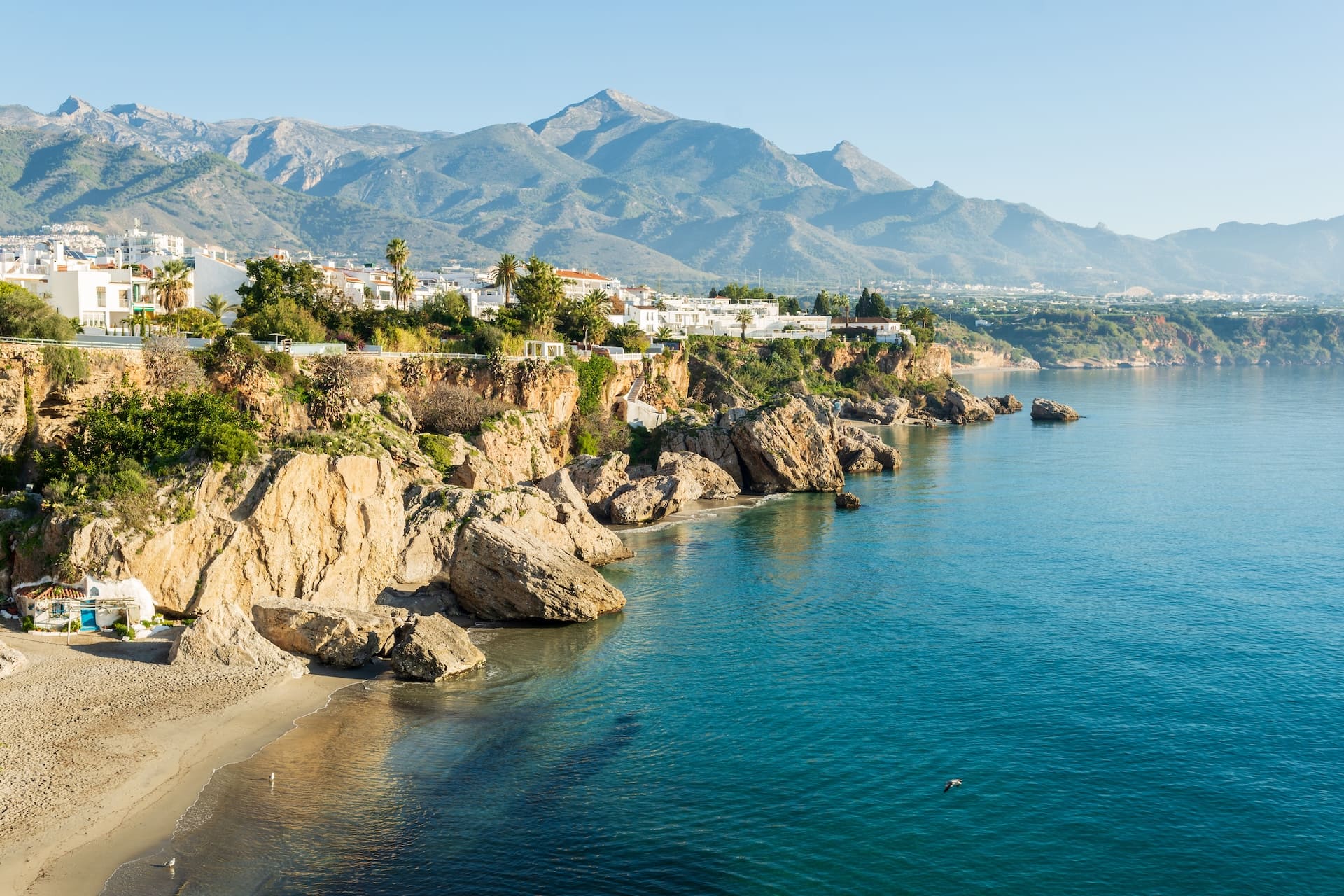



Málaga is easy to underestimate if you know it mainly through the Costa del Sol. The airport is familiar, the Mediterranean is close and many people first encounter the city on their way somewhere else along the coast. Yet Málaga itself now makes a convincing case for year-round living, with established residential neighbourhoods, international schools, strong transport connections, a substantial employment base and several very different ways to live within the city.
If you are planning to live in Málaga year-round, you will naturally look at the city differently. The search becomes less about immediate attraction and more about finding the part of Málaga that fits the way you already live, from privacy and space to schools, access and how close you want to be to the centre or the coast. If this will be a second home, the priorities shift. Ease of arrival, security and how straightforward the property is to own while you are elsewhere may carry more weight.
Investment may form part of either decision, but it brings another set of considerations into the search. Rental restrictions, purchase costs and future resale all deserve attention, particularly when strong market conditions can flatter properties that are otherwise fairly ordinary. Buying a home in Malaga starts with knowing what you want from the city and then finding the property that supports it.
The Mediterranean is an obvious attraction, but Málaga gives you considerably more once you start looking at it as somewhere to live. The centre sits close to the water, residential areas continue east along the coast, and the city rises inland towards neighbourhoods with larger plots, greater privacy and elevated views. You can live in the middle of the city, close to the beach or in a quieter residential area without moving far from Málaga itself.
That range is useful if you are relocating with a family or dividing your time between countries. Schools, the airport and transport connections are already part of the infrastructure of an international city, while neighbourhood choice lets you decide how central, residential or coastal you want daily life to be.
Málaga also has a substantial year-round economy. Málaga TechPark reported 29,018 employees in 2025, with companies based there generating approximately €4.896 billion in revenue. Tourism remains important, but it no longer explains the city on its own.
That broader base is one reason Málaga now works for people who want to spend considerably more than a few weeks a year here. The coast is part of the appeal, but schools, work, transport, services and established residential areas are what allow the city to function as a permanent home.
The latest registered figures show how far prices have risen. In Q2 2026, the annual average registered residential price in Málaga city reached €3,401 per square metre, up 14.7% year on year. Among the Spanish provincial capitals included in the same data, Málaga sat behind San Sebastián, Madrid, Barcelona, Palma and Bilbao.
Use that figure as a reference point, not as a shortcut for deciding what a particular home is worth. It covers registered transactions across the city and represents an annual average. A renovated apartment overlooking the Mediterranean, an older property in the Historic Centre and a villa in El Limonar may all be in Málaga, but the same citywide figure cannot accurately value all three.
The wider market is active. Málaga province recorded 9,387 residential transactions in Q2 2026, up 7.7% from the previous quarter, with 35,839 transactions recorded over the preceding twelve months. Existing homes accounted for 6,420 transactions during the quarter, up 16.2%, while new-home transactions fell 7% to 2,967. These are provincial figures, so they provide context for the wider Malaga property market rather than a direct measure of Málaga city itself.
Foreign purchasers accounted for 37.01% of residential purchases across Málaga province in Q2 2026, confirming the strength of international demand. If you are buying from abroad, you are entering a market that is already highly familiar with international ownership and where the better properties can attract interest from several countries at once.
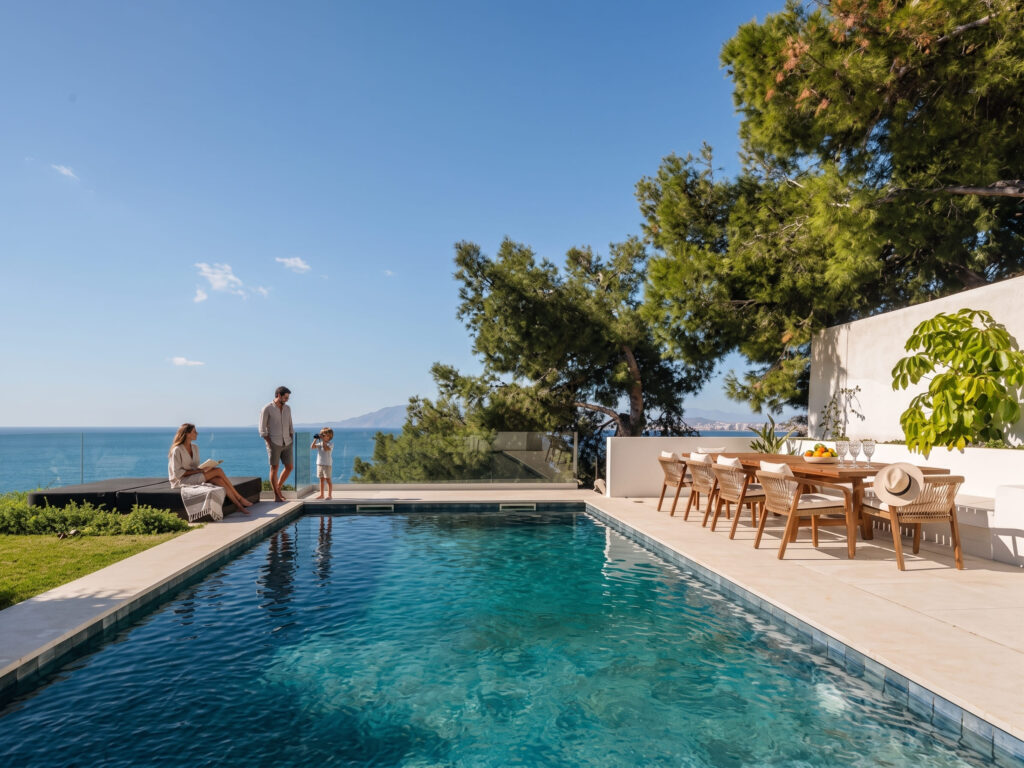
The differences within Real estate in Malaga become much clearer once you start looking at individual neighbourhoods. A relatively short distance can take you from a historic apartment to an urban seafront residence, an established villa district or a part of the eastern coast where the beach is part of everyday neighbourhood life.
Some areas also have much stronger demand than a citywide price average will show. That is where local knowledge becomes useful. The difference between two streets can affect privacy, parking, orientation, access, future development and ultimately what the property is worth.
The Historic Centre works particularly well if you want Málaga immediately outside the door. Restaurants, cultural institutions and everyday services are close, and apartment living can make sense if you travel frequently or prefer not to maintain a larger property.
The street is worth choosing as carefully as the apartment. Evening noise and pedestrian traffic can change considerably within a few blocks, while parking, lifts and accessibility vary from building to building. With an older property, look beyond the renovated interior and check the condition of the roof, façade and common areas, along with any significant works the community is already considering.
Heritage and planning restrictions can also limit the changes you can make. Málaga’s current rules require separate checks on short-term letting, and a property with a successful rental history does not automatically give you the same rights after purchase.
La Malagueta gives you one of the clearest combinations of central Málaga and direct access to the coast. Monte Sancha sits slightly further back and higher up, with more privacy and a more residential setting while keeping the centre close.
Orientation, terrace quality, parking and building condition can justify significant differences in price. Marine exposure deserves attention as well. Salt exposure can accelerate wear on exterior metalwork, glazing, terraces and mechanical equipment, especially when maintenance has been inconsistent.
If the view accounts for a meaningful part of the asking price, investigate what can happen around it. An uninterrupted sea view may depend on what planning allows on nearby land.
If you are looking for a family home within Málaga city, El Limonar deserves serious attention. El Limonar stands out because few other parts of Málaga combine established green streets, substantial plots and privacy with a drive of around ten minutes to the city centre.
Demand here has proven durable. South-facing gardens attract a clear premium, as do homes with direct access to Calle Limonar and properties on the upper streets near the British School. Well-priced houses in the strongest positions can move quickly, so knowing which parts of the neighbourhood justify the premium becomes particularly useful once you begin comparing properties.
If you are relocating with a family, El Limonar will often make sense early in the search and continue making sense after you have explored other areas. Schools, space and privacy are available without pushing daily life too far from the centre.
Larger villas also require proper technical and legal review. Pools, terraces, extensions and ancillary buildings added over time should correspond with planning permissions and registry records. In an area where the strongest properties can attract attention quickly, make sure the planning records, registry details and physical property all correspond before you commit.
Cerrado de Calderón takes the residential proposition further, with greater elevation, larger homes and more privacy. The trade-off is greater reliance on the car, so it is worth experiencing the area as part of an ordinary day instead of judging it entirely from the property.
Access, school journeys, driveway gradients and the routes you will use regularly deserve some thought. Hillside homes also bring technical considerations that can be easy to overlook during a viewing, including drainage, retaining walls and slope condition.
Views are frequently part of the appeal here. If you are paying a premium for one, nearby planning should form part of the research.
Pedregalejo and El Palo deserve more attention than they often receive in conventional Málaga property guides. Along this stretch of the eastern coast, the beach sits inside established neighbourhoods, with the paseo, chiringuitos and local businesses used throughout the year. It feels very different from a purpose-built resort and also different from the more formal urban seafront around La Malagueta.
Competition has strengthened considerably in Pedregalejo, particularly for frontline and first-line homes with terraces and parking. That combination is scarce, and good properties tend not to remain available for long. If this part of Málaga appeals to you, establish early which compromises genuinely make sense and which ones the location does not justify.
There is also a strong relationship between price and what you get to use every day. You can live close to the sea in an established part of the city, remain connected to central Málaga and avoid the infrastructure and scale of a resort development.
Street choice still makes a material difference. Parking, summer footfall and proximity to the busiest parts of the paseo can affect day-to-day living, while older homes near the water warrant close inspection of façades, windows, terraces and signs of marine exposure.
The western waterfront offers a more contemporary side of Real estate in Malaga. Newer developments can provide modern specifications, terraces, private parking and communal facilities, which may appeal if you want a property that is relatively straightforward to own.
The questions are different from those surrounding an older home. Look carefully at developer documentation, specifications, licences, guarantees, completion timing and snagging. Community charges also deserve attention, particularly in developments with extensive shared facilities.
Surrounding land can be equally relevant. A new apartment may currently enjoy open views because neighbouring plots have not yet been developed. If that openness is reflected in the price, find out what is planned nearby.
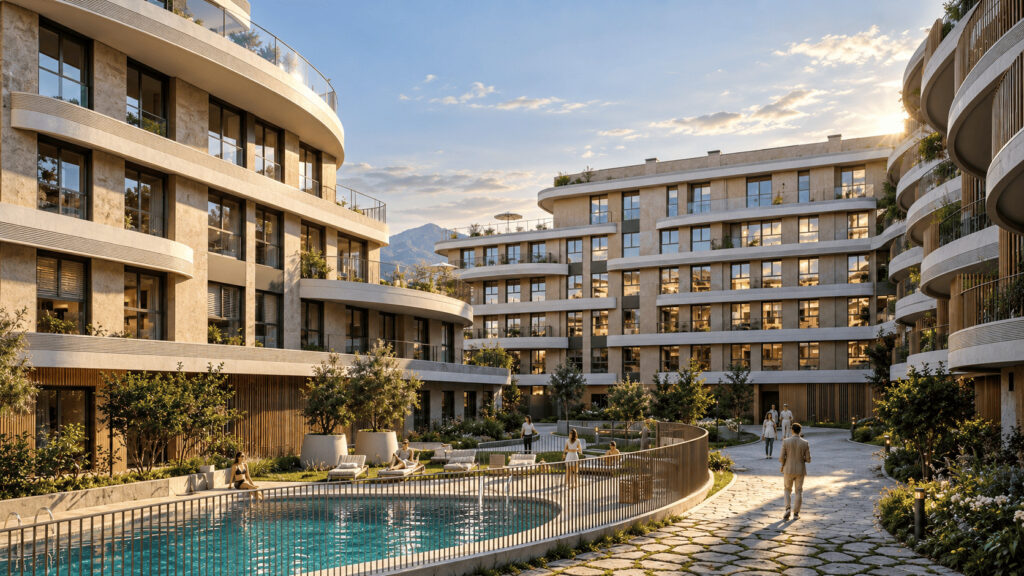
Once you have narrowed the location, deciding between an apartment, villa, historic property or new-build usually becomes easier.
An apartment or penthouse can work well if you travel regularly and want to lock the door without leaving a large property behind. A villa gives you privacy, outdoor space and greater independence, while gardens, pools, security and maintenance become part of the commitment.
Historic apartments bring architecture and central walkability into the purchase, although the building deserves as much attention as the interior. Community works, structural condition and restrictions on alterations can all affect what you are taking on. New-build property removes some of those uncertainties but introduces questions around completion, future development and ongoing community costs.
When comparing Real estate in Malaga, keep coming back to how you expect to use the property. A feature that sounds attractive during a viewing is only valuable if it improves the way you will actually live there.
Once you know what you want from Málaga, the search becomes much more efficient when somebody on the ground can separate genuinely relevant properties from everything that simply looks convincing online.
Local knowledge can save a considerable amount of time. A listing may appear to fit the brief while the street, orientation, asking price, planning history or condition of the building tells a different story. The same applies to neighbourhood choice. El Limonar and Cerrado de Calderón can both offer space and privacy, but daily life is different. A seafront apartment may look straightforward until parking, community costs, salt exposure or future development are taken into account.
A personal property advisor can also widen the search beyond the properties you have already found online. That can include on-market and off-market opportunities, a realistic view of asking prices, access to local agents and owners, and early identification of legal or technical issues that deserve closer inspection.
Thomas te Raaij is Baerz & Co’s Personal Property Advisor for the Costa del Sol and Greater Málaga area. His experience spans the Dutch and Spanish property markets, and he holds a bachelor’s degree in real estate as well as certification as a property appraiser. Thomas’s work covers Málaga, Fuengirola, Mijas, Granada and the wider region, including on-market and off-market searches, negotiation, due diligence and support throughout the purchase.
His role also includes coordinating the specialists who may be needed along the way, from lawyers and tax advisers to architects, technical experts and relocation professionals. That gives you one point of contact while the individual parts of the purchase are handled by the right people.
If your time in Málaga is limited, this can materially improve the process. Instead of spending several days discovering why certain areas or properties do not work, much of that filtering can happen in advance. You arrive with a shorter list, better local context and a clearer idea of which properties deserve serious attention.
The purchase price is only one part of the amount you will need to commit, and the tax treatment changes depending on whether you buy a resale or a new home.
For a resale property in Andalusia, the general Transfer Tax, or ITP, is 7%. On a €1 million purchase, that means €70,000 in ITP, with legal advice, notarial work, registration, technical inspections and any financing costs sitting outside that figure.
A €1 million new home purchased from a developer is generally subject to 10% VAT and 1.2% AJD stamp duty in Andalusia. Together, those taxes amount to €112,000 on the same €1 million purchase, again excluding professional, registration and financing costs.
Two homes advertised at the same price can therefore have noticeably different acquisition costs. Once you own the property, community fees, local property taxes, insurance, utilities and maintenance also need to be considered. A villa puts more of those costs directly under your control, while a development with extensive communal facilities can carry substantial regular charges.
If you will own the property as a non-resident, Spanish property-related tax obligations may also apply. Your wider tax position will depend on residence and how the property is held, so specialist advice is sensible once your circumstances move beyond a straightforward purchase.
If rental income forms part of your plans, do not rely on what the property has earned historically or what similar homes appear to achieve online. Málaga’s rules have changed substantially.
Since August 2025, new tourist homes have been suspended across the entire municipality of Málaga for a maximum of three years, or until the relevant planning modification is approved sooner. An earlier January 2025 regime restricted new registrations in 43 neighbourhoods where tourist homes exceeded 8% of residential stock, but the later citywide suspension is the position to work from in 2026.
National rules also affect short-term letting. Since April 2025, starting tourist-accommodation activity in many buildings governed by Spain’s horizontal-property law generally requires express approval from three fifths of all owners representing three fifths of participation quotas. Existing qualifying activity can be treated differently, and community statutes may impose additional restrictions.
Since July 2025, qualifying short-term rentals marketed through online platforms have also required a national rental-registration number, or NRUA.
If rental income affects what you are prepared to pay, have the legal position of the specific property checked first. Previous rental activity does not automatically establish what you will be entitled to do after completion.
You can buy property in Spain without being resident here. Foreign purchasers accounted for 37.01% of residential transactions across Málaga province in Q2 2026, so international ownership is already a significant part of the local market.
Buying the property does not, however, give you Spanish residency. Spain ended its property-linked investor residence provisions for new applicants on 3 April 2025, removing the route commonly known as the golden visa.
If you are British or another non-EU national and plan to spend substantial time in Málaga, treat immigration as a separate part of the process. Standard Schengen visits allow up to 90 days in any 180-day period, while longer stays require the appropriate residence permission.
You may also have seen reports of a proposed 100% tax on certain property purchases by non-EU, non-resident purchasers.The proposal had not become a general purchase tax and remained stalled in Congress in 2026.
If you expect to spend a significant part of the year in Málaga, consider residency and taxation alongside the property purchase. Each can affect how you structure the process. They affect one another in practice, even though they remain separate legal questions.
Once you find a property you want to pursue, legal and technical checks should reflect what you are actually buying.
Your lawyer should establish ownership and title, mortgages and charges, and confirm that the registry and cadastral records are consistent. They should also review planning status, licences, community debts and statutes, approved or pending works, local taxes and any restrictions on alterations. Claims concerning tourist use should also be checked independently.
The technical review will look different depending on the property. In the Historic Centre, lifts, façades, roofs, access and heritage restrictions may need particular attention. On the seafront, corrosion, waterproofing, windows and terraces move higher up the list. With a hillside villa, drainage, retaining walls, pools, extensions, boundaries and access become more relevant.
New-build property brings its own checks around specifications, licences, guarantees, snagging, delivery timing and future development phases. If you are paying significantly for a view, nearby planning should be checked as well.
Do as much of this work as possible before money becomes materially non-refundable. A reservation agreement can arrive surprisingly early in the process, and enthusiasm for the property is a poor reason to reduce the level of scrutiny.

A successful viewing tells you that you like the property. It does not necessarily tell you whether you will like owning it.
By the time you are down to the final options, you should have a much clearer idea of the Málaga you want. That may mean walking into the centre from La Malagueta, living with more space in El Limonar, keeping the beach close in Pedregalejo or choosing a newer apartment because you want fewer maintenance responsibilities.
Then test the property against the less attractive parts of ownership. Consider the journeys you will make regularly, the maintenance you are prepared to take on, what happens when you leave for several months and whether you would still want the home if rental income or a particular view changed in the future.
That is ultimately a more useful way to approach Real estate in Malaga. The city gives you several genuinely different ways to live within a relatively compact area. Finding the right home comes down to understanding which part of Málaga suits you best and being prepared to walk away when the property does not.
The Q2 2026 data from Spain’s property registrars puts Málaga city’s annual average registered residential price at €3,401 per square metre, up 14.7% year on year. It is a citywide transaction benchmark, not an asking-price guide, so the value of an individual property can differ considerably according to location, type, condition and position.
Yes. You can buy property in Málaga as a foreign national. Foreign purchasers represented 37.01% of residential transactions across Málaga province in Q2 2026. Owning property does not automatically give you Spanish residency, and Spain ended the property-linked golden visa route for new applicants in April 2025.
A resale property in Andalusia is generally subject to 7% ITP transfer tax. A new residential property purchased from a developer is generally subject to 10% VAT plus 1.2% AJD stamp duty. Legal, notarial, registration, technical and financing costs can apply in addition.
Do not assume that you can. Málaga currently has a municipal suspension on new tourist homes, introduced in August 2025. National rules can also require approval from the owners’ community, while qualifying short-term rentals marketed online require an NRUA registration number. Check the position of the individual property before relying on tourist-rental income.
Check title, charges, planning status, cadastral consistency, community obligations, alterations and the physical condition of the property. The technical review should then reflect what you are buying, whether that means marine exposure on the seafront, an older building in the centre or drainage and retaining structures on a hillside plot.
























 Dutch
Dutch  German
  Spanish
  French
  Arabic
  Chinese
  Russian
  Swedish
  Portuguese
  Polish
  Greek
Greek  Italian