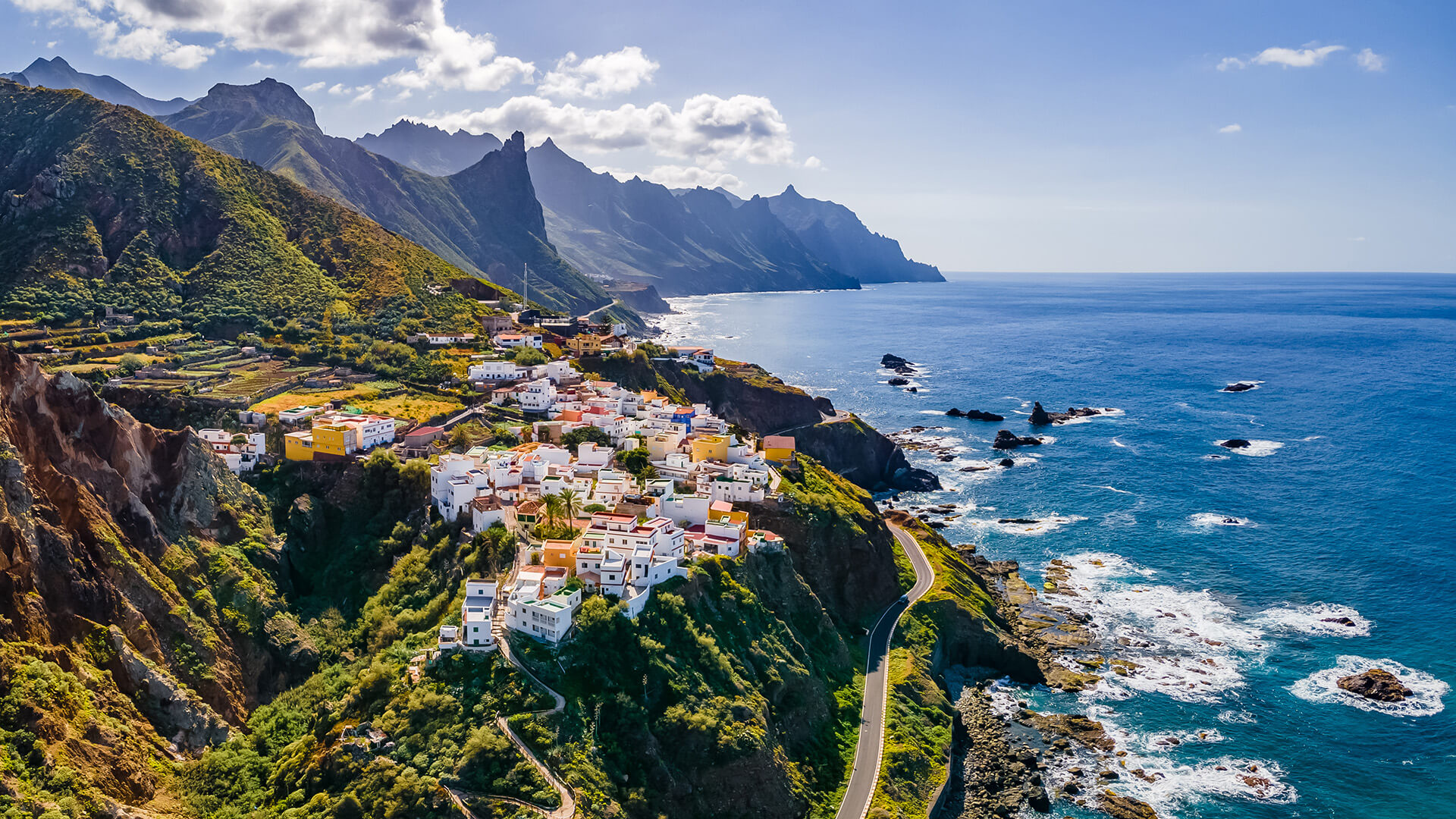


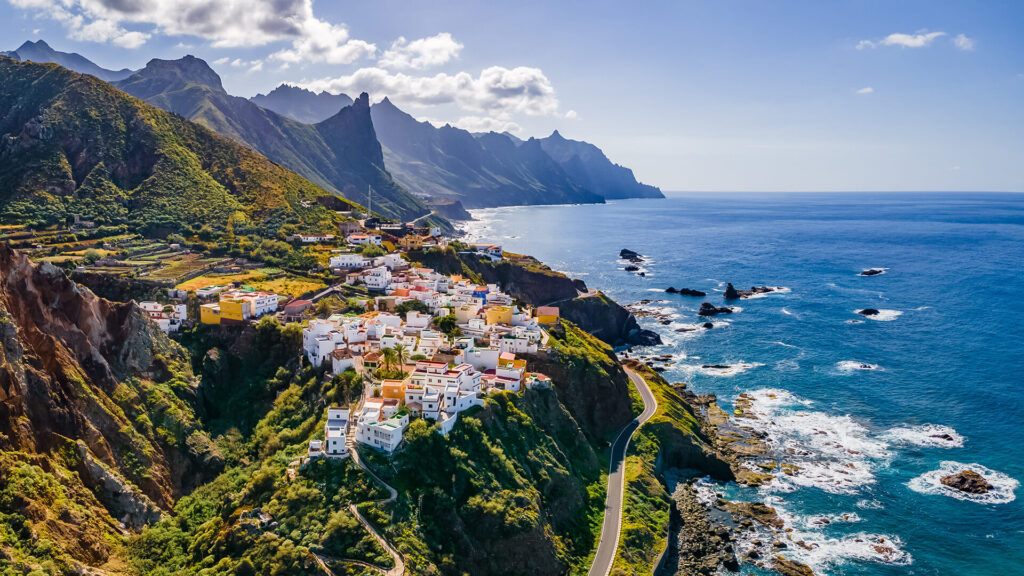
There are few places in Europe where daily life is shaped so profoundly by the landscape. Within the space of an hour, Tenerife moves from volcanic coastline to ancient forests, from sun-drenched terraces overlooking the Atlantic to mountain villages where cooler air and slower rhythms define everyday living. The island’s geography creates remarkable variety, allowing each area to develop its own character while remaining connected by modern infrastructure and a strong sense of place.
That diversity continues to attract homeowners from across Europe and beyond. Some are searching for a second residence where winter feels comfortably distant. Others are planning a permanent move, while many see Tenerife as an opportunity to combine personal enjoyment with a carefully considered addition to their wider property portfolio. Whatever your reason for buying, the island offers a breadth of opportunities that few European destinations can match.
Its appeal extends well beyond climate. Year-round international connections, excellent healthcare, respected international schools, championship golf courses, modern marinas, protected natural parks and an increasingly sophisticated culinary scene have helped establish Tenerife as one of Spain’s most complete residential destinations. Daily life unfolds at a different pace, yet the practical foundations that support long-term ownership remain firmly in place.
Choosing a property here therefore involves much more than selecting a villa with an ocean view or an apartment close to the beach. Every part of the island offers a different ownership experience, influenced by its climate, surroundings, accessibility and local community. Understanding those distinctions from the beginning makes every decision that follows considerably easier.
This guide brings together the considerations that matter when buying property in Tenerife, from understanding the island’s different residential areas and property types to navigating the purchasing process, ownership costs and the value of working with experienced local professionals. Whether you’re looking for a permanent residence, a holiday home or a property that complements an international lifestyle, approaching the market with the right information allows you to search with greater confidence.
One of Tenerife’s greatest strengths lies in its ability to offer distinctly different ways of living within a relatively compact island. Climate, elevation and the influence of the Atlantic create environments that feel surprisingly varied, giving every location its own atmosphere and everyday rhythm.
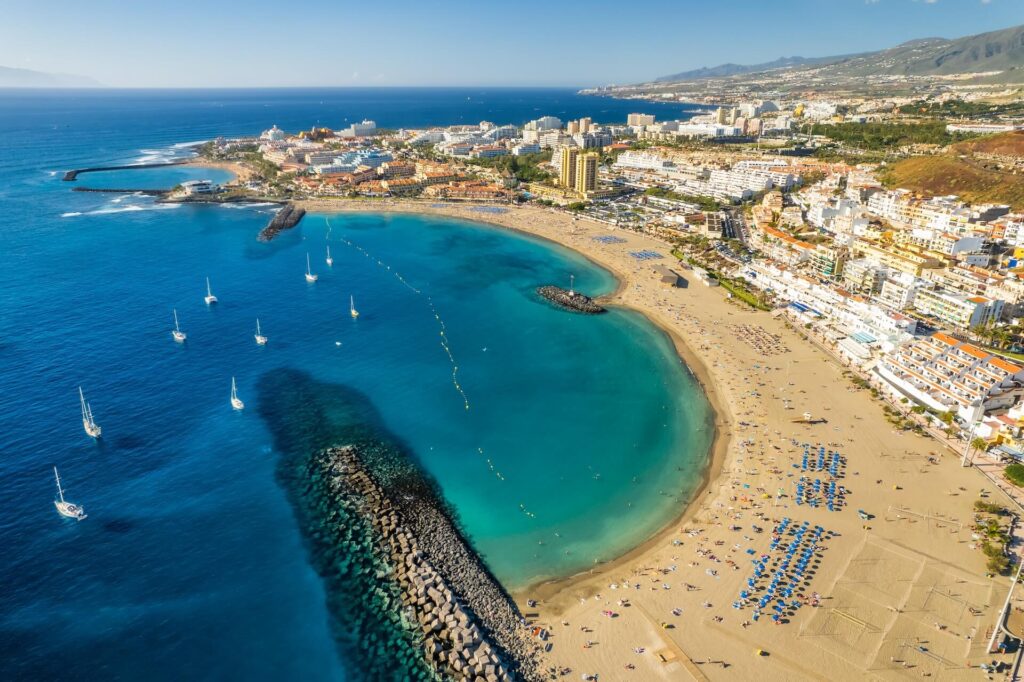
The south-west has become Tenerife’s most recognised luxury residential corridor. Costa Adeje, La Caleta, Abama and the neighbouring golf communities enjoy warm, dry conditions throughout much of the year, creating an environment centred around outdoor living. Beaches, golf courses, marinas, international restaurants and five-star resorts sit alongside contemporary villas and apartments designed to maximise natural light and uninterrupted sea views. Easy access to Tenerife South Airport further strengthens the area’s appeal if you travel frequently or divide your time between multiple residences.
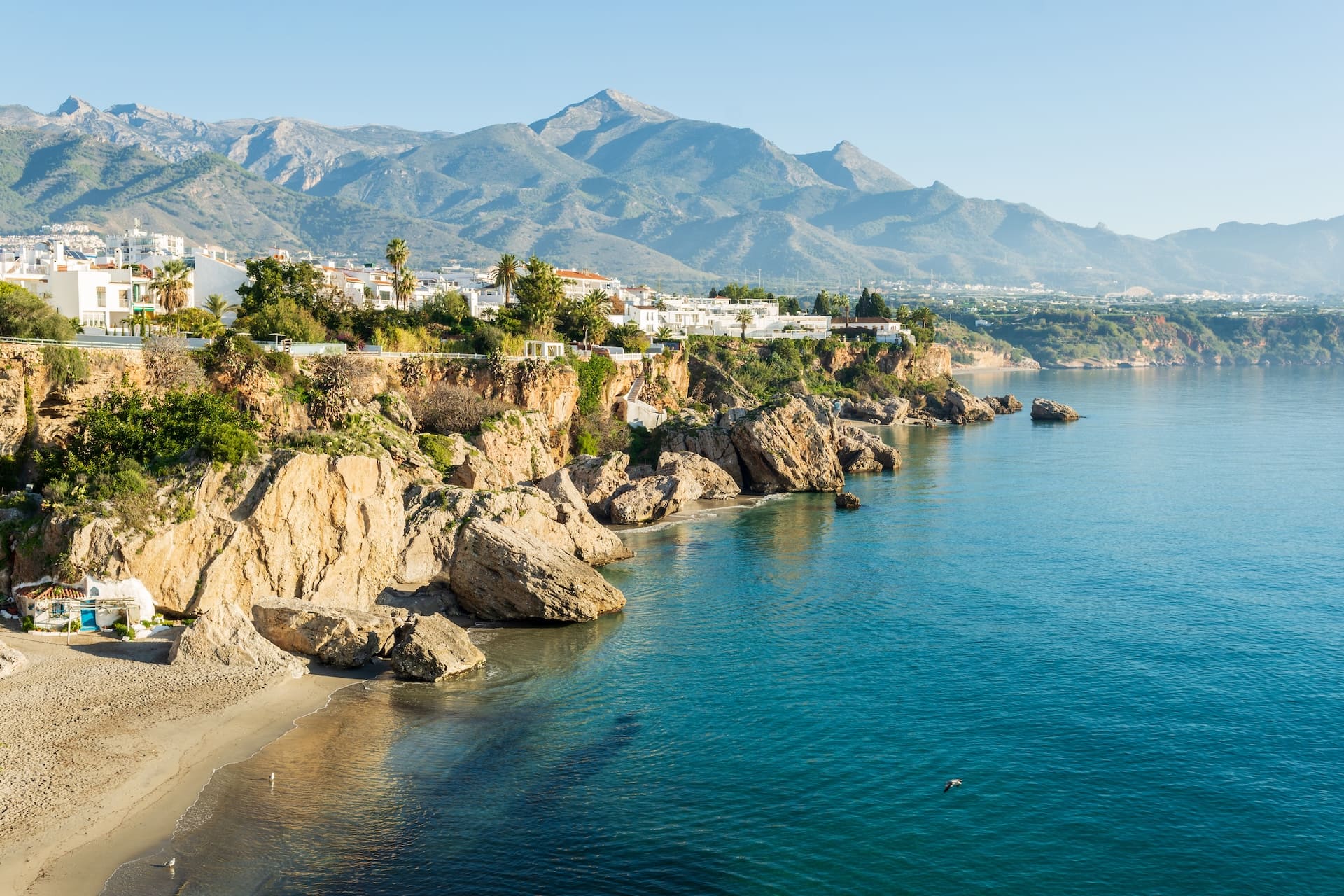
Moving further along the coastline, Los Gigantes, Puerto Santiago and Alcalá present a quieter interpretation of island living. The dramatic volcanic cliffs create one of Tenerife’s most recognisable landscapes, while marinas, waterfront promenades and local restaurants contribute to communities that remain active throughout the year without feeling dominated by tourism.
The northern municipalities reveal a different side of the island altogether. Puerto de la Cruz, La Orotava, Tacoronte and Santa Úrsula are characterised by greener surroundings, mature gardens and architecture that reflects centuries of Canarian history. The landscape feels noticeably lusher, supported by a cooler climate and higher rainfall. Country estates, traditional homes and generous plots become increasingly common, attracting those who appreciate privacy, character and a stronger connection with local culture.
Santa Cruz de Tenerife and the UNESCO-listed city of San Cristóbal de La Laguna complete the picture by offering a more urban lifestyle. Business, education, healthcare and culture shape everyday life here, making both cities particularly attractive if you’re planning to relocate permanently rather than purchasing a seasonal residence.
No location is objectively better than another. The right choice depends entirely on how you intend to use your property. If your priority is year-round sunshine, golf and immediate access to beaches, the south-west naturally deserves close attention. If you’re drawn to historic architecture, greener landscapes and a slower pace of life, the north offers equally compelling advantages. Viewing Tenerife through that perspective transforms the property search from comparing homes into identifying the part of the island that feels most compatible with your lifestyle.
Once you’ve identified the location that best reflects your priorities, the next decision concerns the property itself. Tenerife offers a wide range of residential options, each suited to different lifestyles, levels of occupancy and long-term ownership objectives.
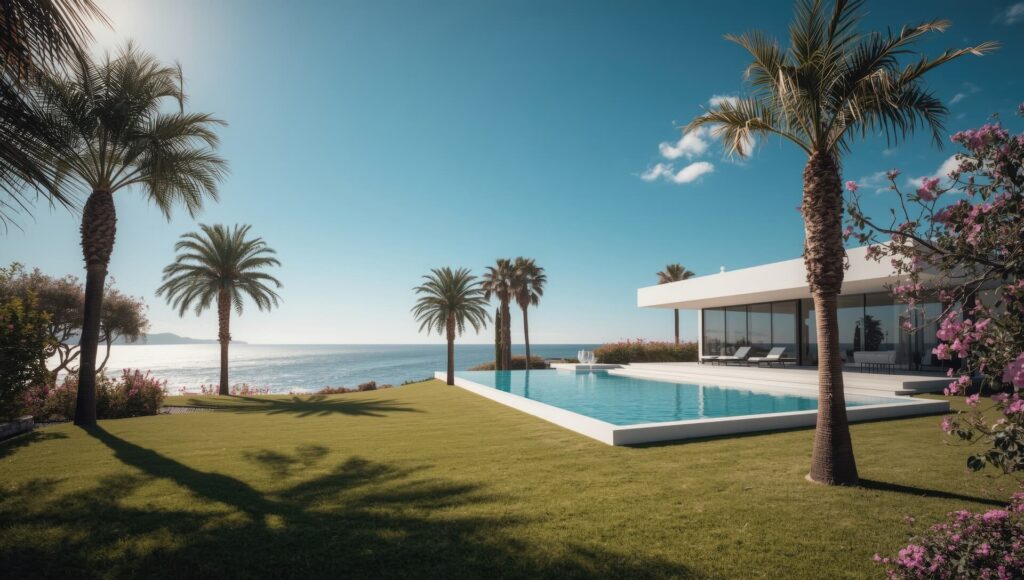
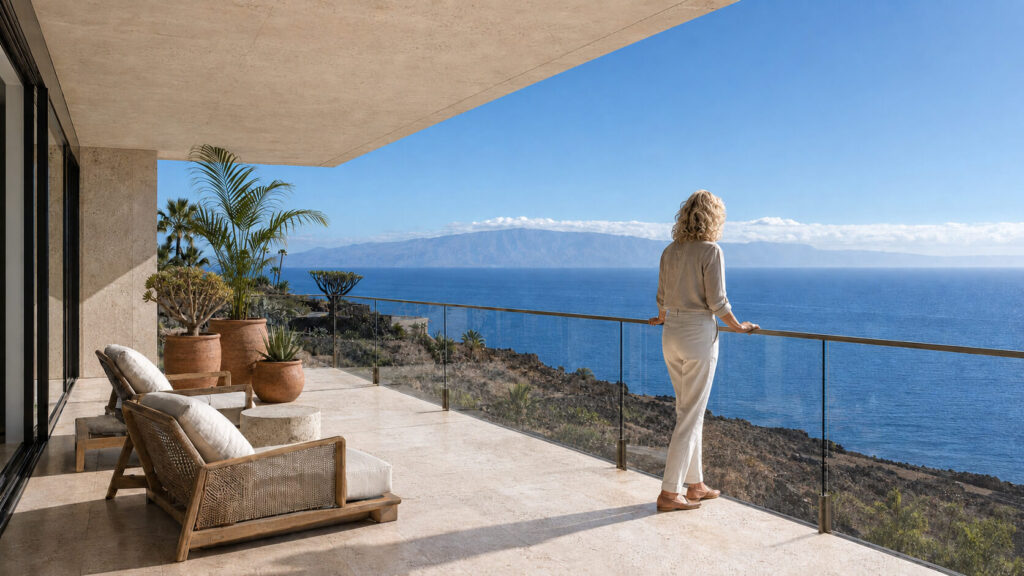
Detached villas remain the benchmark for privacy, space and uninterrupted views. Many occupy elevated plots overlooking the Atlantic, incorporating landscaped gardens, swimming pools, generous terraces and outdoor entertaining areas designed to make the most of Tenerife’s climate. Contemporary architecture has become increasingly prominent in recent years, particularly across Costa Adeje, Abama and Golf Costa Adeje, where clean lines, expansive glazing and open-plan layouts respond naturally to the surrounding landscape.
Apartments and penthouses continue to attract strong interest among homeowners looking for a property that requires less day-to-day management. High-quality developments often include concierge services, communal wellness facilities, landscaped grounds and secure parking, creating an attractive solution if you divide your time between several residences or intend to leave the property unoccupied for extended periods. Many also benefit from lock-up-and-leave convenience, allowing you to travel without the responsibilities associated with maintaining a larger estate.
Traditional Canarian homes occupy another part of the market, particularly throughout the north of the island. Character, craftsmanship and mature gardens define many of these properties, offering an architectural style that differs considerably from the contemporary villas found along the southern coastline. For homeowners seeking authenticity alongside generous land holdings, they represent an appealing alternative.
Your intended use should guide every viewing. A family planning to relocate permanently may place greater importance on proximity to international schools, healthcare and everyday services. A second home designed for seasonal use may prioritise convenience, sea views and simplified maintenance. If rental income also forms part of your plans, location, management services and local regulations deserve careful consideration from the outset.
Rather than searching for the perfect property in isolation, it helps to consider how the home will support your daily routine over the coming years. The answer often becomes much clearer when the property is viewed as part of a wider lifestyle rather than as a standalone purchase.
Tenerife’s property market carries a wide range of values because each municipality contains several distinct micro-locations. Current asking-price indicators place La Caleta near the top of the island at approximately €7,469 per square metre, while Costa Adeje’s broader average sits closer to €5,309. Along the western coast, Los Gigantes has recently indicated around €4,480 per square metre, with Puerto Santiago nearer €3,753. In the north, municipal averages can fall closer to €2,000 per square metre, although landmark estates, historic houses and comprehensively renovated homes often sit well outside those figures.
These numbers provide orientation rather than a complete valuation. A first-line coastal position, protected Atlantic views, walkability, construction quality and the legal status of every addition can move a property far above the surrounding average. Equally, two villas marketed under the same area name may sit at different elevations, face different winds and offer very different access to restaurants, schools or the coast.
La Caleta and El Duque command the clearest prime premium through limited coastal supply and international recognition. Contemporary villas in the hills above Costa Adeje offer a broader price range, particularly across Roque del Conde, Torviscas Alto and El Madroñal, although road gradient, construction nearby and the protection of the view deserve close attention. Abama carries its own pricing logic because the acquisition includes a managed resort environment, while the north offers greater land and architectural character at lower municipal averages, accompanied by higher maintenance demands in many locations.
As you compare properties, the asking price should be read alongside the quality of the plot, the surrounding planning context, annual running costs and the depth of future demand. That broader view helps distinguish an address carrying durable relevance from a home priced around presentation alone.
The purchase price forms only one part of the financial commitment. For a resale property, a prudent allowance of approximately 8% to 10% above the agreed price can cover transfer tax, legal advice, notary, registry, survey and associated transaction costs. For a new-build property, the total allowance commonly falls around 9% to 11%, reflecting IGIC, stamp duty and professional fees. The final amount depends on the transaction, so your Spanish lawyer and tax adviser should confirm the exact position for the property and ownership structure under consideration.
Annual costs then depend heavily on the type of home. An apartment within a managed development may carry substantial community charges, yet those fees can include security, landscaping, shared facilities and building maintenance. A standalone villa gives you greater control, together with direct responsibility for the pool, garden, façade, alarm, insurance, cooling, heating and periodic repairs. Oceanfront properties require particular attention to corrosion, glazing, railings and exterior equipment, while northern homes can demand regular work on drainage, roofs, damp control and exterior surfaces.
Large gardens also require a realistic water and maintenance strategy. Drought-conscious planting, zoned irrigation and efficient pool systems can reduce the operational burden in the south, while dense subtropical planting in the north needs disciplined pruning, drainage and moisture management. Imported furniture, specialist glazing, stone and high-specification equipment may carry longer lead times and additional freight costs, which should be considered when purchasing a home that requires refurbishment.
If Tenerife will become your principal residence, the household budget may also include private education, healthcare, domestic staff, property management, frequent flights and tax obligations connected with worldwide income and assets. The island can offer excellent value relative to several established European resort markets, although the cost of a high-service lifestyle still depends on the standards you expect to maintain.
Tenerife’s tourism economy creates strong demand for accommodation, yet rental potential has to be examined at the level of the individual property. Canary Islands Law 6/2025 changed the holiday-rental framework by placing greater emphasis on municipal planning, residential zoning and community restrictions. An existing rental history, online listing or seller projection therefore provides context, while legal eligibility requires separate verification.
Your lawyer should confirm whether tourist use is permitted under the relevant municipal plan, whether the community statutes allow it and whether any current authorisation remains valid following a sale. Resort properties may also be governed by operator agreements, furniture standards, compulsory services or limits on personal use, all of which influence the flexibility of ownership.
Once eligibility has been established, the financial model should move from gross revenue to net income. Management, cleaning, utilities, community fees, insurance, taxes, maintenance, owner use and replacement reserves can materially reduce the headline yield. A villa capable of commanding a high nightly rate may also require more staff, garden care, pool maintenance and periods of vacancy than a managed apartment.
The most useful question is whether the rental arrangement supports the way you intend to use the home. If personal use remains the priority, income may simply recover part of the annual cost. If the property forms part of a wider portfolio strategy, legal certainty, management quality and resale demand deserve equal weight alongside occupancy projections.
A well-structured acquisition begins with independent legal and technical advice. Your lawyer should verify ownership, mortgages, liens, easements, cadastral consistency, planning permissions, community debts, local taxes and the legal status of pools, terraces, guest accommodation or extensions. Coastal homes may also be affected by Spain’s Coastal Law and public maritime-terrestrial easements, while rural estates require additional attention to boundaries, access, water rights and the permitted use of auxiliary buildings.
The reservation document deserves the same care as the final contract. It should set out due-diligence conditions, refund rights, completion timing, included contents and any statements concerning rental use. Independent advice should be in place while your negotiating position remains protected and each representation can still be tested.
A technical survey then examines the areas that photography leaves unseen. On elevated plots, retaining walls, drainage and slope stability can carry significant future cost. Along the coast, marine corrosion may affect railings, windows and mechanical equipment. In the north, moisture, ventilation, roofs and exterior timber require close inspection, while a rural property may need a fuller assessment of fire exposure, wastewater systems, power resilience and emergency access.
The island’s microclimates add another layer to every viewing. You should understand the elevation, orientation, typical afternoon wind, cloud patterns, pool temperature, salt exposure and water requirements of the garden. It is equally useful to drive the approach at night, test the journey during peak traffic and confirm whether the open view is protected by planning or simply unobstructed at present.
These checks do not make the search less enjoyable. They allow the architectural and lifestyle appeal of the property to rest on a sounder ownership foundation.
A property that suits a three-week winter stay may serve a school term or permanent relocation very differently. Once Tenerife becomes part of your everyday life, school routes, hospital access, traffic, deliveries, fibre connectivity and the availability of trusted household services begin to shape the location decision.
International and multilingual schools are spread across the island. Costa Adeje and the south connect well with options such as Wingate School and Colegio Internacional Costa Adeje, while the north and Orotava Valley offer access to the British School of Tenerife, Deutsche Schule and Casa Azul. Santa Cruz, La Laguna and the north-east provide further multilingual and academic options. Curriculum, waiting lists, school transport and peak-hour travel times should all be confirmed alongside the property search.
Healthcare follows a similar geographical pattern. The south offers established private hospitals and emergency care, including Quirónsalud Costa Adeje and Hospiten Sur, while some specialist treatment requires travel toward Santa Cruz or La Laguna. If regular care forms part of your household’s requirements, the journey should be tested in real conditions rather than estimated from a map.
Connectivity also differs by location. Tenerife South Airport serves most international routes, making Costa Adeje, La Caleta and the southern golf areas particularly convenient for frequent European travel. Western addresses such as Abama, Alcalá and Los Gigantes offer greater distance from the busiest resort corridor, accompanied by longer journeys to the airport and specialist hospitals. In the north, Tenerife North Airport supports mainland and inter-island connections, while congestion on the TF-5 can materially affect daily schedules.
Within the home itself, installed fibre should be confirmed at the exact address, along with mobile backup, cooling, acoustics and power resilience. If you intend to work remotely, run a business from Tenerife or host visiting staff, those practical details deserve the same attention as the terrace and principal suite.
Tenerife’s property market asks you to interpret several variables at once. A short distance can change elevation, wind, humidity, access and the quality of everyday services, while the same location name may be used across properties that belong to very different residential settings. A Personal Property Advisor in Tenerife can translate those differences into a shortlist built around your intended use, preferred climate, annual cost tolerance and long-term plans.
Anna Vrijenhoek advises international clients across Tenerife South, Costa Adeje, Guía de Isora and Arona, drawing on an international banking background and practical knowledge of the island’s prime residential markets. Her role begins with understanding how you intend to live, then testing each location against the realities that determine whether a property continues to suit that life.
That process can include comparing public listings with private opportunities, identifying duplicated or stale properties, reviewing wind and elevation, examining access and future planning, and coordinating independent legal, tax, technical and architectural advice. Where a property forms part of a rental or managed-residence strategy, the review can also extend to community costs, operator agreements, legal eligibility and realistic net returns.
The value lies in maintaining one buyer-side view throughout the acquisition. A striking view can dominate a first visit, while access, humidity, community rules or an exposed terrace may carry greater consequence over time. Local advice keeps those considerations in proportion and gives each property a fair reading within its own micro-location.
From there, the search becomes more precise. La Caleta may suit your preference for coastal walkability and established dining, while Abama may offer the service model required for a residence used intermittently. A family relocating for several years may find El Madroñal, Santa Cruz or the northern municipalities more practical once schools and healthcare enter the equation. The right answer emerges from how the island aligns with your life, rather than from a single hierarchy of addresses.
By this stage, you’ll have a clearer understanding of which part of Tenerife feels right for the way you intend to live. The final decision is bringing the property itself into that picture. While architecture, views and finishes naturally shape the first impression, long-term satisfaction usually depends on factors that reveal themselves through careful consideration rather than a single viewing.
A contemporary villa overlooking Costa Adeje may offer outstanding privacy, generous outdoor living and effortless access to golf, beaches and international dining. Meanwhile, a traditional home in La Orotava provides a completely different ownership experience, centred on larger grounds, mature gardens and a stronger connection to the island’s architectural heritage. Neither approach is inherently better. The right choice depends on how comfortably the property supports your lifestyle throughout the year.
If you’re purchasing a holiday home, straightforward maintenance, secure management and convenient travel connections may take priority over interior size alone. A permanent move introduces different considerations, including access to schools, healthcare, professional services and the routines that shape everyday life. If the property will also generate rental income, legal eligibility, management quality and realistic operating costs become equally important parts of the decision.
Looking beyond the property itself is equally valuable. Orientation influences sunlight throughout the day, prevailing winds affect outdoor living, and elevation can noticeably change both temperature and humidity. Road access, future planning, neighbouring construction, community regulations and the long-term protection of the view all deserve the same attention as architecture and finishes.
Seen together, these factors create a much clearer picture of ownership. They allow you to judge a property by how well it will perform over the coming years rather than how strongly it impresses during a single visit. That perspective ultimately leads to more confident decisions and a home that continues to suit your life long after the purchase is complete.
Buying property in Tenerife is ultimately an exercise in matching the right home with the right location and the right purpose. The island offers an exceptional variety of residential environments, each shaped by its own landscape, climate and pace of life. Understanding those differences before narrowing your search creates a stronger foundation for every decision that follows.
The property itself will always remain central to the process, yet long-term satisfaction depends just as much on the surroundings that support it. Accessibility, local amenities, maintenance requirements, planning considerations and the character of each neighbourhood all contribute to the ownership experience in ways that only become fully apparent over time.
Taking a considered approach allows you to compare opportunities with greater confidence, ask better questions during viewings and focus your attention on properties that genuinely align with your priorities. Whether you’re searching for a contemporary villa overlooking the Atlantic, a lock-up-and-leave apartment close to the coast or a permanent residence immersed in Tenerife’s greener northern landscape, understanding the island first makes choosing the right property considerably easier.
Explore our collection of luxury property for sale in Tenerife, or speak with a Personal Property Advisor for tailored guidance based on your preferred lifestyle, location and long-term objectives.
Buying property in Tenerife can be a strong long-term investment, particularly in established locations such as Costa Adeje, La Caleta and Abama, where international demand and limited prime supply continue to support the market. Long-term performance ultimately depends on the property’s location, construction quality, legal status, ownership costs and future resale appeal rather than the island’s popularity alone.
The most common pitfalls include purchasing without verifying planning permissions, assuming holiday rentals are automatically permitted, overlooking community regulations and underestimating ongoing ownership costs. Microclimates, wind exposure, accessibility and future development can also affect long-term enjoyment and resale value, making independent legal and technical due diligence essential before committing to a purchase.
Yes. Foreign nationals can buy property in Tenerife regardless of whether they are Spanish residents. The purchase normally requires a Spanish NIE number, an independent lawyer and the usual legal and financial checks. Property ownership does not automatically grant residency in Spain, so immigration and tax obligations should be considered separately if you intend to live on the island for extended periods.
Tenerife forms part of Spain and the Schengen Area, so many non-EU nationals may stay for up to 90 days within any rolling 180-day period without a visa. Buying a property does not change this limit, and anyone planning longer stays should seek advice on the most appropriate Spanish residency option for their circumstances.
Alongside the purchase price, you should budget for taxes, legal fees, notary costs, Land Registry fees and other acquisition expenses. Resale properties generally require around 8%–10% in additional costs, while new-build purchases are typically closer to 9%–11%. Annual ownership may also include local property tax, community fees, insurance and property maintenance

























 Dutch
Dutch  German
  Spanish
  French
  Arabic
  Chinese
  Russian
  Swedish
  Portuguese
  Polish
  Greek
Greek  Italian