
Certain European addresses carry meaning far beyond geography. They compress capital, access, taste, discretion, history and convenience into a few letters or numbers. They are small enough to be walked, named with confidence by brokers, understood by private banks, and recognized by people who may have studied the market from a distance.
That is the difference between an expensive location and an envied postcode.
This ranking works as an editorial index. It considers current prime pricing power, trophy-price ceilings, scarcity of supply, international recognizability, luxury infrastructure, year-round liveability and recent resilience. Each postcode acts as a proxy for a precise micro-location: W1K for the Grosvenor Square and Mount Street pocket of Mayfair; 75008 for Avenue Montaigne, George V and François 1er; 20121 for the Quadrilatero della Moda around Via Monte Napoleone and Via della Spiga. The point is how wealth speaks about place.
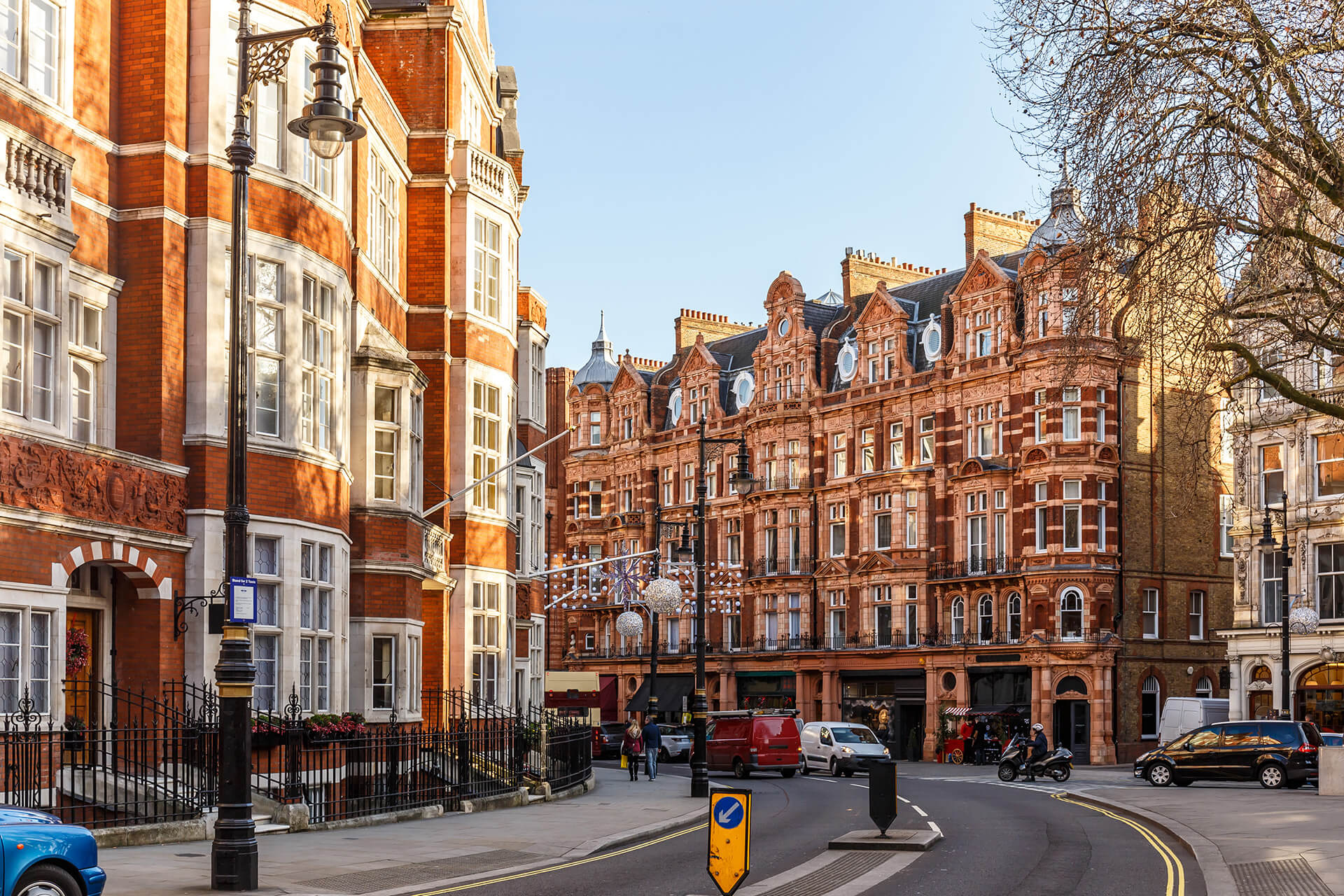
W1K leads because it carries the most complete social charge in Europe. It has old-establishment memory, retail supremacy, private-club density, embassy gravity, serious restaurants, hotel infrastructure and a supply picture that stays tight through cycles.
Mayfair is one of the few residential markets where the street outside the front door can be as valuable to the narrative as the residence itself. Grosvenor Square, Upper Brook Street, Park Street, Mount Street and Bond Street create a network of recognition that travels instantly. A buyer can let the postcode speak.
The research case is equally strong. Prime Mayfair homes above £5 million have recently traded around £4,000 to £5,000 per square foot, while luxury new-home supply has fallen to a 10-year low. New Bond Street’s position as the world’s most expensive retail destination adds another layer. In W1K, residential prestige and luxury infrastructure operate as one system.
Its long-term relevance is simple: Mayfair remains one of the few European districts where inherited status and contemporary capital still agree.
Paris has many prestigious addresses, and 75008 is the cleanest shorthand for international recognition. The Golden Triangle bounded by Avenue Montaigne, Avenue George V and the Champs-Élysées is couture Paris, embassy Paris, grand-hotel Paris and serious apartment Paris compressed into one district.
The postcode’s power comes from legibility. Avenue Montaigne alone carries enough cultural weight to anchor the case. Dior’s 30 Avenue Montaigne has turned a flagship address into a hybrid of couture house, museum, retail salon, hospitality venue and institutional memory. Today’s most envied postcodes require an ecosystem as much as a price point.
Prime Paris values remain high, with the Golden Triangle sitting above broader city averages and trophy product capable of moving far beyond standard benchmarks. The district’s strength lies in the relationship between scarcity and symbolism. Apartments here sit inside a cultural export that France has refined for more than a century.
For global buyers, 75008 remains Paris at full resolution.
Milan’s 20121 is one of the sharpest postcode stories in Europe. The Quadrilatero della Moda has become a concentrated expression of retail, design, finance, hospitality and residential scarcity.
The case begins with density. Via Monte Napoleone, Via della Spiga, Via Sant’Andrea and San Babila form a compact field of luxury so intense that the residential market around it takes on a different meaning. To live here is to occupy the control room of Milanese taste.
Current pricing evidence supports the shift. Milan holds Italy’s highest prime residential values per square metre, while Quadrilatero pricing sits well above the city average and exceptional stock can climb substantially higher. Via Monte Napoleone’s position near the top of global luxury retail rents reinforces the postcode’s status.
Milan also has momentum. Tax advantages, cultural investment, upgraded hospitality and a sharpened international buyer profile have pushed it into a higher category. London reads as establishment power. Paris reads as couture heritage. 20121 reads as current capital with taste discipline.
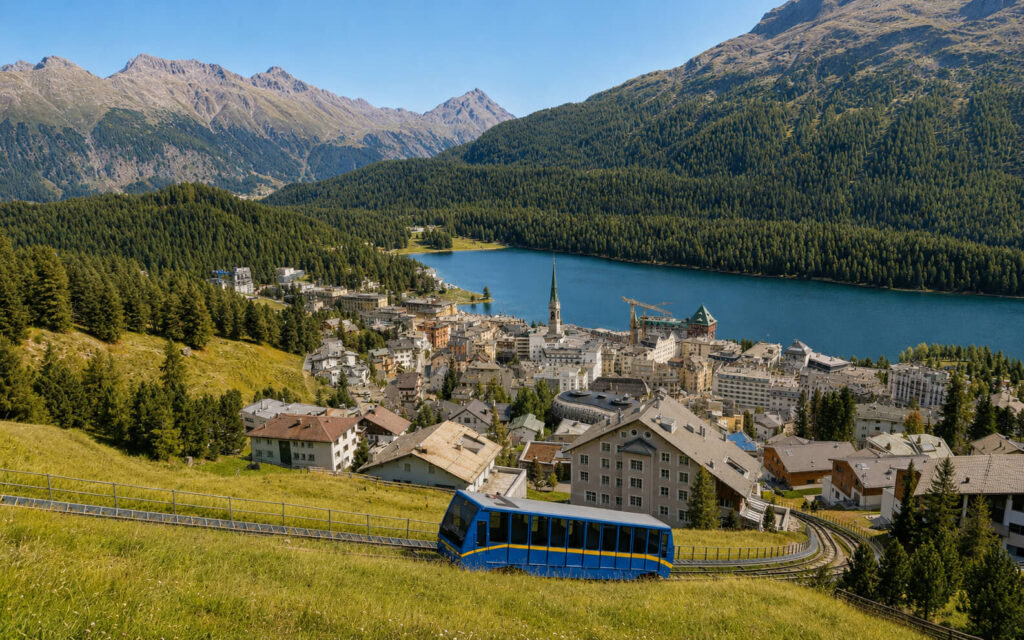
St. Moritz is one of Europe’s most successful status inventions. The postcode 7500, particularly the Dorf and Via Serlas pocket, has the unusual ability to feel remote and intensely connected to global wealth at the same time.
Its pricing sits at the top end of the alpine hierarchy. Upscale holiday homes in the Engadin and St. Moritz area command rarefied values, with luxury stock reaching levels that compete with major-city prime markets. Alpine atmosphere gives the place emotional pull; pricing power gives it market authority.
The postcode’s deeper strength is infrastructure. Via Serlas gives a small mountain town a retail spine that would be credible in a capital city. The hotels, restaurants, clubs, winter events and private networks complete the picture. St. Moritz is seasonal, and its season has institutional force.
Its ownership meaning is tied to ritual. Families return. Networks repeat. Wealth recognizes itself quietly.
Saint-Jean-Cap-Ferrat is the Riviera’s most persuasive privacy postcode. The peninsula signals a different kind of possession: land, sea edge, gates, gardens, silence and proximity to Monaco with daily life held at a measured distance from the theatre.
The pricing logic is severe. Average values are already high, and the true case lies in waterfront scarcity. Exceptional homes can move far beyond standard Côte d’Azur benchmarks because comparable land is so finite. Geography does much of the discipline here. A small peninsula can absorb demand through price, patience and selectivity.
The cultural case is equally durable. Cap-Ferrat has Belle Époque memory, villa mythology and the kind of discretion that becomes more valuable as wealth becomes more visible elsewhere. It appeals to buyers who want the Riviera in its most composed form.
In thirty years, 06230 will matter for the same reason it matters now: the peninsula is singular.
Gstaad’s envy factor is quieter than St. Moritz, and equally serious. Its power sits in restraint. The village core and promenade deliver one of Europe’s most controlled alpine wealth environments: polished, small-scale, socially selective and resistant to broad expansion.
Upscale holiday-home values place Gstaad at the top of the alpine market. Supply is structurally limited, and the built identity of the village reinforces scarcity. There are few places where chalet architecture, private-school adjacency, winter society and generational wealth remain so tightly aligned.
Gstaad’s status comes from refusal of excess scale, visual volume and broad-access resort atmosphere. That restraint is commercially meaningful. It protects the market from overexposure.
Its place in the ranking is secured by scarcity and social coding. Its year-round rhythm is narrower than London, Paris, Milan or Zürich, though its alpine authority remains formidable.
Porto Cervo is the yacht-club chapter of European postcode envy. The 07021 micro-market concentrates its influence in season, and that seasonal influence carries remarkable clarity.
The property case has strengthened. New and renovated homes in Porto Cervo sit at levels that place the market firmly in prime European resort territory, with top stock pushing considerably higher. The marina, heliport access, private aviation infrastructure and hotel ecosystem support the residential narrative.
Porto Cervo’s meaning is inseparable from Costa Smeralda’s invention as a landscape of curated summer wealth. It is a purpose-built social machine, refined over decades, and still understood by the people who use the Mediterranean as a seasonal circuit.
Its energy narrows outside peak season. During the season, few European postcodes are more socially readable.
Madrid’s 28001 is the sharpest riser in the ranking. Recoletos and the Serrano corridor have moved from elegant local prestige into a broader European wealth conversation. The shift is supported by pricing, retail demand, international relocation and the city’s improved cultural confidence.
Prime values in 28001 have climbed strongly, with luxury Madrid posting some of Europe’s most notable recent growth. Ultra-high-end ceilings are now far above what many international buyers would have associated with the city a decade ago. Salamanca’s retail corridor has also become more competitive, with low vacancy and a new wave of serious luxury openings.
The appeal is timing. Mayfair, the Golden Triangle and St. Moritz sit in the established category. Madrid carries the feeling of ascent. That makes it particularly interesting for buyers who want status with forward motion.
28001 now belongs in any serious discussion of European postcode envy because it reflects a market changing rank in real time.
Zürich 8001 speaks through precision, capital protection, safety, order and access to one of Europe’s most powerful financial ecosystems.
The Bahnhofstrasse and Paradeplatz core gives the postcode its signal value. Retail rents remain among Europe’s highest, vacancy is exceptionally tight, and the street continues to attract flagship luxury investment. Residential values in 8001 are elevated, supported by scarcity, wealth concentration and the city’s reputation for stability.
Zürich’s envy is different from London’s or Paris’s. It is built around command. The address suggests liquidity, discipline and a life run with minimal friction. For certain buyers, especially those managing capital across jurisdictions, that may be the most attractive luxury of all.
8001 is polished financial supremacy in postcode form.
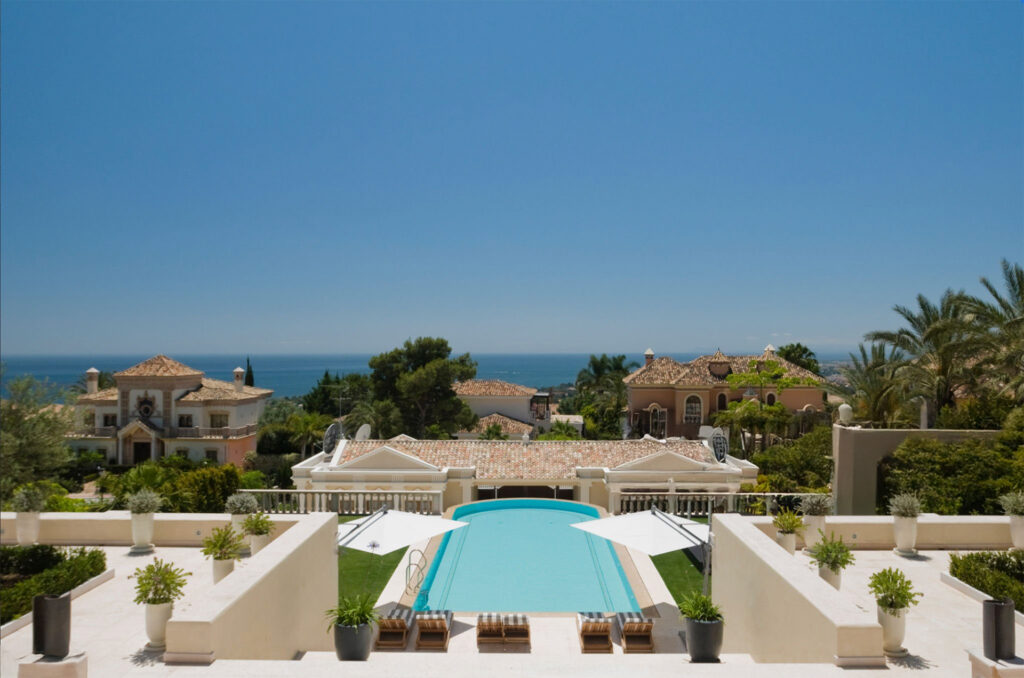
Marbella’s 29602 earns its place because it has become one of southern Europe’s clearest lifestyle-status postcodes with a serious property market beneath it. The Golden Mile, Puente Romano and Sierra Blanca combine resort infrastructure, beach proximity, gated hillside privacy and a large international buyer base.
The numbers justify inclusion. Marbella’s Golden Mile commands strong average sale values, and select villa markets such as Sierra Blanca sit at high per-square-metre levels. Trophy cases in Puente Romano and Sierra Blanca have pushed far above the wider market, showing that Marbella’s top end is a genuine prime market.
The postcode’s social power is visual and immediate. Puente Romano alone supplies the hospitality, dining and resort theatre that make the area recognizable beyond Spain. Sierra Blanca adds the privacy and scale that UHNW buyers require when resort life becomes too public.
Marbella has a different advantage from Cap-Ferrat or Mayfair: it converts Mediterranean ease into a postcode that global buyers understand quickly.
The strongest European postcodes are defined by compression of meaning. Price gives the entry condition. Scarcity, recognition, infrastructure and social transmission create the rank.
W1K speaks of establishment power, while 75008 carries couture authority at full institutional scale. From there, 20121 reflects Milan’s sharpened luxury economy, with 7500 and 3780 expressing two different forms of alpine wealth: St. Moritz as social mythology, Gstaad as controlled discretion. Along the coast, 06230 preserves Riviera privacy at its most finite, while 07021 belongs to the yacht-season imagination. Further south, 28001 captures Madrid’s rise, 8001 signals financial order, and 29602 turns Mediterranean lifestyle into a serious private-wealth address.
Postcode envy begins when a location becomes legible to other people. The address stops functioning as a coordinate and starts operating as symbolic capital.
The most expensive postcodes in Europe include W1K in Mayfair, 75008 in Paris’s Golden Triangle, 20121 in Milan’s Quadrilatero della Moda, 7500 in St. Moritz and 06230 in Saint-Jean-Cap-Ferrat. These micro-markets combine high prime values, scarce supply, trophy-price ceilings and international recognition.
Europe’s top prime residential markets include London’s Mayfair, Paris’s Golden Triangle, Milan’s Quadrilatero, St. Moritz, Saint-Jean-Cap-Ferrat, Gstaad, Porto Cervo, Madrid’s Recoletos, central Zürich and Marbella’s Golden Mile. Each market attracts global wealth through a different mix of scarcity, access, lifestyle infrastructure and long-term status value.
UHNW buyers continue to focus on established and rising European micro-markets with strong privacy, mobility, hospitality and wealth-service infrastructure. Key locations include Mayfair, Paris 75008, Milan 20121, St. Moritz, Gstaad, Saint-Jean-Cap-Ferrat, Porto Cervo, Madrid 28001, Zürich 8001 and Marbella 29602. Recent reporting also points to continued wealthy-buyer demand for Spain, especially Madrid and the Costa del Sol, as a stability and diversification play.
A luxury postcode becomes valuable when price, scarcity, architecture, address recognition, lifestyle infrastructure and buyer demand reinforce one another. In prime markets, the strongest postcodes act as shorthand for access: the right street, the right neighbours, the right hotel, the right club, the right retail corridor and the right long-term ownership story.
The most exclusive neighbourhoods in Europe for luxury property include Mayfair, Paris’s Golden Triangle, Milan’s Quadrilatero della Moda, St. Moritz Dorf, Saint-Jean-Cap-Ferrat, Gstaad village, Porto Cervo, Madrid’s Recoletos, Zürich 8001 and Marbella’s Golden Mile. Their strength comes from micro-location scarcity rather than broad city prestige.
























 Dutch
Dutch  German
  Spanish
  French
  Arabic
  Chinese
  Russian
  Swedish
  Portuguese
  Polish
  Greek
Greek  Italian