










Branded Residences and the Repricing of Global Luxury Property
Branded Residences Now Anchor Pricing Across Prime Global Markets
Branded Residences now sit at the centre of global prime property strategy. Capital has already adjusted to this position, even as parts of the market continue to treat the category as emerging.
Supply has expanded across nearly every major luxury corridor, yet demand continues to absorb it at a premium. This reflects a structural repositioning rather than cyclical movement. Buyers no longer evaluate whether to enter the branded segment. They assess where within it to allocate capital.
Timing carries consequence. Early entrants secured brand-aligned assets before pricing benchmarks recalibrated. Current acquisitions operate within a narrower band, where differentiation depends on brand strength, location precision, and long-term operational integrity.
Price Premiums in Branded Residences Reflect Reduced Risk, Not Added Features
Pricing strength in branded developments holds because it addresses a core concern among globally mobile buyers: control over outcome.
Control begins at delivery. A recognised brand imposes discipline across architecture, interiors, and construction. This reduces execution risk, particularly in markets where development quality varies.
It extends into ownership. Residences operate within a managed framework where maintenance, staffing, and service delivery follow defined standards. The asset performs consistently, whether occupied or held within a broader portfolio.
It carries through to exit. Brand recognition compresses decision-making at resale. Buyers understand the product before viewing it, supporting liquidity across international markets.
The premium reflects fewer variables rather than additional features. That distinction underpins long-term pricing resilience.
Limited Supply in European Cities Is Driving Disproportionate Value in Branded Stock
European markets are entering the branded residential category under constraint, and that constraint is creating value.
Paris marks a defining moment. A fully realised branded residential scheme now operates within the historic fabric of the city. This establishes precedent in a market shaped by architectural control and limited development opportunity.
Supply remains restricted. Development in central Paris, London, and comparable cities requires building repurposing, regulatory navigation, and extended timelines. Each completed scheme carries disproportionate influence on pricing and perception.
For buyers, this introduces a distinct positioning opportunity. Entry into early European branded stock offers exposure to a segment where supply cannot expand at pace, yet global demand continues to deepen.
Southern Europe presents a different structure. Portugal, Spain, and Mediterranean markets allow for larger-scale branded communities. Here, value is defined through land, infrastructure, and integrated lifestyle positioning.
Allocation across both environments reflects a more complete approach to capital deployment.
Dubai and Abu Dhabi Are Setting the Global Benchmark for Branded Residential Pricing
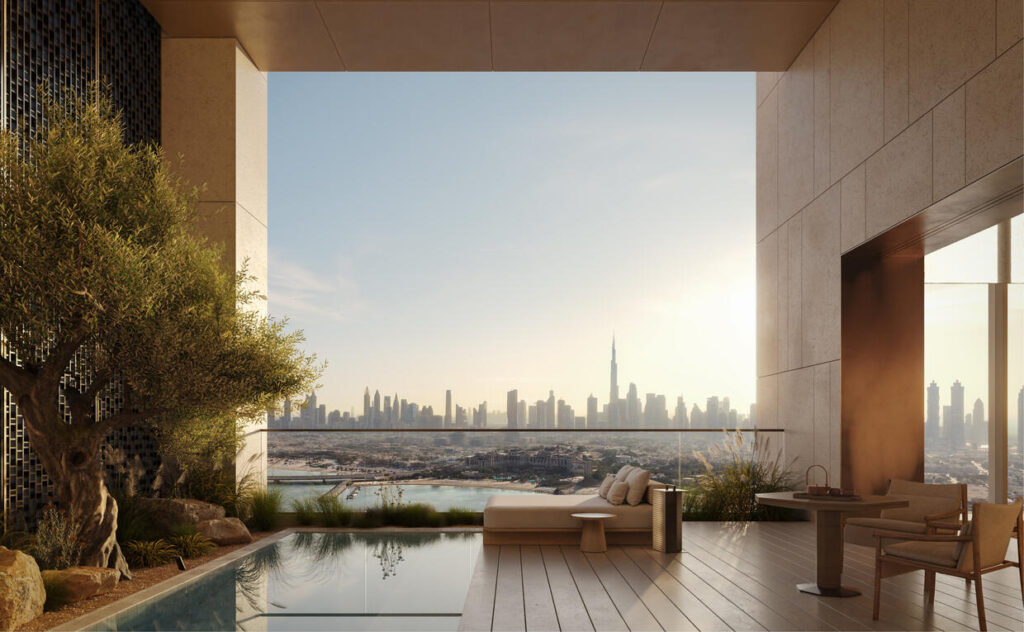
Dubai and Abu Dhabi operate at a level of delivery that now influences global expectations.
Developers are delivering entire districts anchored in branded identity, integrating hospitality, residential, and cultural components at scale. This establishes a benchmark against which other markets are measured.
Pricing reflects this position. Ultra-prime branded assets in the Gulf establish thresholds that inform valuation in Europe, Asia, and North America.
Demand patterns reinforce the model. International buyers continue to allocate capital into the region, treating it as both a residential base and a strategic holding location.
For investors, the Gulf represents exposure to innovation within the category. Selection at the asset level carries increasing importance as pipeline volume expands.
Fashion and Automotive Brands Are Segmenting the Branded Residences Market
The entry of fashion houses and automotive marques has introduced new segmentation within branded residential development.
These brands bring defined aesthetics, established client bases, and cultural positioning. Their involvement transforms residences into expressions of identity rather than purely real estate assets.
This creates divergence within the market. Hospitality-led developments prioritise service and operational performance. Design-led brands focus on visual coherence and lifestyle alignment.
Buyers now select across these distinctions. The decision extends beyond geography into alignment with a specific brand philosophy.
This has implications for long-term value. Assets tied to enduring brands with global recognition maintain relevance across cycles. Developments built around weaker or misaligned branding introduce greater volatility.
Standalone Branded Residences Are Unlocking New Urban and Heritage Markets
An increasing share of branded developments now operate independently of attached hotels.
This expands the category into locations where hospitality development faces constraint. It also creates a more private ownership structure, where services are tailored to residents rather than shared with transient guests.
For buyers, this introduces flexibility. Ownership retains brand-backed standards while offering a more controlled residential environment.
For developers, it unlocks new formats. Projects can be positioned within urban centres, heritage buildings, and lower-density locations without the operational requirements of a hotel component.
This structure will define the next phase of branded residential expansion.
Wellness and Environmental Design Now Influence Valuation in Branded Developments
Buyer expectations now extend into environment, health, and long-term usability.
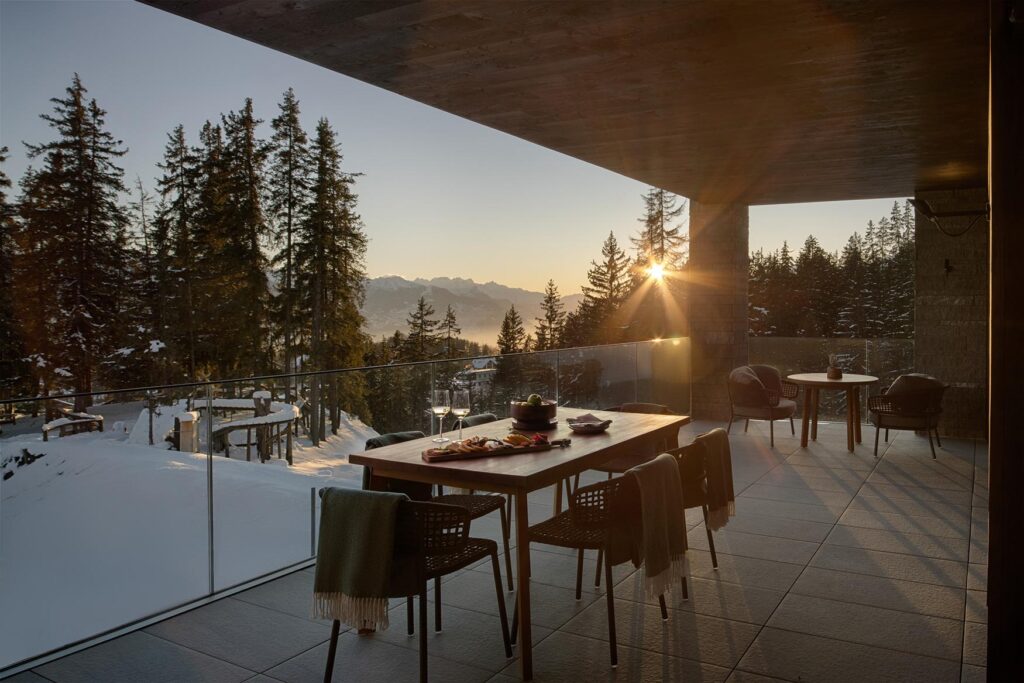
Developments integrating wellness infrastructure, environmental design, and sustainable systems achieve stronger positioning within the market. These elements influence both experience and asset longevity.
This is evident in newer projects across the Gulf and Southern Europe, where landscape design, air quality systems, and energy efficiency form part of the core offering.
For investors, this introduces another layer of evaluation. Assets aligned with these priorities maintain competitiveness as buyer expectations continue to advance.
Branded Residences Now Function as Core Holdings Within Global Property Portfolios
Branded Residences have moved into a central role within global property portfolios.
They provide geographic diversification with a consistent operational framework. A residence in London, Dubai, or Lisbon delivers a comparable ownership experience anchored by brand standards.
They also provide optionality. Owners can occupy, lease, or hold depending on broader portfolio objectives.
Liquidity remains a defining advantage. Brand recognition reduces friction in cross-border transactions, supporting resale across international buyer pools.
For family offices and private investors, these characteristics align with capital allocation strategies focused on usability and preservation.
Entry Timing Is Tightening as Pricing and Buyer Awareness Advance
The market has moved beyond early positioning. The current phase rewards precision.
Pricing has adjusted upward. Brand participation has expanded. Buyer awareness has deepened.
This changes how opportunities are identified. Advantage now lies in access to specific projects, early positioning within launches, and alignment with brands that hold long-term relevance.
European markets continue to establish their branded baseline. The Gulf defines the upper range of pricing and delivery. Secondary markets are preparing to enter the category.
Relative advantage compresses as these conditions mature.
Access to Prime Branded Residences Is Increasingly Determined Before Public Release
Access within this segment is structured through private channels, with allocation often determined prior to public release.
Developers prioritise aligned buyers early in the sales cycle. This ensures pricing integrity and controlled absorption.
Detailed briefs, pricing structures, and developer alignment are shared on request, calibrated to acquisition strategy and geographic focus.
FAQs on Branded Residences
What are Branded Residences and how do they function within luxury real estate?
Branded Residences combine private ownership with a recognised brand that governs design, service delivery, and long-term management. This creates a structured ownership model supported by established operational systems.
How do Branded Residences differ from traditional luxury apartments?
The difference lies in operational framework and brand alignment. Traditional luxury property relies on location and design, while branded developments integrate service infrastructure, management, and global recognition into the asset.
Why do Branded Residences command higher prices?
Pricing reflects reduced execution risk, consistent service delivery, and stronger resale positioning. Buyers place value on predictability across ownership and exit scenarios.
Are Branded Residences a strong long-term investment?
They align with strategies focused on capital preservation, usability, and global liquidity. Performance depends on brand strength, location, and sustained operational standards.
How do investors approach purchasing within this segment?
Investors assess brand positioning, market trajectory, and asset-level differentiation. Decisions are informed by portfolio allocation, geographic exposure, and long-term relevance.