







Empordà and Costa Brava: A Mediterranean Landscape of Heritage and Depth
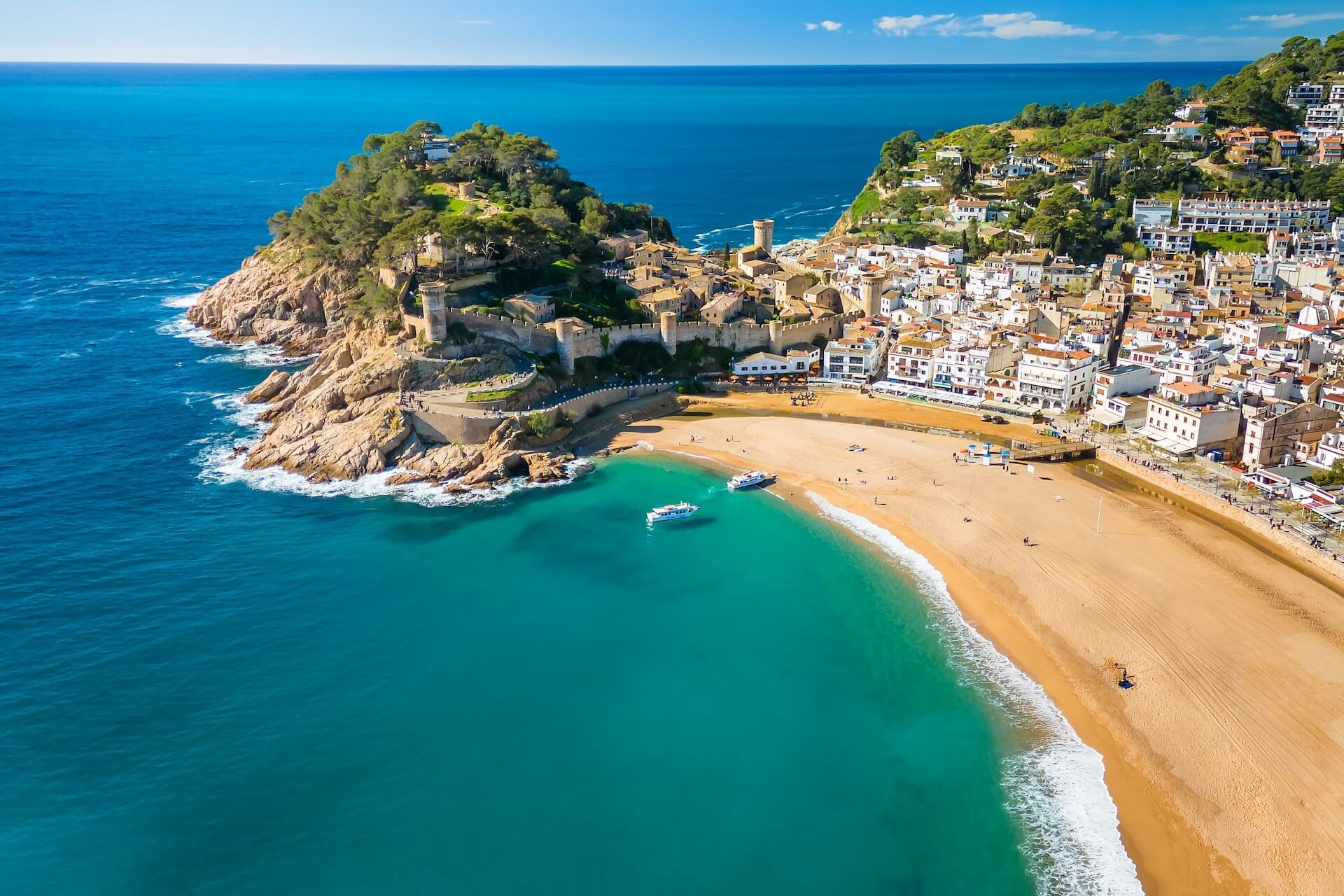
The enduring appeal of this corner of Catalonia begins with structure. Not structure in the narrow architectural sense, although that is part of it, but in the broader composition of the region itself: coastline and farmland, medieval villages and working ports, vineyards and wetlands, old stone houses and carefully placed contemporary homes. Empordà and Costa Brava hold together because each part strengthens the next. The sea never feels detached from the land behind it, and the land never feels incidental to the life lived along the coast.
That coherence is increasingly rare. Many Mediterranean destinations offer beauty, climate and access, yet fewer retain the underlying integrity that makes them feel complete. Here, the coastline remains visually disciplined, the villages retain cultural weight, and the best properties still draw their authority from place rather than display. This is what gives the region its staying power. It is not simply attractive. It is composed.
An Unspoiled Coast, Held in Place by Time
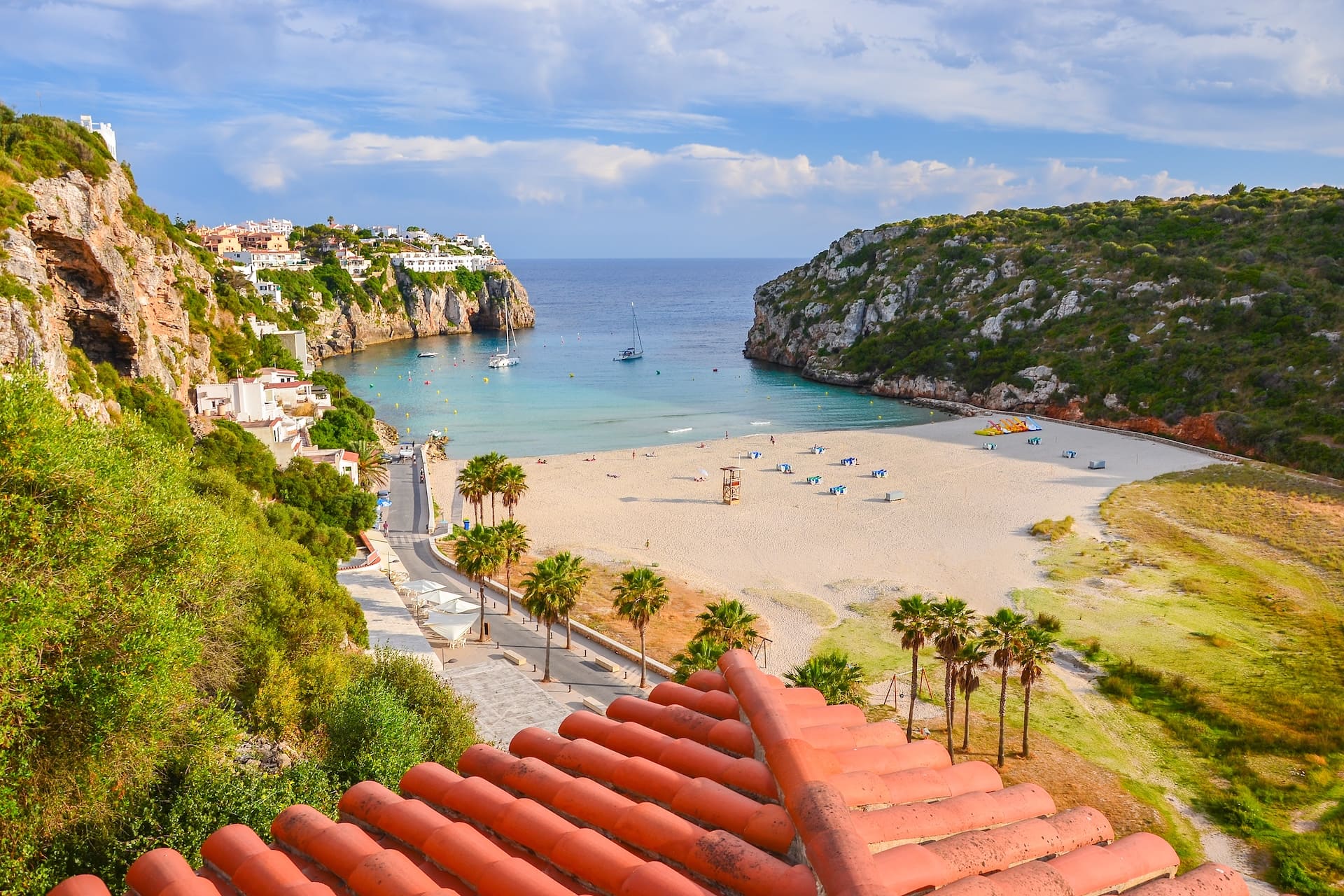
The Costa Brava extends along Catalonia’s north-eastern shoreline in a sequence of cliffs, coves, beaches, fishing towns and headlands that has long resisted simplification. It is often described through its views, yet what makes it persuasive is its resistance to overstatement. The coast is rugged without feeling theatrical, cultivated without feeling arranged. Pine-covered slopes fall toward the sea, rock formations interrupt the smoothness of the shore, and small harbours still preserve the working identity that preceded the arrival of second-home culture.
What has protected the coast from becoming interchangeable is not chance but constraint. Natural parks and planning controls have preserved large stretches of the landscape, limiting new development and reinforcing the sense that the region still belongs to itself. Cap de Creus remains one of the clearest examples: a severe, wind-shaped peninsula where the terrain has kept its force and where scarcity is inseparable from value. The same can be said, in different ways, of the Aiguamolls wetlands and the protected territory around Montgrí, the Medes Islands and the Baix Ter. Together, they do more than preserve scenery. They preserve proportion.
This matters aesthetically, but it matters in market terms as well. In coastal regions, what remains unspoiled rarely stays undervalued for long. Here, preservation has given the coastline a particular kind of credibility. Buyers are not simply responding to views. They are responding to limits.
Empordà and the Character of Catalonia
If the coast supplies the immediate image, Empordà provides the region’s depth. It is the interior geography that gives Costa Brava its cultural and architectural substance: the fertile plains, vineyards, olive groves, old estates and stone-built villages that sit behind the shoreline and explain why the area feels more rooted than many seaside markets.
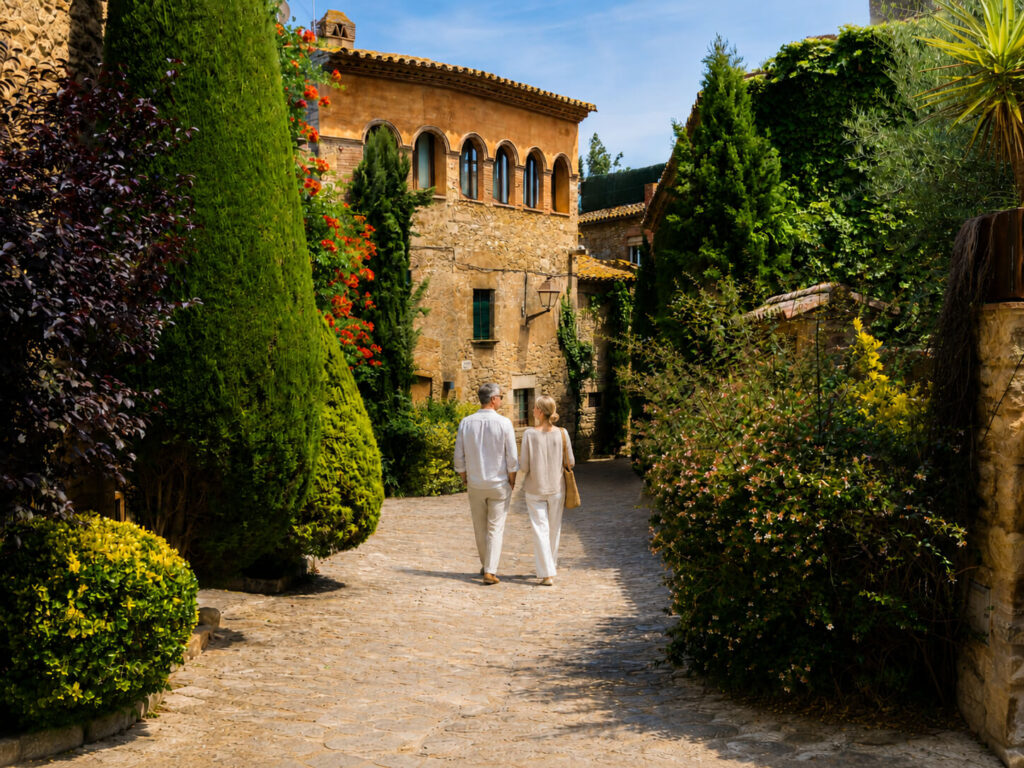
This is where Catalonia becomes most legible in built form. The villages of the Empordà are not decorative relics arranged for tourism. They remain inhabited places with their own civic memory, agricultural logic and material continuity. Their streets, churches, squares and houses still carry the scale of older forms of life, and that continuity changes the tone of the region entirely. The coast may attract attention first, yet it is the interior that makes the wider landscape feel culturally complete.
The effect is subtle but decisive. Without Empordà, the Costa Brava would still be beautiful. With Empordà, it acquires identity.
The Landscape Behind the View
One of the most persuasive qualities of the region is that the view is never only a view. Look outward from a coastal house and the sea may dominate the foreground, yet the larger value of the setting depends on what surrounds it: protected headlands, agricultural plains, cypress lines, vineyards, old village silhouettes and the distant presence of the Pyrenees. That layered geography gives the area visual depth as well as a stronger sense of permanence.
It also creates unusual flexibility in how people live here. A morning can begin inland, among vineyards or wooded hills, and end by the sea without the sense of crossing between separate worlds. Owners can choose between village life, waterfront access, rural privacy or a combination of all three within a relatively compact territory. That is part of the region’s sophistication. It does not force one Mediterranean ideal. It allows several to coexist.
For buyers and residents alike, this makes the setting more than scenic. It makes it inhabitable in different registers, across different seasons, and over much longer periods of ownership.
Villages Defined by Heritage
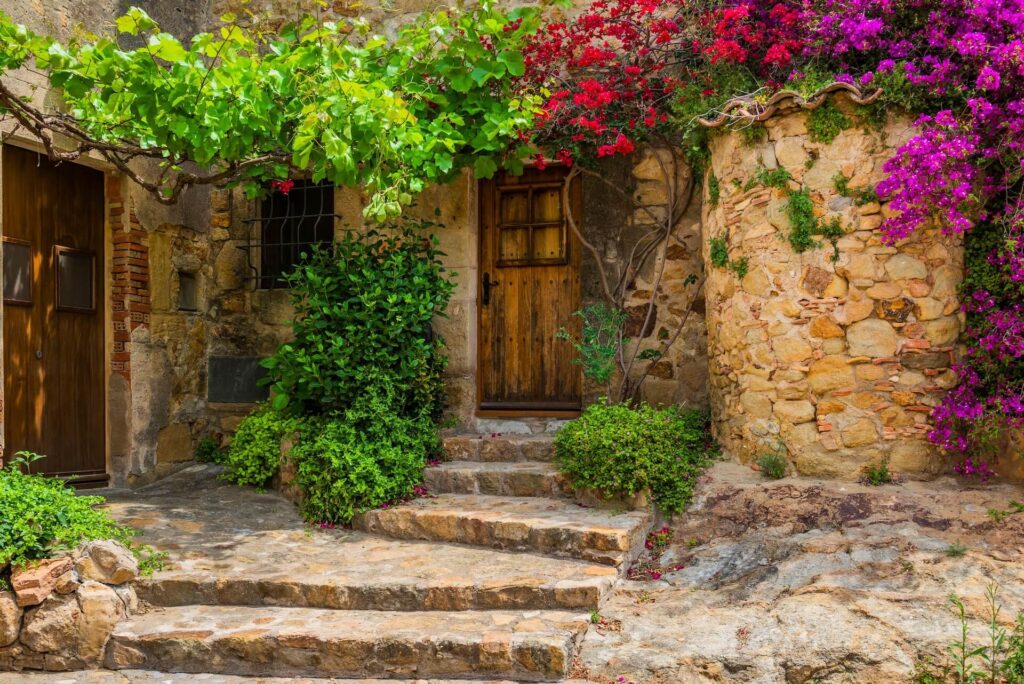
The villages of Empordà give the region a composure that newer luxury destinations struggle to replicate. Places such as Peralada, Pals, Corçà, Rupià and Castelló d’Empúries hold onto the physical language of older Catalonia: stone façades, vaulted passages, Romanesque and Gothic elements, internal courtyards, fortified traces, civic squares and the quiet authority of buildings that were not designed to impress strangers.
That heritage does not sit apart from contemporary life. It remains active within it. Wine culture, seasonal markets, serious gastronomy and summer festivals all operate within settings whose value was established centuries ago. A Michelin-starred meal in a village like Corçà feels convincing not because it is luxurious, but because it belongs to a place with architectural memory. A restored masia outside Peralada or in the Baix Empordà carries the same appeal. The house is not just large, old or attractive. It is connected to a regional history of land, use and continuity.
This is often what changes a buyer’s reading of the area. The attraction shifts from surface beauty to cultural texture. What seemed at first like a coastal decision becomes, more interestingly, a choice about landscape, heritage and belonging.
Life Between Coast and Countryside
The daily life offered by Empordà and Costa Brava is one of the region’s most persuasive assets because it is not dependent on spectacle. It is made up of habits that feel anchored rather than performed. There are mornings on foot in the Gavarres, long drives through vineyard country, market stops in old town centres, late lunches by the water, afternoons spent sailing or swimming in sheltered coves, and evenings that return naturally to village squares, terraces and restaurants where the emphasis remains on product and place.
The region’s gastronomic culture strengthens this further. Seafood from the coast, olive oil from inland groves, local wines from DO Empordà and the broader influence of Catalonia’s serious culinary tradition give everyday life a level of refinement that feels integrated rather than imported. This is not a place where lifestyle has been assembled for external consumption. It has evolved through local habits, regional produce and inherited standards.
At the same time, the practical conditions for modern living are strong enough to support more than a seasonal relationship. Girona serves as an intellectual and logistical anchor. Barcelona remains close enough to keep the area relevant for buyers balancing urban commitments with a second or third residence. International access, digital infrastructure and the relative ease of moving between countryside, village and coast all contribute to a way of living that feels calm without feeling remote.
For that reason, Empordà and Costa Brava attract a wider range of owners than the usual coastal shorthand suggests. Families, semi-permanent residents, entrepreneurs, remote professionals and long-horizon buyers can all find a version of the region that suits them.
Ownership with Cultural and Market Weight
Property here carries a different kind of meaning because the market is shaped by more than demand alone. Geography, heritage protections, environmental restrictions and the limited amount of buildable land all contribute to a level of scarcity that is difficult to reproduce. In stronger micro-markets, the best homes are not interchangeable products. They are specific positions within a finite landscape.
That distinction matters. In many coastal destinations, value is driven by visibility and amenity. In Empordà and Costa Brava, enduring value tends to come from a more complex combination of factors: architectural integrity, protected surroundings, scarcity of comparable stock, privacy, access and the wider cultural quality of the setting. Buyers are not just acquiring a property. They are acquiring a place within a regional composition that cannot easily be expanded.
This is one reason the market has shown resilience. Another is the strength of international demand. Buyers from northern Europe, France and beyond continue to favour the area for its safety, access, restrained atmosphere and long-term relevance. Yet even with broad international interest, the market retains a local character. It still rewards nuance. It still depends on understanding the distinctions between one village, cove or hillside and the next.
Coastal Addresses with Quiet Prestige
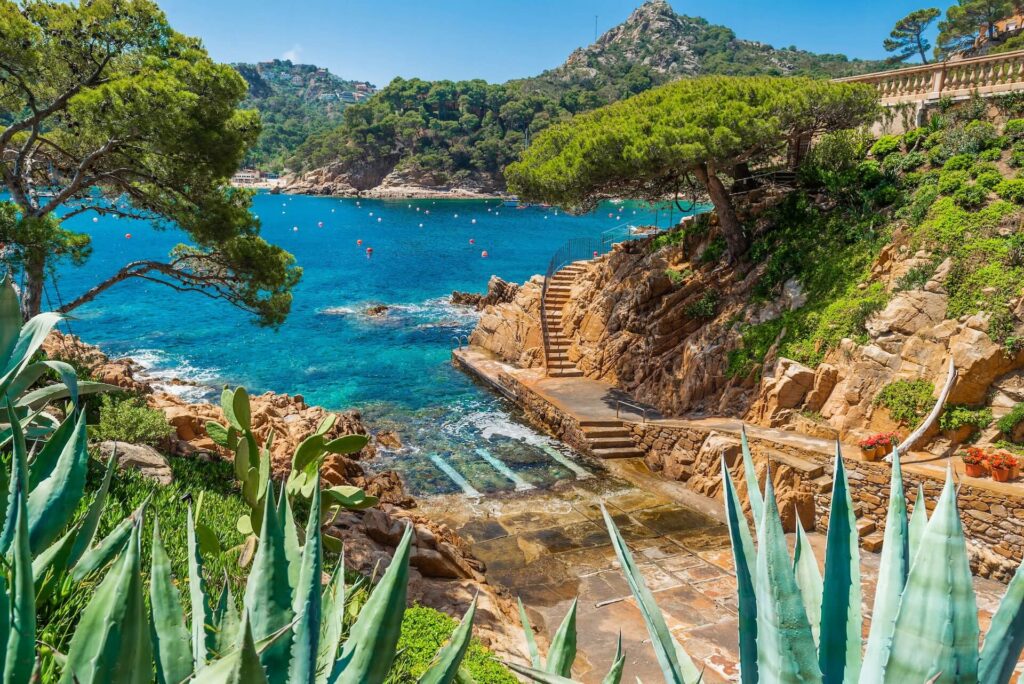
Some parts of the coast have developed a lasting authority that goes beyond fashion. Begur and the coves around Aiguablava, Sa Tuna and Aiguafreda remain among the clearest examples. Their appeal lies in the combination of sea views, privacy, low-density surroundings and a built environment that has remained relatively disciplined. Prestige here is rarely loud. It resides in position, orientation, access and the scarcity of properties that bring all of these together.
Cadaqués occupies a different category altogether. It is one of the most singular addresses in the western Mediterranean, not simply because it is beautiful, but because its cultural associations and protected surroundings make it resistant to standard comparison. The village has an intellectual and artistic legacy, and the landscape around it still feels elemental. Buyers do not approach Cadaqués in the same way they approach more conventional prime markets. They are often responding to singularity as much as to value.
Palamós and La Fosca speak to another kind of coastal credibility. Here the attraction is less rarefied and more grounded in working identity, culinary reputation and daily usability. For some buyers, that balance is precisely the point. The prestige is quieter, but it is no less durable.
Inland Houses with Cultural Weight
For a certain buyer, the most intelligent acquisition is not on the coastline at all. It is inland, in a restored masia, a village house with architectural substance, or an estate positioned between vineyards and historic towns. These homes often offer something the coast cannot: scale without exposure, privacy without isolation, and a more immediate relationship to the region’s cultural inheritance.
The inland market also allows ownership to unfold differently. A village house in Pals or Peralada can support year-round use with a sense of civic life around it. A larger estate in the countryside can function as both retreat and long-term family holding. In either case, the emphasis shifts from seasonal enjoyment to continuity. The property becomes less a coastal accessory and more a durable part of personal geography.
This is where Empordà proves especially compelling. It does not ask buyers to choose between beauty and substance. In the right property, the two are inseparable.

The Enduring Virtues of Empordà and Costa Brava
Regions hold their value for many reasons, but only a few endure because their original conditions remain intact. That is the deeper strength of this part of Catalonia. The coastline has not been emptied of character. The villages have not been reduced to aesthetic backdrop. The agricultural and culinary cultures still support the identity they are often asked to symbolize. The best architecture, old or new, still makes sense in relation to the land.
For buyers, that endurance carries practical implications. Scarcity is likely to remain structural rather than temporary. The distinction between prime and secondary locations will continue to matter. Heritage and environmental protections will remain part of the value equation. And ownership will retain a dimension that is both emotional and strategic: a house here can be deeply personal while still making complete sense as a long-term hold.
That is why Empordà and Costa Brava continue to command attention without ever needing to chase it. The region offers what affluent buyers increasingly seek and rarely find in the same place: visual beauty, cultural legitimacy, architectural depth and a market grounded in genuine limits.
In the end, the case for owning here is not only financial, though the fundamentals are persuasive. It is also about access to a way of living that still feels regionally specific, materially grounded and increasingly difficult to replicate elsewhere on the Mediterranean.
FAQs About Buying and Living in Empordà and Costa Brava
Is Costa Brava a good place to live year-round?
Yes, provided the location matches the way you want to live. Some smaller coastal pockets become quieter outside summer, but much of the wider region remains active throughout the year. Buyers looking beyond a purely seasonal market tend to focus on places with stronger local infrastructure and off-season life, including Girona, Palamós, Begur’s surrounding villages and selected inland towns. That aligns with how current relocation and area guides frame the region for year-round living.
What is daily life like in Empordà and Costa Brava?
Daily life is shaped by proximity rather than excess. The region allows an unusual closeness between coast, countryside, village life and culture, so the experience of living here is less about resort activity and more about continuity. A day might move easily from a market town or inland village to the sea, then back to a restaurant, cellar or square that still belongs to local life rather than visitor traffic alone. That blend of landscape, food culture and manageable scale is a major part of the area’s enduring appeal.
Where is the best place to buy property in Costa Brava?
That depends on the type of ownership you value most. Buyers drawn to seafront prestige and stronger visual drama usually look at Begur, Aiguablava, Sa Tuna and Cadaqués. Those who prefer a more grounded coastal setting often consider Palamós or La Fosca. Buyers who prioritize heritage, privacy and a deeper year-round relationship to the region often move inland toward the villages and estates of the Baix and Alt Empordà. That spread closely reflects how current market-facing guides segment the area.
Is it better to buy inland in Empordà or on the Costa Brava coast?
For many buyers, inland ownership can be the more intelligent long-term choice. Coastal homes offer immediacy, sea views and, in prime enclaves, strong liquidity. Inland properties often offer more land, greater privacy, stronger architectural authenticity and a closer relationship to the cultural fabric of the region. The decision is less about hierarchy than about use: seasonal coastal ease on one side, year-round depth and heritage on the other.
Can foreigners buy property in Costa Brava?
Yes. Foreign buyers can purchase property in Spain, including in Costa Brava, and this remains one of the most common practical questions in current buyer guides. The process is established, but serious buyers still need proper legal due diligence, tax identification and a clear review of title, planning status and acquisition structure before proceeding. For this market, access is straightforward; discernment is what matters.
Is property in Empordà and Costa Brava a good long-term investment?
The strongest assets are both lifestyle purchases and long-term investments. Prime homes in the right settings benefit from structural scarcity, continued international demand and the enduring value of protected surroundings. That is especially true in enclaves where landscape restrictions, architectural character and limited supply combine to support long-term relevance. The best properties here are rarely driven by short-term momentum alone.
What is the cost of living in Costa Brava?
In general, Costa Brava can offer a lower cost base than Barcelona, but the answer varies sharply by location and by lifestyle. Prime coastal enclaves and highly sought-after villages command a different level of spending than inland towns or more practical year-round bases. For most prospective buyers, this question matters less as a headline number and more as a question of fit: whether they want a high-season coastal address, a village house, or a more grounded primary or semi-primary residence. Cost of living is very much part of current search interest around the region, especially from relocation-minded readers.