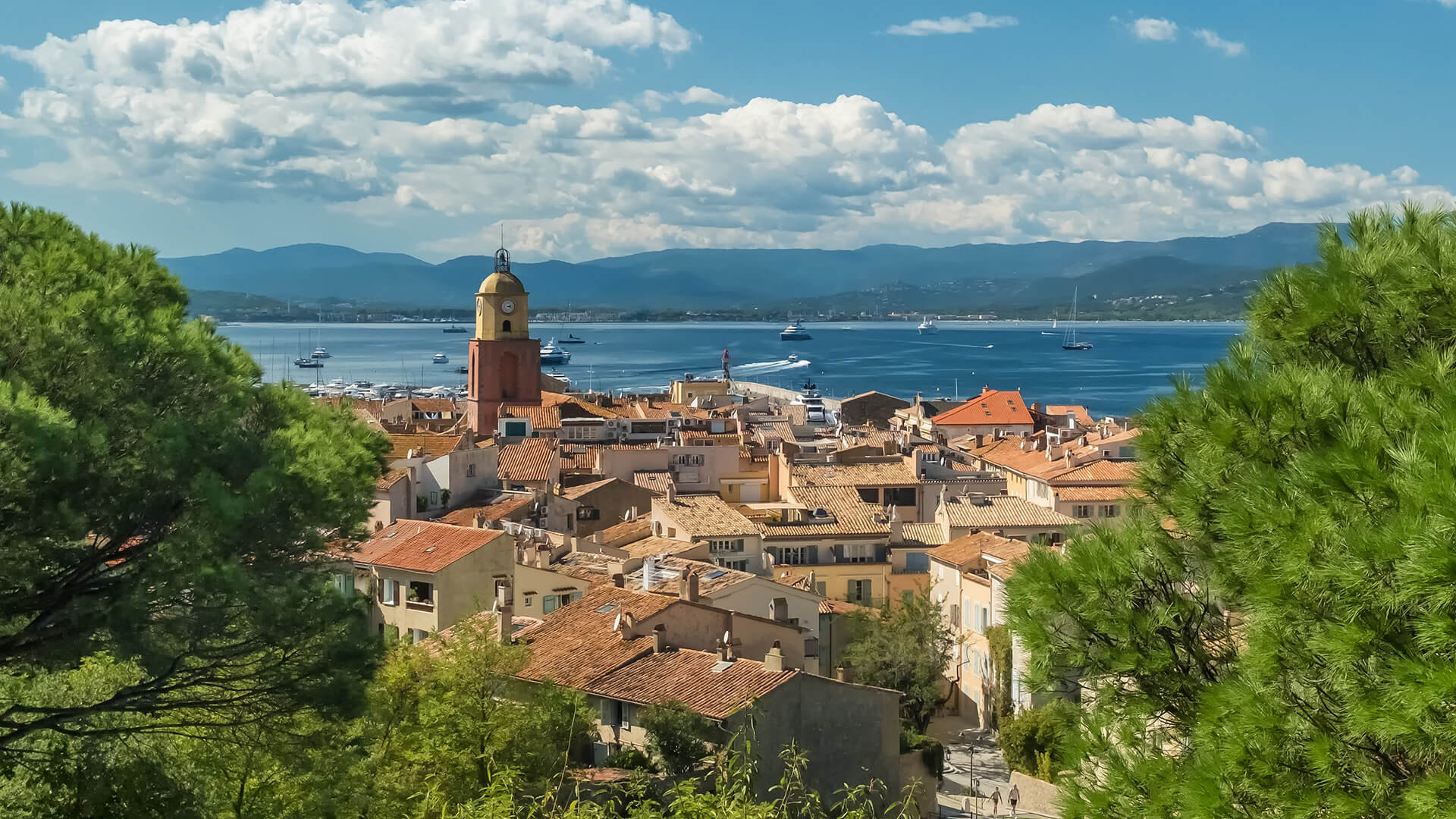

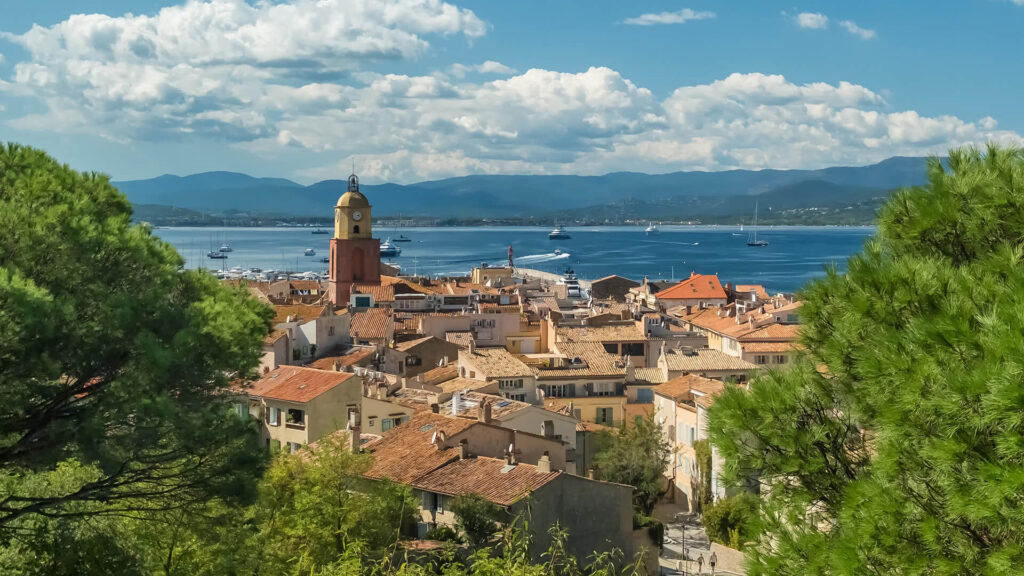
Saint-Tropez is often reduced to its harbour, its summer calendar and the enduring glamour of a village that has never fully surrendered its mythology. Yet the property market is more complex than the image suggests. The most important homes are rarely understood through Saint-Tropez alone, because the real geography of value extends across the gulf: Ramatuelle, Pampelonne, Gassin, Grimaud, La Croix-Valmer, Gigaro, Sainte-Maxime, Port-Grimaud, Cogolin and the private domains that shape the region’s highest levels of ownership.
This broader lens matters because Saint-Tropez luxury homes are not simply expensive Mediterranean houses. They are positions within a highly constrained coastal environment, shaped by privacy, land, access, regulation, heritage, social proximity and the ability to remain protected from the very visibility that makes the gulf so desirable. Some buyers want the immediacy of the port. Others want Les Parcs, La Moutte, Ramatuelle’s vineyard-backed privacy, the family practicality of Sainte-Maxime, or the marina logic of Port-Grimaud. In each case, the address defines the experience before the house itself begins to speak.
The harbour gives Saint-Tropez its global identity, but the market’s deeper value is found once the focus widens. Around the gulf, each commune offers a different version of proximity: to beaches, vineyards, private clubs, villages, marinas, restaurants, sailing, protected land and the wider rhythm of the Côte d’Azur. That is why a single price narrative never quite explains the market. A villa above Pampelonne, a house in La Ponche, a waterfront estate near La Moutte and a canal-side home in Port-Grimaud may all belong to the same international conversation, yet they answer very different ownership needs.
This is also why the best acquisitions require interpretation. In Saint-Tropez, value is not only a matter of square metres or even sea view. It is often the result of a quieter hierarchy: access without exposure, privacy without isolation, land without inconvenience, and proximity to the centre without being consumed by it. The gulf has always rewarded buyers who understand these distinctions.
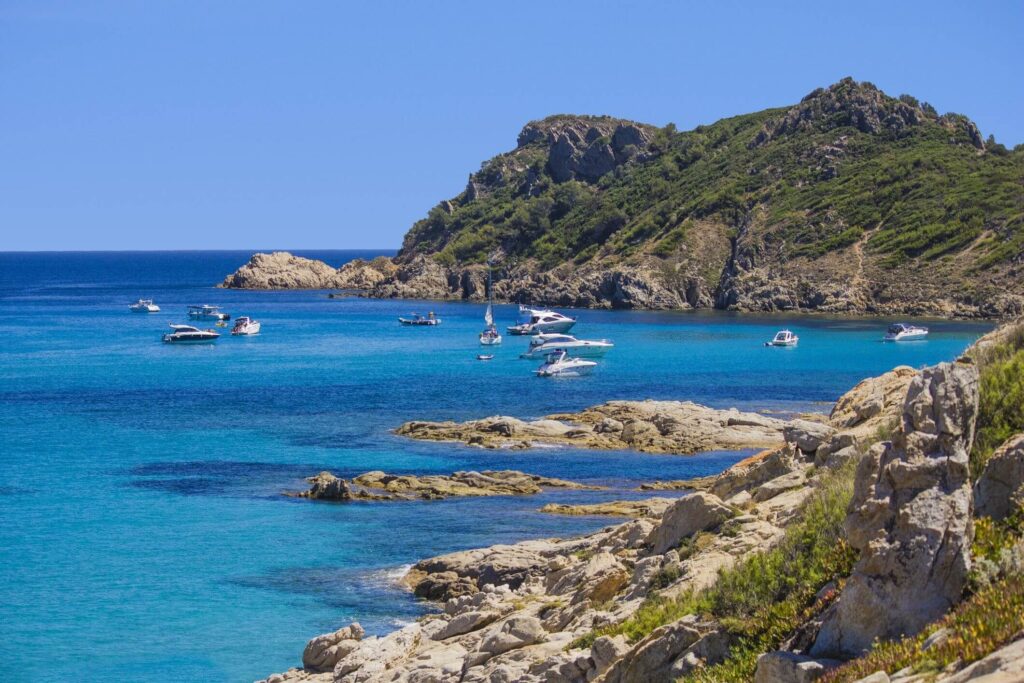
The Golfe de Saint-Tropez is held together by a rare combination of natural constraint and cultural recognition. The Mediterranean defines its front edge, while the Massif des Maures rises behind it, giving the region a protected physical frame. Between the two sit beaches, vineyards, pine forests, hill villages, private estates and coastal paths that have helped prevent the area from becoming a simple resort strip.
That restraint is central to the property story. Pampelonne remains one of the most recognisable beaches in Europe, yet its long-term value is inseparable from environmental discipline. The rehabilitation of the beach, including the reorganisation of beach establishments and restoration of dune vegetation, reflects a wider understanding that preservation is not decorative here. It is part of the market’s foundation. When land is finite and visibility is global, what is protected becomes just as important as what is built.
From that perspective, the gulf is not merely a prestigious setting. It is the mechanism that gives Saint-Tropez its enduring property logic. The village brings the name, but the wider landscape gives the market its depth.
The surrounding villages are essential because they give the gulf a life beyond the summer spectacle. Ramatuelle has the quiet confidence of an old Provençal village above vineyards and beaches. Gassin looks across the gulf from its hilltop position, more reserved and residential in tone. Grimaud carries medieval character and village life, while Port-Grimaud introduces a completely different ownership language through canals, moorings and water access.
Further out, La Croix-Valmer and Gigaro offer a more natural coastal reading, with protected landscapes and a less exposed atmosphere. Sainte-Maxime, across the gulf, provides services, beaches and ferry access with a more family-oriented character. These places matter because they expand the definition of Saint-Tropez ownership. A buyer does not have to choose between the port and retreat. The gulf offers several degrees of involvement.
Vineyards add another layer to that composition. The Côtes de Provence estates around the gulf are not simply lifestyle scenery; they shape the routes, views, lunches, social rituals and seasonal use of the area. For many owners, the relationship between beach, village and vineyard is exactly what makes the gulf more durable than a purely coastal market.
Saint-Tropez has always understood theatre, although its most credible social life is not limited to spectacle. Les Voiles de Saint-Tropez brings sailing culture into the bay each autumn, while polo in Gassin, art exhibitions, regattas, local festivals, classic car gatherings and beach-club rituals all extend the season in different ways. The strongest events are tied to place. They are not imported to manufacture relevance; they belong to the gulf’s existing codes of sport, leisure and private entertaining.
For property owners, this matters because the social calendar influences how homes are used. A house in the gulf may serve as a private family base, a summer residence, an entertaining platform, a sailing-season address or a long-term holding for future generations. The lifestyle is visible, but the best ownership remains highly controlled.
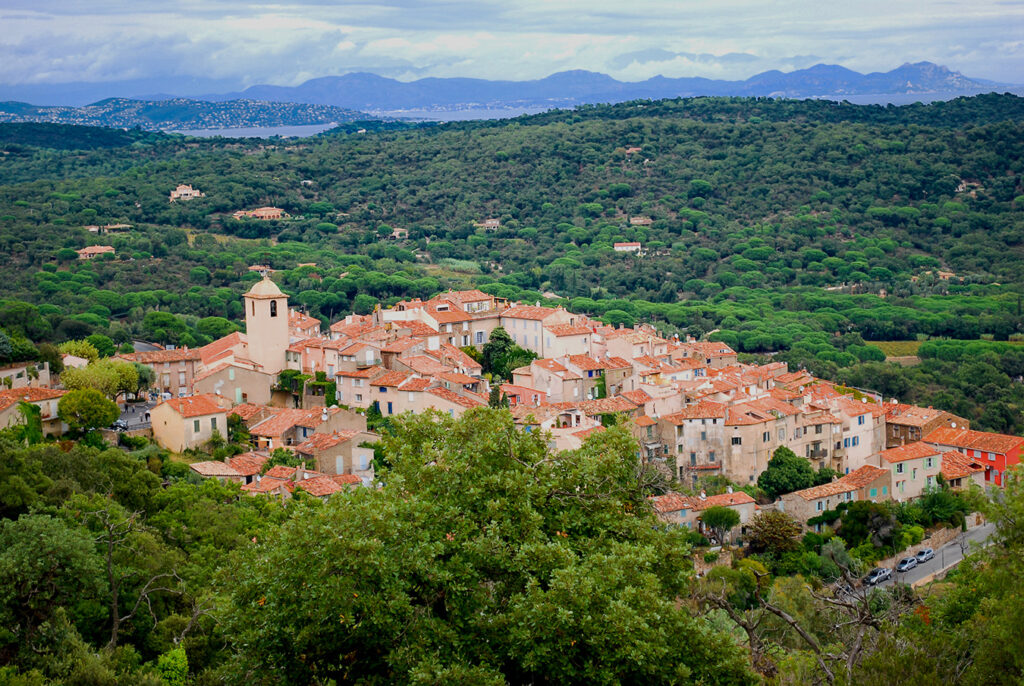
Daily life in the gulf depends heavily on the chosen address. A house in the historic centre offers immediate access to the port, market, restaurants and the older streets of La Ponche. A villa in Les Salins or Pointe de Capon brings a quieter residential character while remaining close to the beaches. Les Parcs offers another level of privacy, security and land. Ramatuelle gives owners proximity to Pampelonne with a more rural backdrop, while Gassin and Grimaud allow life to sit slightly above and away from the summer intensity.
Because the region becomes highly compressed in peak season, movement is part of ownership strategy. Sea shuttles across the gulf are not a convenience detail; they help shape practical access between Sainte-Maxime, Saint-Tropez, Port-Grimaud and Marines de Cogolin when roads become slow. In a market where time and privacy both carry value, transport logic can influence the desirability of an address almost as much as the view.
This is why the best choice is not always the most famous one. Some owners want the harbour close at hand. Others prefer to arrive by boat, remain above the crowds, or use Saint-Tropez selectively while living in the wider gulf. The property decision becomes less about being seen in the centre and more about deciding how close one wishes to live to its energy.
The Saint-Tropez market is expensive for reasons that are unusually clear. The gulf is finite, construction is restricted, prime plots are rare, and many of the strongest homes remain in long-term private hands. At the highest level, particularly in Les Parcs and the most protected waterfront positions, availability is itself part of the asset. When homes come to market, they are not simply compared to other villas. They are weighed against the rarity of ever securing that position again.
The brief cites average prices above €23,000 per square metre in both Saint-Tropez and Ramatuelle, with ultra-prime waterfront and domain properties reaching far higher levels. Yet the gulf should not be read as one uniform price band. Sainte-Maxime, Grimaud, Cogolin and Le Plan-de-la-Tour offer different levels of access and different ownership profiles, while Ramatuelle, Les Parcs, La Moutte and Pampelonne remain among the most fiercely held settings.
As a result, Saint-Tropez luxury homes require a more precise acquisition lens than many buyers first expect. The strongest value is rarely found in surface glamour. It is found in land quality, privacy, orientation, access, planning clarity, renovation integrity, energy performance, rental permissibility and the defensibility of the address over time.
Les Parcs de Saint-Tropez remains the reference point for private ownership in the gulf. Its security, scale, sea access and long-established villa culture make it one of Europe’s most important ultra-prime residential domains. The attraction is not only the prestige of the name. It is the controlled environment: large plots, privacy, mature landscaping, limited turnover and a level of discretion that cannot be recreated through design alone.
Nearby, La Moutte, Pointe de Capon and Les Salins each carry a different expression of prime Saint-Tropez living. La Moutte is associated with seclusion and beach proximity. Pointe de Capon is valued for calm residential positioning and views. Les Salins offers a more family-oriented coastal atmosphere with larger plots and a softer relationship to the village. For buyers at this level, these distinctions are not cosmetic. They determine how a house will be used, who it will suit, and how well it will hold its relevance.
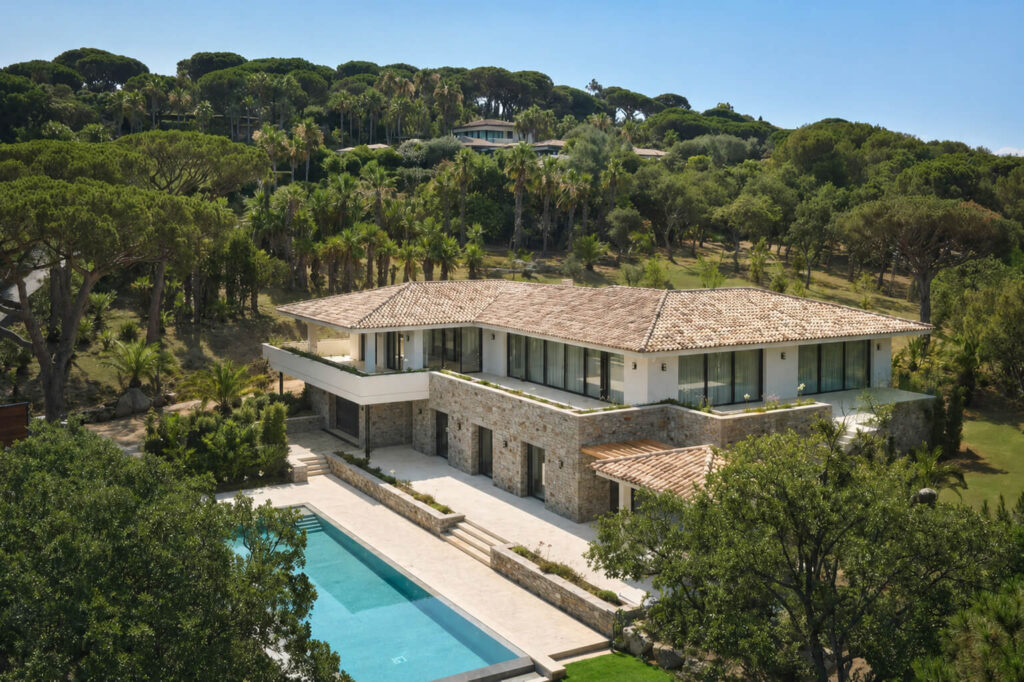
Beyond the most private domains, the gulf offers a wider and often more practical set of addresses. La Ponche and the historic centre appeal to buyers who want the village at their door: market, harbour, restaurants and the old streets that give Saint-Tropez its intimacy. Ramatuelle offers proximity to Pampelonne with more land and a quieter Provençal register. Grimaud combines village architecture with access to Port-Grimaud and the wider gulf. Sainte-Maxime offers beaches, services and ferry links with a more year-round family profile.
These addresses are not lesser versions of Saint-Tropez. They serve different lives. For some buyers, the right home is defined by security and seclusion. For others, it is defined by walkability, boat access, family infrastructure, rental flexibility or the ability to remain close to the gulf without being absorbed by its most visible centre. A mature market should be read through these differences.
Rental income in Saint-Tropez can be substantial, but it should be understood with discipline. At the high end, seasonal villas with pools, sea views, service infrastructure and professional management can command significant rates, especially during peak summer and major events. Even so, the market is rarely best approached as a pure yield play, because acquisition costs are exceptionally high and operating expenses are meaningful.
The brief notes around 552 active short-term rental listings, with median annual revenue of approximately €70,000, occupancy around 58 percent and a nightly rate near €327. Those numbers are useful, but they do not tell the whole story. A villa with staff, gardens, pool, security, maintenance and management requires a different ownership model from a smaller village house or apartment. Rental income may offset costs, but the core rationale for buying is usually lifestyle, scarcity and long-term capital preservation.
Regulation adds another layer. Tourist rental registration, local controls under the Loi Le Meur, co-ownership restrictions and energy-performance standards all affect how a property can be used. For buyers intending to rent, the due diligence cannot wait until after acquisition. It must be built into the search from the beginning, alongside title, planning, renovation quality and the property’s long-term compliance profile.
Buying well in the Golfe de Saint-Tropez requires more than access to visible homes. Many of the best opportunities are shaped by discretion, timing and the ability to interpret a property before it becomes widely discussed. In this market, the risks are not always visible in photography. They may sit in planning status, renovation history, energy performance, co-ownership rules, rental restrictions, access, road exposure, flood or fire considerations, or the difference between a prestigious location and a genuinely defensible address.
Baerz approaches the gulf through buyer representation rather than property presentation alone. The role is to help clients understand which homes carry long-term relevance, which locations match their intended use, and which apparent opportunities deserve caution. In a market with very high entry costs, this level of review is not administrative. It is central to protecting capital and preserving optionality.
The gulf rewards precise judgment because neighbouring addresses can behave very differently. A villa in Les Parcs, a waterfront estate near La Moutte, a village house in Ramatuelle, a marina home in Port-Grimaud and a family villa in Sainte-Maxime may all belong to the same regional market, yet each requires a different acquisition lens.
Baerz helps buyers assess privacy, access, legal clarity, rental potential, architectural quality, operating costs, future liquidity and the long-term meaning of the address. The objective is not to see everything. It is to see clearly, and to move only when the property, setting and ownership logic align.
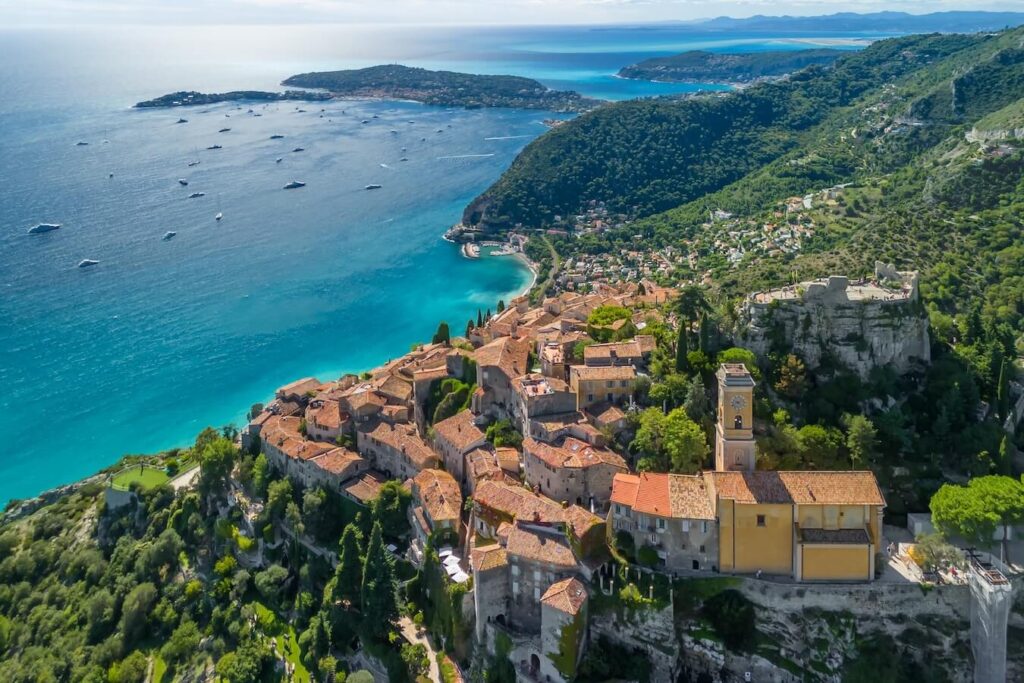
The wider Côte d’Azur has entered a more selective phase after years of strong price movement, and Saint-Tropez is not entirely separate from that adjustment. Buyers are more demanding about condition, energy performance, privacy, security and the relationship between price and quality. However, the gulf continues to sit apart from many broader market pressures because its strongest buyers are often international, cash-led and focused on assets that cannot be easily replaced.
That selectivity is not a weakness. It clarifies the market. Compromised homes with ambitious pricing may sit longer, while rare, well-executed properties in defensible addresses remain difficult to secure. The gulf’s central truth is therefore simple but demanding: global demand exists, but not every property deserves to participate in it.
For long-horizon buyers, this environment can be useful. It rewards diligence, negotiation and sharper asset selection. Rather than chasing the idea of Saint-Tropez, serious buyers can focus on the homes and addresses that will continue to matter once the season changes.
The strength of the Golfe de Saint-Tropez lies in the fact that its glamour is supported by geography. The village brings recognition, but Ramatuelle, Gassin, Grimaud, Sainte-Maxime, La Croix-Valmer, Port-Grimaud and the private domains give the market dimension. Beaches, vineyards, forested hills, sailing routes and protected landscapes all contribute to a form of ownership that is more layered than the public image suggests.
That is why Saint-Tropez luxury homes continue to hold attention among buyers who have access to many places. The best assets here offer more than a prestigious name. They hold privacy, access, land, compliance, architecture, atmosphere and scarcity within one of Europe’s most closely watched coastal markets.
The gulf remains expensive, but its expense is legible. Supply is restricted. Demand is international. The best addresses are finite. The landscape continues to matter. For buyers who understand the distinctions between the port, the beaches, the domains and the surrounding villages, Saint-Tropez remains not only a destination, but a highly disciplined ownership market.
The strongest homes can be compelling long-term holdings, particularly when privacy, scarcity, location and legal clarity align. Saint-Tropez is generally better understood as a capital preservation and lifestyle market than a pure yield market. The brief notes major price strength across the gulf in recent years, supported by limited supply and international demand.
The right area depends on how the home will be used. Les Parcs is the reference for privacy, security and ultra-prime estates. La Moutte, Pointe de Capon and Les Salins appeal to buyers seeking beach proximity, views and residential calm. The historic centre and La Ponche suit those who want village life and port access. Ramatuelle, Gassin, Grimaud and Sainte-Maxime offer wider choices across vineyard, village, family and marina settings.
Saint-Tropez can work year-round for buyers who understand its seasonality. The village and surrounding communes remain active outside summer, but the rhythm changes after the high season. Sainte-Maxime, Grimaud, Cogolin and Gassin can offer more practical year-round infrastructure, while Saint-Tropez itself is strongest for buyers who value proximity to the port, the heritage centre and the seasonal social calendar.
Pricing varies sharply by address, land, view, condition and privacy. The brief cites average values above €23,000 per square metre in Saint-Tropez, with Ramatuelle at a similar level and ultra-prime waterfront properties reaching much higher prices. Sainte-Maxime, Grimaud, Cogolin and Le Plan-de-la-Tour generally offer lower average entry points within the wider gulf.
Yes. Foreign buyers can purchase property in France, including Saint-Tropez and the wider gulf. The process is well established, but buyers should consider notary fees, taxes, financing where relevant, ownership structure, inheritance planning and rental regulations. Proper legal and tax advice is essential before acquisition.
Rental income can be substantial in absolute terms, especially for high-quality villas during the summer season, but percentage yields are often modest because purchase prices are so high. The brief notes median annual short-term rental revenue around €70,000, with Saint-Tropez ranking low nationally for yield. Buyers should usually prioritise long-term value, personal use and capital preservation over income percentage alone.
Ramatuelle may be better for buyers seeking larger plots, vineyard surroundings, privacy and proximity to Pampelonne. Saint-Tropez is stronger for those who want immediate access to the port, village life and the symbolic centre of the market. Both are highly prestigious, but they serve different ownership styles. The right choice depends on how the property will be used.
























 Dutch
Dutch  German
  Spanish
  French
  Arabic
  Chinese
  Russian
  Swedish
  Portuguese
  Polish
  Greek
Greek  Italian