








Buying Property in the Algarve: Choosing the Right South
Buying property in the Algarve begins with a deceptively simple question: which version of the south deserves ownership?
The answer matters because the Algarve has matured far beyond the easy vocabulary of sun, golf and coastal villas. It now reads as several residential worlds held within one relatively compact region: marina life, hillside privacy, historic town centres, golf-led convenience, cliffside houses, working villages, protected wetlands and school corridors that support longer stays. Each version has its own pattern of use, its own audience and its own relationship with value.
For a serious buyer, the strongest Algarve purchase starts with place. The house carries the first attraction, yet the life around it usually determines how well ownership holds. Access, privacy, planning context, water, orientation, neighbouring land, seasonal pressure and the everyday life of the nearest town all become part of the property itself.
At the upper end of the market, the question is no longer whether the Algarve has appeal. The more useful question is which Algarve can support the life an owner expects from it.
The Algarve Is Several Lives Held Within One Coastline
From a distance, the Algarve appears simple. The name suggests Atlantic light, beaches, villas and a familiar form of southern European ease. Once the map tightens, however, the region separates into different ownership environments.
Quarteira behaves differently from Loulé. Lagos asks a different question from Carvoeiro. São Brás de Alportel belongs to another pattern of life than Vilamoura, while Boliqueime and Querença carry forms of privacy that depend on land, elevation and distance from the busiest coastal corridors. This variety gives the Algarve its strength. A single region can support several intelligent choices.
One owner may want the institutional ease of central Algarve, where restaurants, airport access, international schools and golf remain within a short radius. Another may prefer the western pull of Lagos, where old-town streets, marina life and sculptural coastline create a fuller daily setting. Another may move inland, toward São Brás, Querença or Boliqueime, where land, calm and cultural continuity carry more weight than proximity to a beach club.
Because of this, buying property in the Algarve should begin as a location decision. A villa with an impressive view, a difficult approach and weak all-season use can quickly become a compromise. A quieter property with the right access, orientation, ownership structure and surrounding context can age with far greater intelligence.
Why the South of Portugal Has Become a Longer-Stay Proposition
The Algarve’s appeal begins with climate because climate shapes use. Faro’s long-term climate normal shows an average annual temperature of 18.2°C, around 115 days per year with maximum temperatures at or above 25°C, and moderate annual rainfall. Those conditions explain why the region supports a calendar that extends well beyond July and August. Spring, autumn and large parts of winter remain usable, which matters when a home is judged by the number of meaningful days it can absorb each year.
Access strengthens that proposition. Faro Airport handled more than 10.4 million passengers in 2025, placing the region within easy reach of northern Europe and major wealth centres. The Algarve rail line also runs across the region from east to west, linking thirty stations and connecting municipalities such as Loulé, Lagoa and Lagos. For owners, family members, staff and guests, that logistical base gives the region a practical advantage over more isolated resort markets.
It’s institutional layer matters as well. The University of Algarve anchors Faro, while international schooling options in Almancil and Lagoa support families considering longer stays, semi-permanent relocation or a multi-generational European base. These details shape the quality of ownership in ways that a sea view alone cannot.
The Algarve can host a long weekend, a school term, a working season, a retirement plan or an extended family stay. That range gives the region its lasting relevance.
The New Algarve Buyer Looks Beyond the Beach Address
The Algarve remains one of Portugal’s most expensive housing regions on completed sales. In 2025, Portugal’s national median house price reached €2,076 per square metre, while the Algarve stood materially higher at €3,139 per square metre. Within the region, Loulé reached €3,993 per square metre and Lagos €3,801 per square metre, placing both firmly within the country’s premium property conversation.
Current asking-price data shows further pressure in selected areas. In May 2026, the Algarve regional average sat at €4,057 per square metre, while Loulé reached €4,669, Lagos €4,609, Quarteira €5,265 and São Brás de Alportel €3,561. The growth figures in Quarteira and São Brás show how demand has expanded beyond the most familiar coastal names. Buyers are weighing walkability, access, year-round life, land, privacy and local identity alongside the more obvious resort markers.
Tourism also gives the market a recurring audience. The Algarve accounted for the largest regional share of overnight stays in Portugal in 2025, and its share remained especially strong in the second quarter. That flow supports liquidity in well-positioned addresses, particularly where second-home use, relocation, rental relevance and extended stays overlap.
Even so, regional averages only go so far. The better acquisition depends on the exact street, plot, approach, view, planning context, neighbouring uses and summer pressure. Two properties separated by fifteen minutes can belong to entirely different markets.
Sea Cliffs, Market Towns and Hillside Villages Shape Different Kinds of Ownership
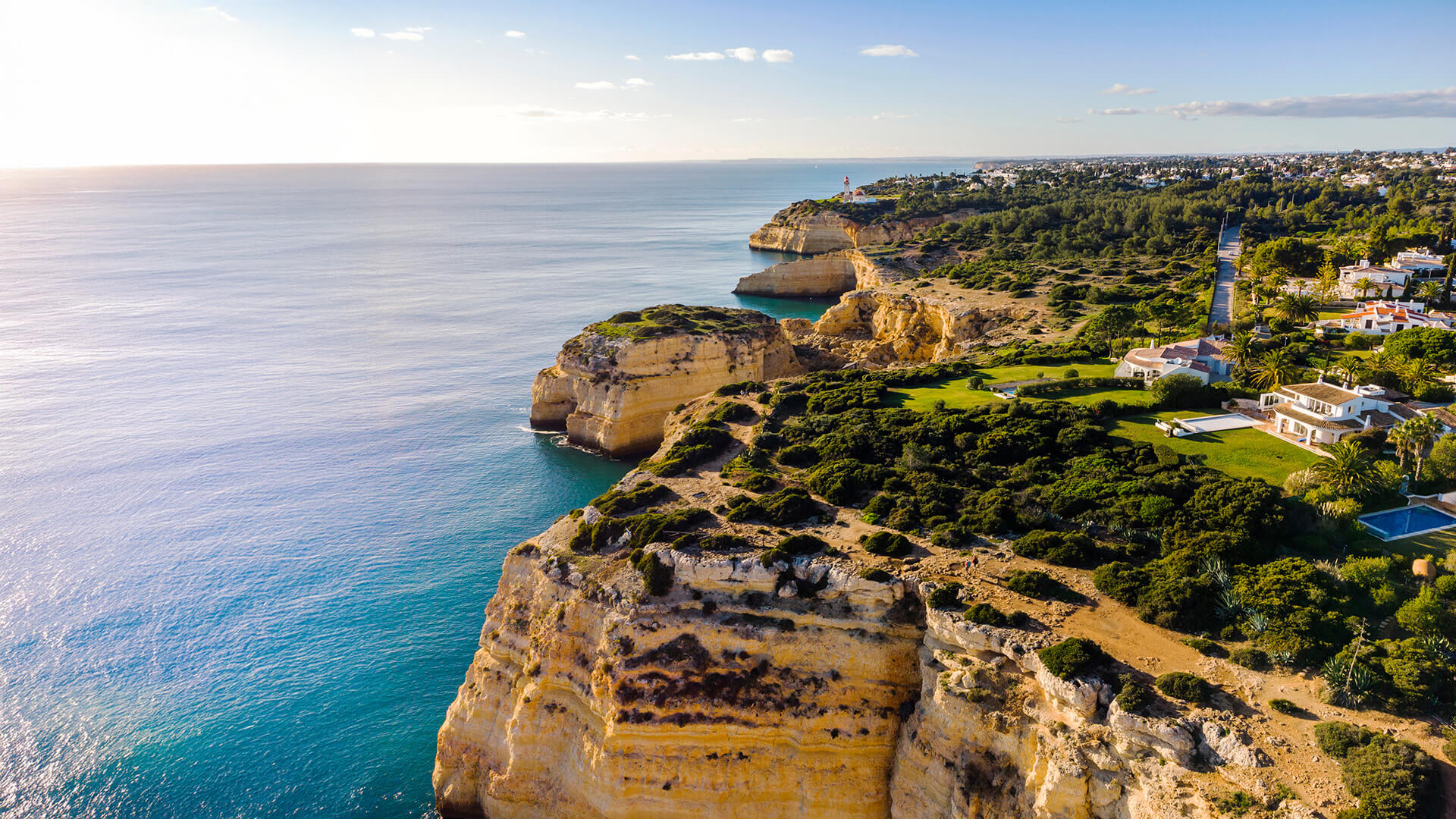
The Algarve coastline has immediate force. Long sandy beaches, small coves, ochre cliffs and Atlantic light create the visual language that draws international attention. Places such as Praia da Marinha, Benagil, Algar Seco, Ponta da Piedade and the Seven Hanging Valleys Trail form part of the region’s identity because they are instantly recognisable and difficult to reproduce.
The region becomes more interesting once the eye moves beyond the first line of coast. The Ria Formosa, with its wetlands and barrier islands, gives the eastern and central Algarve an ecological dimension that shapes both lifestyle and planning. The South West Alentejo and Vicentine Coast Natural Park extends the western edge into one of Europe’s most protected coastal landscapes. Inland, the barrocal and the transition toward the Serra introduce a slower, more traditional Algarve, marked by whitewashed houses, decorated chimneys, working towns and agricultural memory.
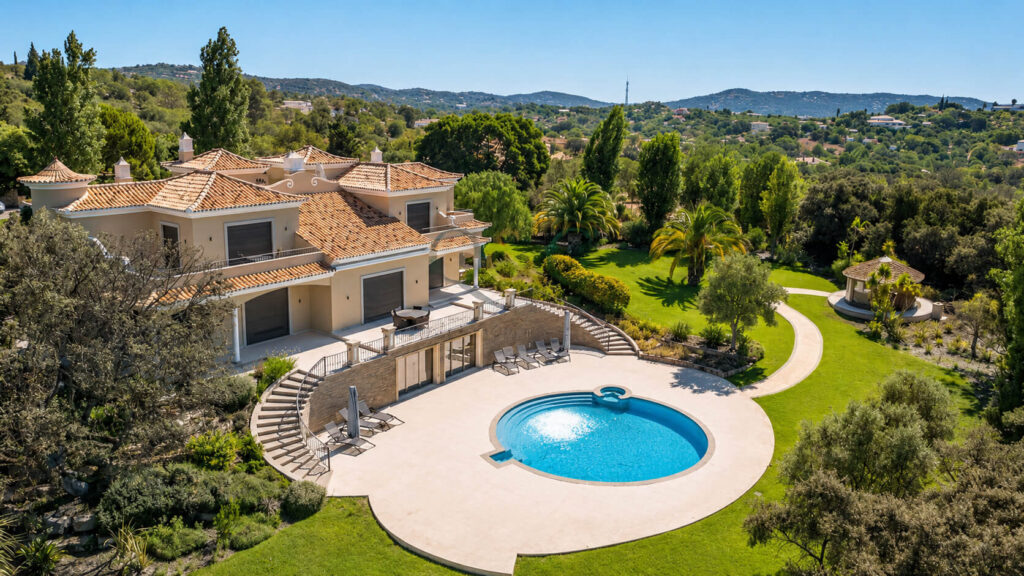
These settings create different ownership types. A cliffside residence trades on view, drama and visual identity. A marina or resort address offers service, liquidity and ease. A townhouse in a lived-in centre gives access to restaurants, markets and daily routine. A rural estate draws value from land, privacy and architectural character.
The sophisticated purchase begins by deciding which of these lives deserves priority.
Central Algarve and the Privilege of Having Everything Close
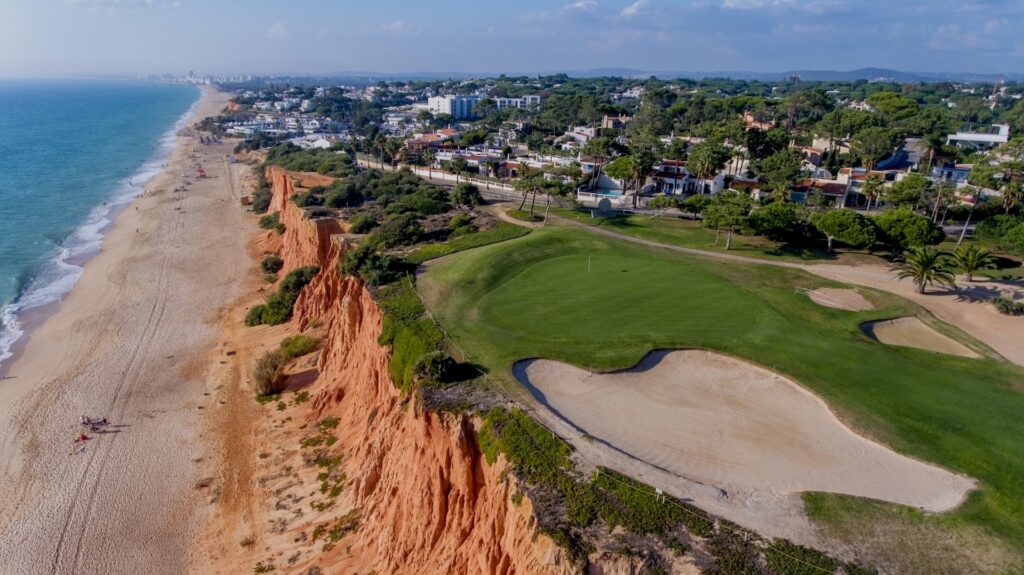
Central Algarve remains the region’s most established prime corridor because it brings together airport access, golf, beaches, restaurants, schools and recognisable resort infrastructure. Although, its advantage is practical as much as aspirational. Life can be arranged with relative ease, which is one of the quiet luxuries that becomes more valuable over time.
Yet the central Algarve also requires careful reading. A property near Vilamoura serves a different purpose from a house above Loulé. A seafront apartment in Quarteira works differently from a villa in Boliqueime. The distances may look modest on the map, but the ownership experience changes quickly.
Loulé and the Appeal of a Town That Keeps Its Own Calendar
Loulé is one of the strongest answers for buyers seeking substance beyond the resort belt. The town has a real historic centre, a distinctive neo-Arab municipal market and a local pattern of life that continues through the year. Its municipality also contains some of the Algarve’s most prestigious residential addresses, giving it unusual range.
That range matters. Loulé can support town living, country houses, renovated estates and ultra-prime villas in more established pockets of the municipality. Its 2025 median sales price and 2026 asking-price position show a market already recognised by informed buyers, yet broad enough to offer very different forms of ownership. The town itself brings cultural continuity, while the wider municipality provides reach, privacy and access.
Quarteira and the Return of the Walkable Seafront
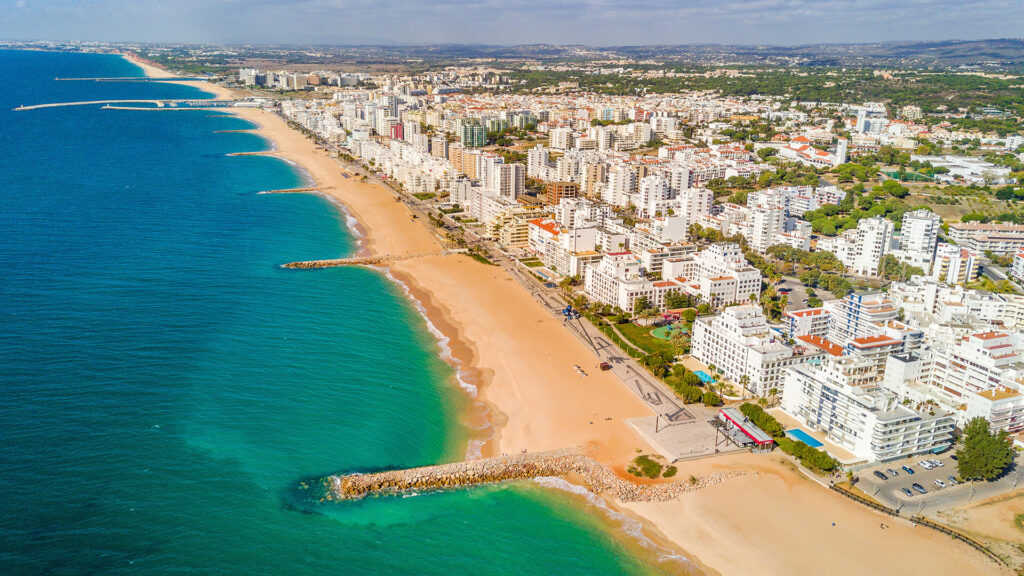
Quarteira deserves closer attention than its older reputation allows. Its beach, promenade and active market give it a daily-life quality that many more polished resort addresses struggle to sustain. At the same time, the parish includes Vilamoura, which draws Quarteira into a marina and golf orbit with stronger international visibility.
The recent asking-price growth suggests that the market has begun to recognise this dual identity. Quarteira offers beach immediacy, walkability, apartment liquidity and rental relevance, while its proximity to more established luxury infrastructure supports confidence. It suits ownership built around frequent stays, easy routines and a seafront that remains useful beyond the height of summer.
Boliqueime and the Quiet Advantage of Staying Near the Coast
Boliqueime appeals through a quieter equation. It offers countryside positioning, larger plots and a calmer atmosphere while keeping the coast, golf, services and airport within reach. That balance gives it particular relevance for buyers who want privacy and space while still valuing central Algarve convenience.
Pricing in Boliqueime is highly property-specific, which makes broad averages less useful than disciplined comparable analysis. The strongest opportunities tend to depend on land quality, approach, views, renovation standard, title history and proximity to services. In this part of the market, advice becomes valuable when it protects the buyer from mistaking rural charm for long-term defensibility.
Inland Algarve and the Pull of the Older South
The inland Algarve has gained strength because it offers something increasingly valuable: a sense of place with room to breathe. These addresses carry a different form of luxury, based on quiet, land3, cultural continuity and distance from the heavier seasonal pressure of the coast.
For buyers used to fully serviced resort environments, the interior asks for a more personal relationship with place. The reward is a form of ownership that feels rooted in the Algarve’s older character, with villages, hills, orchards, cork history and architectural details that belong to the region rather than to a global resort language.
Querença and the Whitewashed Architecture of a Slower Algarve
Querença is one of the region’s most articulate village addresses. White houses, decorated chimneys and Arab-influenced architectural details give the village a visual language tied to the Algarve’s older identity. Its proximity to Fonte Benémola, a protected landscape crossed by the Ribeira de Menalva, adds a walking and nature dimension that makes ownership here feel deliberately removed from the more visible coast.
This is a location for buyers drawn to authenticity, privacy and long-horizon stewardship. The appeal sits in proportion, quiet and rootedness. Querença suits owners who understand that some properties draw value from land, restraint and a deeper relationship with place.
São Brás de Alportel and the Elegance of a Town Built on Craft
São Brás de Alportel occupies a useful middle position between rural calm and practical access. The town is associated with white houses, surrounding hills and a traditional Algarve atmosphere, while its Museu do Trajo and cork-trade history give it a stronger cultural base than many buyers expect.
Its recent asking-price growth makes it one of the more interesting inland-central stories. The town reads as grounded and residential, with enough proximity to Faro, Loulé and the coast to remain practical. For families, long-stay owners and buyers who value local life, São Brás offers a compelling alternative to the more visible resort belt.
Western Algarve and the Drama of the Atlantic Edge
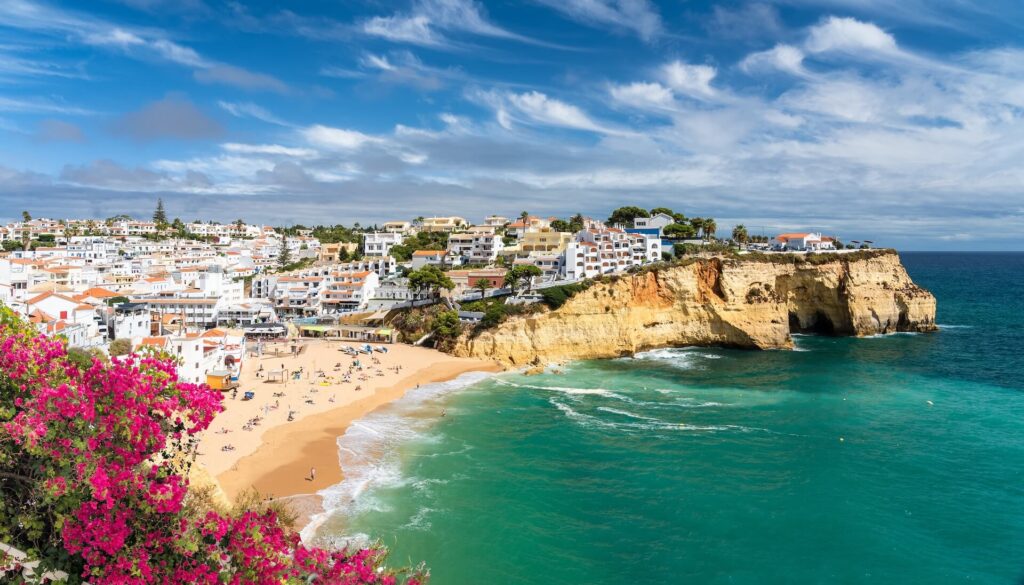
Further west, the Algarve becomes more dramatic. The coastline turns sculptural, the towns carry stronger historical identity, and the property decision often involves a more emotional relationship with landscape.
The western Algarve appeals to buyers who want a fuller sense of place. It carries beaches and cliffs, certainly, but also old streets, marinas, fishing heritage, walking routes and a scale of scenery that feels more Atlantic than resort-led. The area can still be highly international, though its strongest addresses tend to feel less packaged than parts of the central corridor.
Lagos and the Rare Strength of a Coastal Town With Real Life Behind It
Lagos stands apart because it operates as a real town as well as a coastal destination. Its marina, beaches, sailors, historic streets and proximity to Ponta da Piedade give it a layered appeal. The town supports a broader year-round social mix than many places built primarily around vacation ownership.
From an acquisition perspective, Lagos offers several forms of value. Old-town property carries walkability and character. Marina-adjacent addresses bring convenience and movement. Coastal homes around the municipality benefit from dramatic scenery and international recognition. The municipality’s pricing already places it among Portugal’s premium areas, yet its identity remains broad enough to support different buyer profiles.
The strategic appeal lies in balance. Lagos has lifestyle, history, scenery and daily function in one frame, which gives it particular strength for buyers seeking a residence with more substance than a seasonal base.
Lagoa and Carvoeiro and the Coastline Buyers Remember First
Lagoa and Carvoeiro deliver some of the most visually persuasive Algarve territory. Praia da Marinha, Benagil, Algar Seco, Vale de Centeanes and the Seven Hanging Valleys Trail give this micro-area a level of visual recognition that supports both emotional demand and view premiums.
Still, the area works because it carries practical substance beneath the imagery. Lagoa has an established international-school campus, while Carvoeiro offers a coastal village atmosphere with restaurants, beaches and cliffside walks. For second homes, family relocation and lifestyle-led purchases, this combination of scenery and usability is powerful.
The strongest properties here tend to draw their value from a precise relationship to the coastline. Orientation, cliff position, access, privacy, protection from summer pressure and build quality become decisive. In a landscape this photographed, the true premium belongs to properties that translate beauty into liveable ownership.
The Algarve Search Is Best Handled Away From the Market Frenzy
Buying property in the Algarve often begins online, though the most important risks usually sit outside the search results. A polished listing can show the view, pool, terrace and distance to the beach, yet it may reveal little about the pattern of the street in August, the pressure on parking, the exposure to short-term rental traffic, the reliability of the advertised availability or the way a property’s setting will feel after the first emotional response has settled.
The first issue is duplication. In an active international market, the same residence can appear across several portals, sometimes through different agencies, with inconsistent descriptions, outdated pricing or photography that reflects a previous condition. This wastes time and distorts judgment. When the same property appears repeatedly, the market can look deeper than it is, while the strongest opportunities may remain outside public view.
Then comes representation. Many conversations begin with a selling agent, whose role is to represent the owner and move a specific property forward. That is a normal part of the market, yet it creates a structural limitation for the purchaser. Advice connected to one vendor, one agency portfolio or one set of available listings gives a narrower view than a full regional reading, especially in a place as varied as the Algarve. A house in Quarteira, a villa in Boliqueime, a town property in Loulé and a cliffside residence near Carvoeiro may all appear comparable online, yet each asks a different ownership question.
The Algarve adds its own layers. Seasonality can transform a street. Water strategy has become part of responsible villa ownership. Access can look simple on a map and feel very different after several return trips with family, guests or staff. Meanwhile, title history, planning status, energy performance, renovation quality and surrounding land use all influence the long-term comfort of the acquisition. These questions deepen the appeal of the region by separating a beautiful purchase from a durable one.
Kay Verhees and the Local Eye Behind a Better Algarve Purchase
This is where a Personal Property Advisor in the Algarve becomes especially useful. The role is less about finding a property and more about translating a fragmented region into an intelligent decision. Kay Verhees, Personal Property Advisor in the Algarve, brings a buyer-side approach shaped by business training, a master’s in Innovation and Entrepreneurship, a Portuguese real estate licence and practical experience across the region.
His work is grounded in the realities that matter to international clients: lifestyle fit, investment sense, access to on- and off-market opportunities, and coordination with legal, tax, financial, architectural, design and concierge professionals. That combination matters because the Algarve is a market of fine distinctions. A tranquil cove near São Rafael, the vineyards around Silves, the village charm of Alte, the resort polish of central Algarve and the practical needs of a relocating family each require a different reading.
Kay’s value lies in connecting those lifestyle readings with a disciplined acquisition process. His client base includes entrepreneurs, expats, families and investors from Europe and the United States, which gives his advisory work a practical understanding of cross-border expectations. The objective is to help clients weigh the right town, the right access, the right ownership structure and the right professional advice before committing.
For UHNW buyers, the advantage is composure. One point of contact can reduce noise, filter unsuitable options, test the market beyond public listings and keep the process aligned with the buyer’s interests. In the Algarve, where a twenty-minute drive can move a client between completely different forms of ownership, local judgment often decides whether the acquisition simply sits in the region or belongs to the right Algarve life.
Questions That Matter Once the View Has Done Its Work
The Algarve rewards romance, but it also rewards discipline. At the top of the market, buyers are often drawn south by climate, scenery and ease, yet the quality of the decision depends on more technical questions.
Seasonality comes first. A street that feels composed in March can feel entirely different in August. Access, sound, parking, restaurants, beach flow and rental activity all deserve assessment across more than one season. This is particularly important in beachfront and old-town locations, where charm and pressure can sit very close together.
Environmental realism is equally important. The Algarve has faced drought pressure, and water strategy has become a serious ownership issue for villas and estates. Irrigation, pool management, landscaping, water source security and fire exposure deserve the same attention as finishes and views. A residence that depends on an ornamental landscape unsuited to the climate can become expensive in ways that have little to do with the purchase price.
Transaction discipline also matters. Foreign buyers need to consider the NIF process, ownership structuring, energy certification, technical due diligence and transfer procedures. These requirements are manageable, yet they benefit from coordination. In premium acquisitions, fragmented advice can create blind spots. A single, buyer-side advisory approach gives the process more control, especially when legal, fiscal, technical and lifestyle considerations need to align.
The Algarve Home That Still Makes Sense in November
An Algarve home that ages well usually has several qualities working together. It sits in a micro-location with a clear role in the region. It can be reached easily by the people who will actually use it. It carries a setting that can hold interest beyond the first emotional response. It has an ownership structure and technical condition that support confidence. It also belongs to a place with relevance beyond August.
This is why the Algarve should be read as a region of fit. The most intelligent acquisition in Loulé may have little in common with the best decision in Lagos. A Boliqueime estate answers a different life than a Quarteira apartment. A Carvoeiro cliffside residence and a São Brás townhouse may both be correct, provided each aligns with the owner’s pattern of use, family needs, privacy expectations and long-term view.
The region’s strength lies in that range. It can be polished or traditional, coastal or inland, highly serviced or deeply private, visually dramatic or quietly rooted. As international demand continues to examine Portugal with greater seriousness, the Algarve’s best addresses will continue to reward buyers who understand nuance before consensus.
Choosing the Right South
Buying property in the Algarve requires precision. The region offers climate, access, landscape and lifestyle density, yet its real value emerges when the micro-markets are read on their own terms.
That means understanding why Quarteira’s walkable coast is moving differently from Querença’s village calm, why Loulé combines town identity with municipal prestige, why Lagos has a substance that extends beyond scenery, and why Lagoa and Carvoeiro can command attention through coastline, schooling and visual rarity. It also means recognising that privacy, water, access, planning context and seasonal pattern are part of the asset.
The Algarve will keep drawing serious buyers south because it offers a rare combination of pleasure and practicality. Its finest purchases, however, belong to those who choose the right version of the region, then acquire with patience, context and discipline.
FAQ About Buying Property in the Algarve
Is buying property in the Algarve a good decision for international buyers?
Buying property in the Algarve can be a strong decision for international buyers who value climate, access, lifestyle infrastructure and long-term usability. The best purchase depends on the micro-location, seasonality, water strategy, legal position and how the home will be used across the year.
Where are the best places to buy property in the Algarve?
The best places to buy property in the Algarve depend on the buyer’s lifestyle. Loulé suits year-round town life and municipal reach, Quarteira offers walkable seafront living, Boliqueime gives countryside privacy near the coast, Lagos combines town life with Atlantic scenery, and Lagoa and Carvoeiro offer some of the region’s most recognisable coastline.
What should buyers check before buying a villa in the Algarve?
Buyers should review title history, planning status, energy certification, water supply, irrigation needs, pool costs, access, parking, seasonal noise, neighbouring land use and technical condition. These checks are especially important for villas, rural estates and cliffside homes.
Is the Algarve suitable for year-round living?
The Algarve can work well for year-round living because of its climate, Faro Airport, regional rail links, international schools and established town infrastructure. Loulé, Lagos, São Brás de Alportel and parts of Lagoa and Carvoeiro are especially relevant for buyers looking beyond high-season use.
Why use a Personal Property Advisor in the Algarve?
A Personal Property Advisor in the Algarve helps buyers look beyond public listings, compare micro-locations properly, avoid duplicated or outdated property information, and coordinate legal, fiscal, technical and lifestyle considerations. This is particularly useful in a region where nearby areas can offer very different ownership experiences.