










Off-Market Property Deals Now Dominate Europe’s Property Market
What Is Happening Now Across Europe’s Ultra-Prime Property Markets
Off-market property deals are now accounting for a substantial share of transactions across Europe’s prime real estate markets.
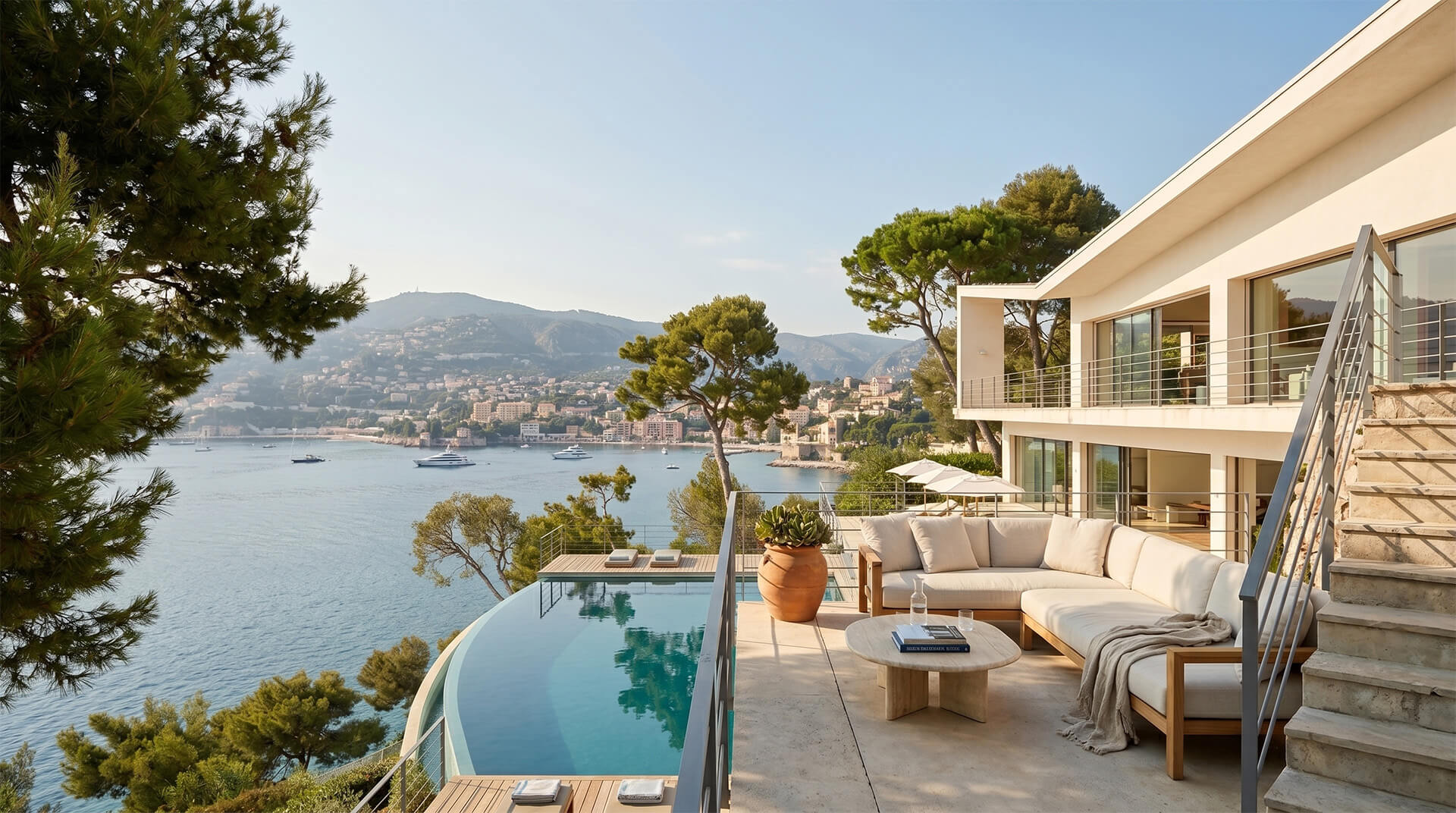
In locations such as the French Riviera, Monaco, Lake Como, and coastal Tuscany, high-value residential assets are being introduced through private channels before any public listing is considered. In several of these regions, between 40% and over 60% of luxury transactions are currently executed off-market .
At the same time, transaction volumes remain active. Riviera deal flow has exceeded €9 billion annually, while Monaco has recorded a 51.7% increase in residential transactions year-on-year in recent reporting periods .
As a result, the visible market no longer reflects the full scope of what is trading. What appears limited is, in practice, selectively disclosed.
Sellers Are Moving Inventory Before It Becomes Visible
This environment is being shaped at the seller level.
Owners of high-value assets are increasingly introducing properties within controlled networks before considering public exposure. In practical terms, waterfront villas and new-build penthouses are often circulated among a defined group of advisors and buyers, with formal listings positioned as a secondary step.
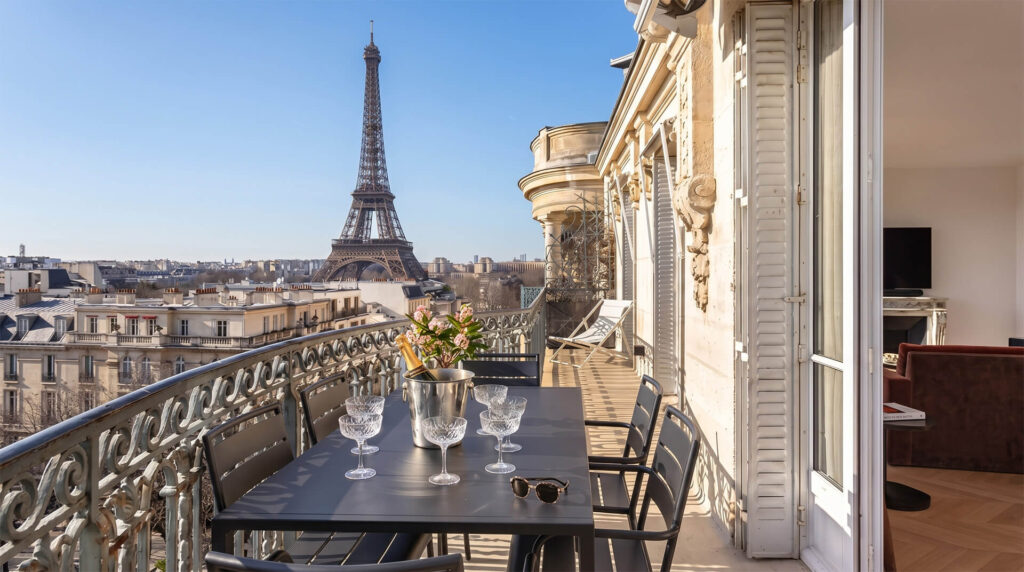
This is already evident in transaction behavior. A €10 million penthouse in Paris was completed privately through internal coordination, without entering the open market .
As a result, public listings are increasingly used as a fallback rather than a starting point. By the time a property becomes visible, it has often already been assessed within private circulation.
Deal Flow Is Concentrated Inside Broker Networks
In parallel, access to these transactions is being consolidated within a relatively small number of cross-border networks.
On the Riviera, international demand remains highly concentrated. Buyers from the Gulf account for approximately 25% of acquisitions, alongside sustained activity from American, German, and Swiss investors . These buyers are not relying on public platforms. They are being introduced to opportunities through established advisory relationships.
Brokerage firms are coordinating across France, Italy, the UK, the UAE, and the United States, sharing inventory discreetly between trusted counterparts . In practical terms, no single platform reflects the full extent of available opportunities.
What follows from this is a redistribution of advantage. Access is determined less by search and more by proximity to these networks.
Supply Is Tightening While Visibility Continues to Narrow
At the same time, underlying supply is contracting.
On the French Riviera, available inventory has declined by approximately 15% year-on-year . Across Italy, 43.2% of agents report reduced housing supply, while only a limited volume of new construction is entering the market, with roughly 58000 homes delivered in the most recent cycle .
At the upper end, these constraints are more pronounced. Prime coastal zones and heritage locations offer limited scope for expansion, which restricts the introduction of new high-quality assets.
As a result, two forces are now acting simultaneously. Supply is tightening in absolute terms, and visibility is narrowing as more transactions take place privately.
This combination is concentrating competition within a smaller field of access.

Pricing Is Being Established in Private Conversations
Pricing behavior is adjusting accordingly.
In the absence of transparent comparables, value is increasingly determined through private negotiation. This has created a divergence between publicly listed properties and those transacting within controlled environments.
In public listings, pricing is often used to test the market, which can result in extended timelines and eventual adjustments. In some cases, final transaction levels differ significantly from initial positioning .
At the same time, prime assets introduced privately are maintaining stronger alignment. On the Riviera, prices have risen by approximately 8.7%, with Saint-Tropez reaching around €18000 per square meter .
Monaco reinforces this pattern. New developments generated approximately €2.5 billion in transaction value in the first half of 2025 alone .
In practical terms, pricing is holding. What has changed is how it is discovered.
Transactions Are Closing Faster Where Access Exists
Transaction timelines are also reflecting this structure.
In public markets, sales cycles remain relatively stable. On Lake Como, prime apartments are transacting within 100 to 140 days, while lakefront villas range between 140 and 220 days .
Within private channels, timelines are shorter.
When a property is introduced to a qualified buyer, the expectation is that financing and structuring are already in place. This allows for immediate engagement once alignment is achieved.
There are documented cases where transactions have concluded within days. In Paris, an off-market apartment was sold in under two weeks through coordinated internal networks .
This is not acceleration for its own sake. It reflects preparation meeting opportunity.
Demand Is Concentrating Around Specific Locations
At the same time, demand is becoming more focused.
In Tuscany, the Argentario now accounts for 44.9% of ultra-luxury enquiries, compared to 14.1% for Chianti . This indicates that buyers are positioning ahead of seasonal peaks to secure limited coastal inventory.
In the mid-market segment, enquiry growth has reached 75% in Lunigiana and 95% in Versilia .
Across Italy, transaction volumes are projected to exceed 750000, with demand increasing while supply continues to lag .
What this suggests is not a broad expansion of interest, but a concentration around specific geographies and asset types.
Buyers Are Engaging Earlier and With Greater Structure
Against this backdrop, buyer behavior is adjusting.
Engagement is taking place earlier, often before assets are formally introduced. This ensures inclusion in private circulation where the most relevant opportunities are first presented.
At the same time, preparation has become essential. Financing, legal structuring, and tax positioning are being addressed in advance, allowing for immediate execution when alignment is achieved.
Buyers are also adapting to reduced transparency. Access to higher-quality assets often involves limited initial disclosure, and this is increasingly accepted as part of the process.
The Next Phase Is Already Taking Shape
Looking ahead, current conditions are expected to persist.
Visible inventory above €10 million is likely to contract further as sellers continue to favor private introductions. In several markets, private transactions are expected to exceed 50% of total activity during peak periods .
At the same time, pricing for high-quality assets is expected to remain supported, particularly in supply-constrained locations such as Cap d’Antibes, Saint-Jean-Cap-Ferrat, and the Argentario coast .
In turn, the distinction between publicly listed properties and privately circulated assets will become more pronounced.
Ownership Is Now Structured Around Access
At the top end of Europe’s property market, ownership is increasingly tied to access.
The assets themselves remain unchanged in their fundamentals. What has evolved is how they are introduced and secured.
Visibility is selective. Timing is controlled. Transactions are conducted within defined networks.
For buyers operating at this level, participation begins before the opportunity becomes visible.
FAQ: Off-Market Property Deals
What are off-market property deals?
Off-market property deals are transactions conducted without public advertising, introduced through private networks or advisory relationships.
Why off-market property deals increasing in Europe?
Sellers are prioritizing discretion and control, while buyers are engaging earlier through established networks.
How can buyers access off-market property deals?
Access is typically gained through advisors with strong cross-border relationships and network proximity.
Are off-market properties priced differently?
They are less transparent but often more stable in positioning due to limited exposure and targeted demand.
Will off-market property deals continue to dominate?
Current data indicates continued expansion, particularly in ultra-prime segments where private transactions are becoming the standard.